Copper smelter facilities operate through multiple processing stages that may involve chemicals, process liquids, wastewater, and corrosive operating environments. Equipment used in these facilities therefore needs to be selected according to the actual process conditions rather than relying only on conventional material choices.
One solution that can be considered for selected storage and processing requirements is an FRP tank for copper smelter applications. Fiber Reinforced Plastic combines fiberglass reinforcement with a thermosetting resin system, allowing the tank construction to be engineered according to chemical exposure, temperature, mechanical requirements, capacity, and other project conditions.
GAJA has practical experience in this area through the design, engineering, and fabrication of FRP tanks for a Copper Smelter Plant requested by PT. Merdeka Copper. This project demonstrates how engineered FRP tanks can be applied in demanding metallurgical and smelting environments.
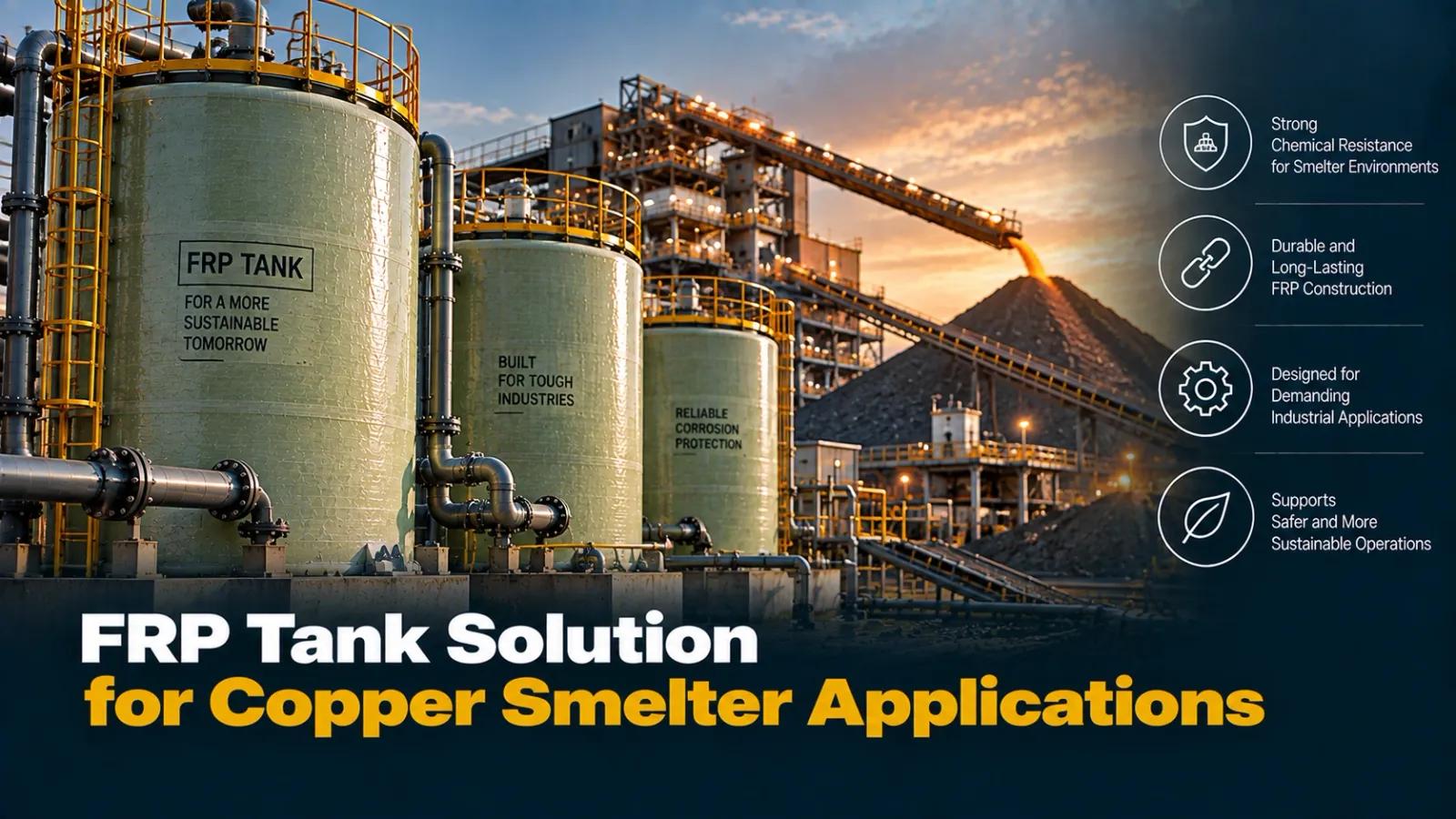
Copper smelting is part of a wider metallurgical process that requires various supporting systems around the main production equipment. Depending on the plant configuration, tanks may be required for:
Not every one of these applications automatically requires FRP. The appropriate tank material depends on the characteristics of the liquid, operating temperature, mechanical requirements, and applicable project specifications.
However, where corrosion becomes an important consideration, FRP provides engineers with the ability to customize the resin system and laminate construction according to the intended service. GAJA's FRP Tank is developed for industrial storage and processing of chemicals and other liquids and can be customized according to specific project requirements.
Corrosion is one of the main material challenges encountered in mineral processing and metallurgical facilities. Storage equipment may be exposed internally to process chemicals while also operating in environments affected by moisture, chemical vapors, or other corrosive conditions.
An FRP tank uses a corrosion resistant inner section combined with structural fiberglass reinforcement. The material system can therefore be adapted to the expected chemical environment instead of relying only on an external protective coating. This does not mean that every FRP tank provides the same chemical resistance.
Performance depends heavily on resin selection, corrosion barrier design, chemical concentration, temperature, and laminate construction. Project teams should therefore define the actual service conditions before selecting the material specification. For more detail on chemical service, see FRP Chemical Storage Tanks for Corrosive Industrial Environments.
FRP tank design should begin with process information. Several parameters can influence the final tank specification.
The exact liquid should be identified before resin and laminate selection begins. Different acids, alkalis, salts, process solutions, and wastewater compositions can have different compatibility requirements. Using a general description such as "chemical tank" is not sufficient for proper material selection.
Chemical concentration also matters. The same chemical at two different concentrations may require different resin or corrosion barrier specifications. Expected minimum and maximum concentration should therefore be communicated during the engineering stage.
Temperature can significantly influence chemical resistance. Project teams should provide both normal operating temperature and maximum expected temperature because resin performance can change under elevated service conditions.
Resin is one of the most important components of an FRP tank intended for corrosive industrial service. Polyester and vinyl ester resin systems offer different performance characteristics, and the appropriate choice should be based on chemical compatibility, concentration, temperature, and expected operating conditions.
This subject is explored further in How to Select Resin for an FRP Chemical Storage Tank?
Tank capacity is only one part of the design. Diameter, height, nozzle position, manholes, support arrangements, access requirements, pipe connections, installation area, and surrounding equipment should also be considered. A customized configuration can be particularly important in complex industrial plants where storage equipment needs to integrate with existing process systems.
Technical knowledge becomes more valuable when supported by actual project experience. GAJA's project portfolio includes a completed Copper Smelter Plant project involving the designing, engineering, and fabrication of FRP tanks requested by PT Merdeka Copper.
The significance of this experience is not simply the supply of a finished tank. It demonstrates involvement across several important project stages Design - Engineering - Fabrication.
This type of integrated capability is particularly relevant for industrial FRP projects because the tank specification needs to reflect actual process and site requirements. GAJA's experience in the broader mining and metallurgical sector also includes supplying FRP Pipe for acid line piping for the Merdeka Tsingshan Nickel Smelter project in Morowali. Together, these projects help demonstrate GAJA's experience with corrosion resistant FRP equipment in mining and smelting environments.
FRP should not automatically replace steel, HDPE, or other tank materials in every smelter application. Each material has advantages and limitations. Steel provides high mechanical strength but may require corrosion protection depending on chemical exposure. HDPE provides good chemical resistance in many environments but has different structural and temperature characteristics.
FRP offers flexibility because the resin system, corrosion barrier, reinforcement, and tank configuration can be engineered according to a specific application. For a broader material comparison, see FRP Tank vs Steel and HDPE Tank: Which Is Better for Your Application?
The right question is therefore not simply “Is FRP better than steel?” but rather “Which material best matches the chemical, temperature, structural, and operating requirements of this specific process?”
Copper smelter and other heavy industrial projects often require more than standard tank fabrication. When selecting an FRP manufacturer, project teams should evaluate:
GAJA is an Indonesian FRP engineering and manufacturing company with experience producing industrial FRP products including tanks, pipes and fittings, grating, lining, panel tanks, and other customized FRP solutions.
For a copper smelter project, providing complete process information, including chemical composition, concentration, temperature, tank capacity, installation conditions, and required connections, will help the engineering team develop a more appropriate tank specification.
Project teams planning FRP tanks for copper smelters, mining facilities, or other corrosive industrial environments can contact GAJA to discuss application requirements before moving into detailed engineering and fabrication.
FRP tanks can be considered where storage or process equipment is exposed to corrosive chemicals, wastewater, or aggressive industrial environments. The tank can be engineered with a resin and laminate system suited to specific service conditions.
Potentially, yes. Suitability depends on the specific acid, concentration, operating temperature, resin system, and tank design. Chemical compatibility must be evaluated before specifying the tank.
There is no single resin suitable for every smelter application. Resin selection should be based on chemical composition, concentration, temperature, and expected service conditions.
Yes. FRP tanks can be designed with customized dimensions, nozzle locations, manholes, supports, and connections according to available space and process requirements.
Yes. GAJA's project portfolio lists a completed Copper Smelter Plant project involving the design, engineering, and fabrication of FRP tanks requested by PT. Merdeka Copper.
30 Sept 2026
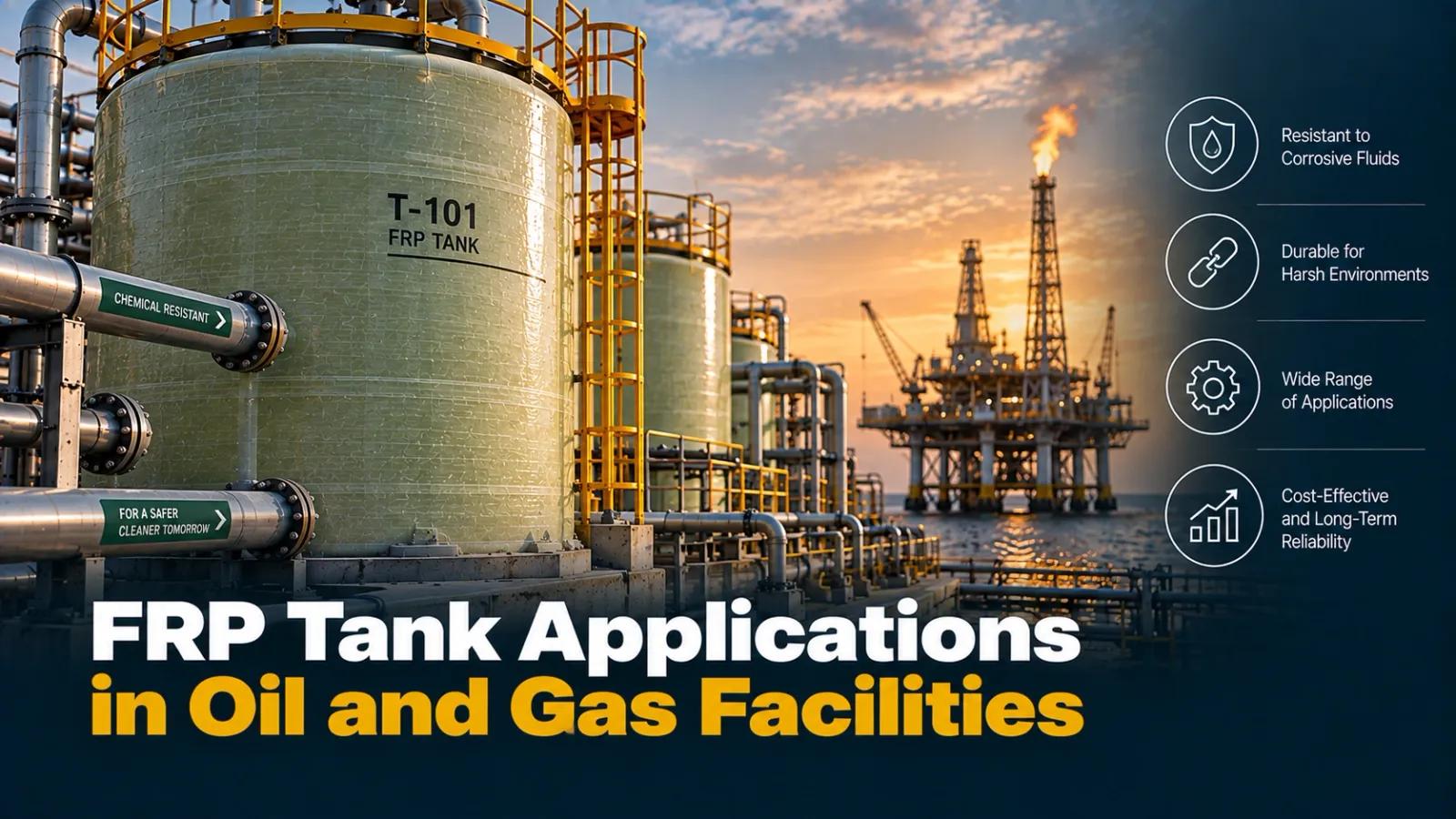
Discover FRP tank applications in oil and gas facilities, including chemical storage, wastewater, process water, corrosion resistance, selection factors, and real industrial project experience.
Read More →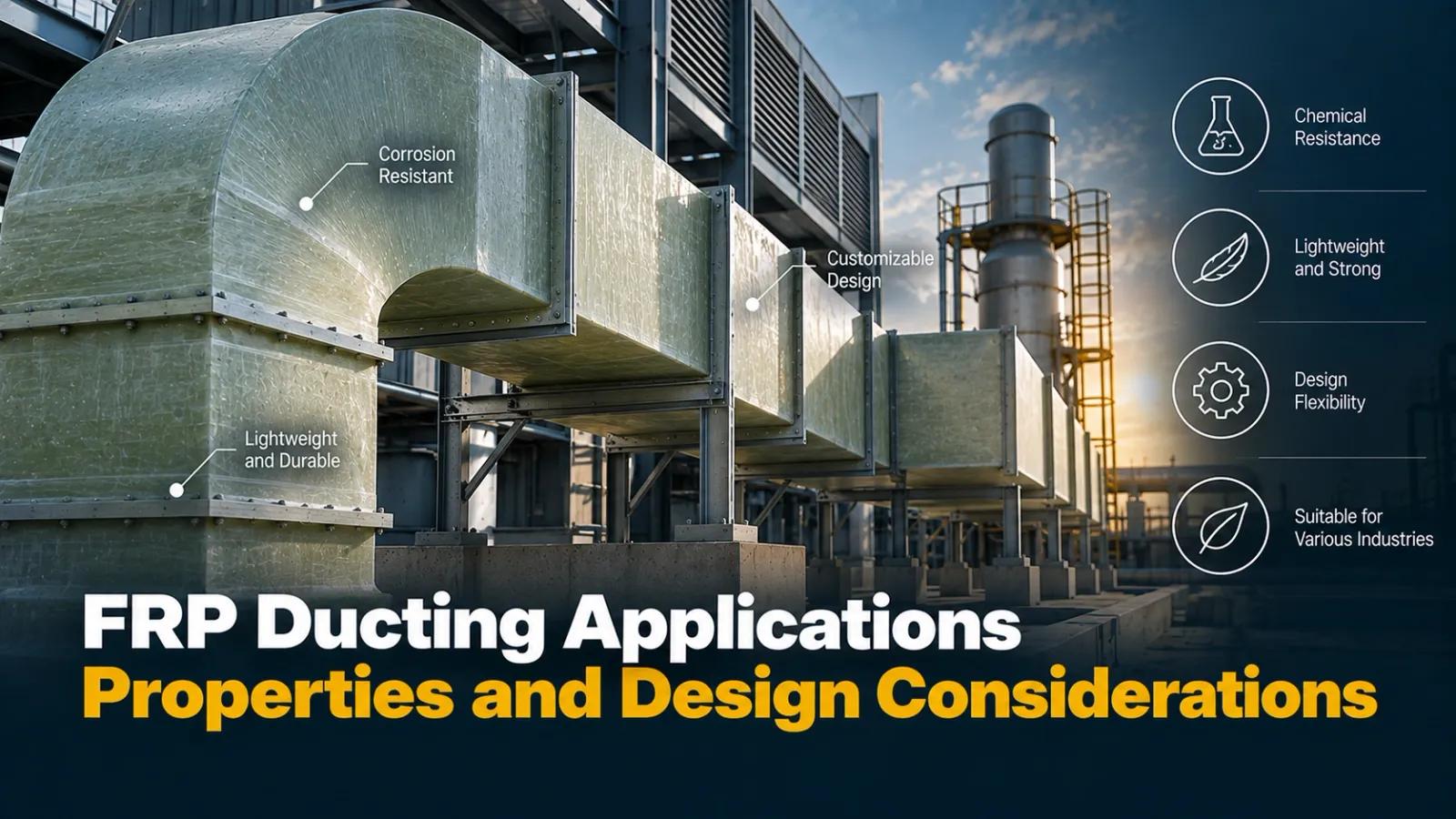
3 Oct 2026
Learn about FRP ducting applications, properties, material selection, and key design considerations for corrosive industrial environments.
Read More →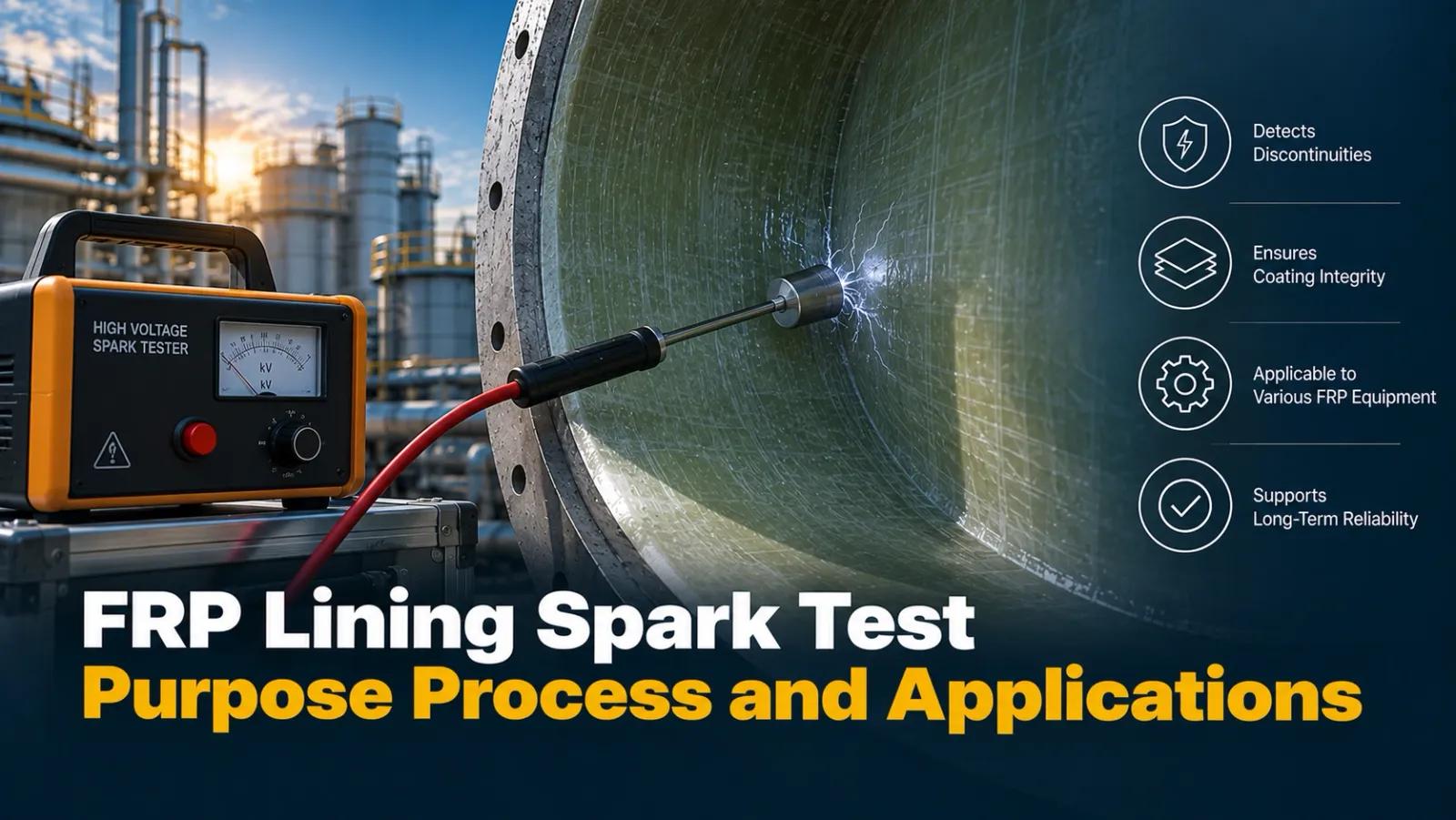
3 Oct 2026
Learn how FRP lining spark tests detect pinholes and defects, including the testing process, applications, safety factors, and inspection considerations.
Read More →