FRP tanks in oil and gas facilities can provide a corrosion resistant option for selected storage and process applications. Fiber Reinforced Plastic combines fiberglass reinforcement with a thermosetting resin system that can be engineered according to specific chemical and environmental conditions.
FRP should not be considered a universal replacement for steel or other tank materials. Its suitability depends on the actual service conditions. However, when corrosion resistance, customized configuration, and relatively low weight are important, FRP can offer practical advantages for certain oil and gas applications.
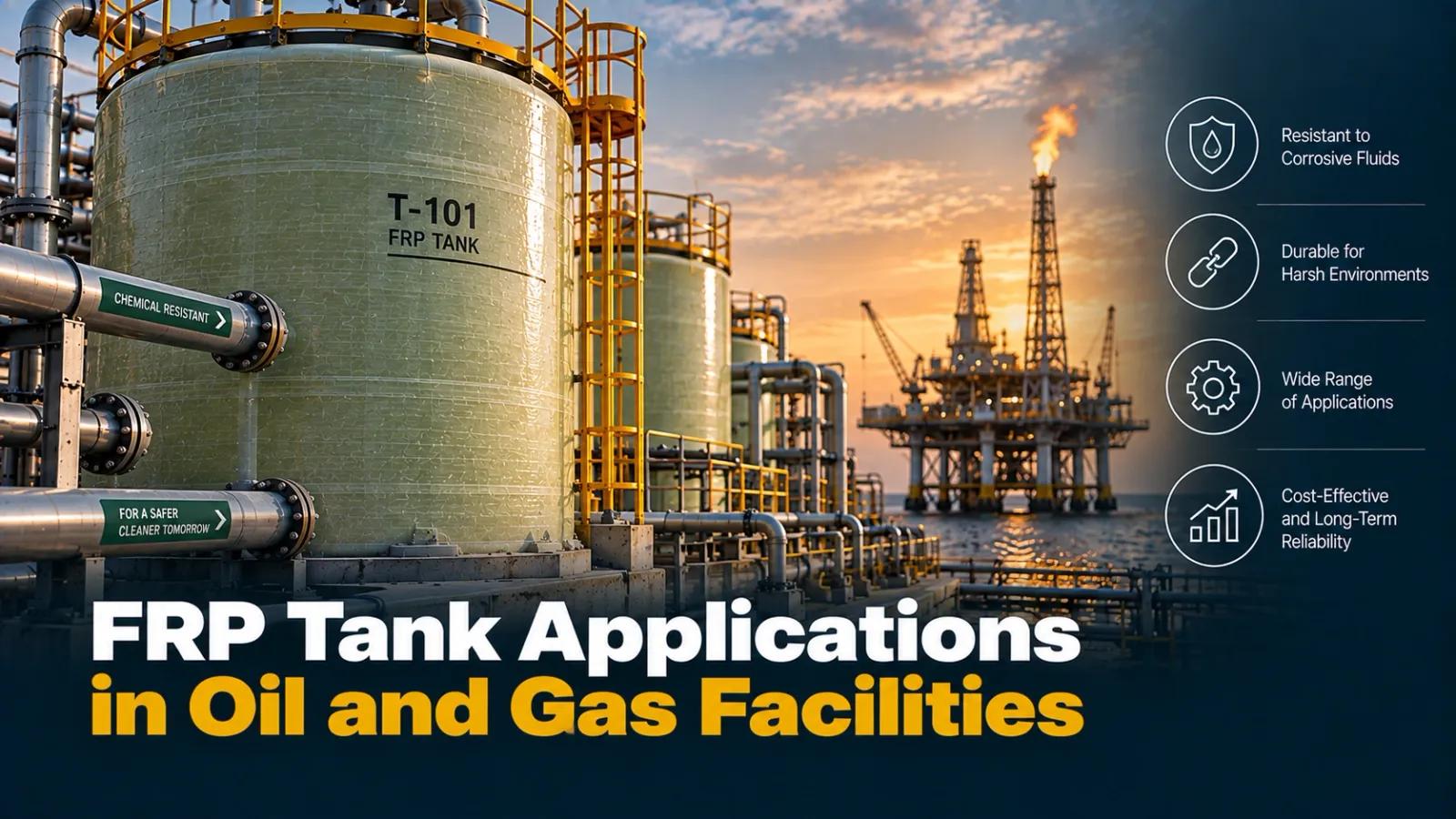
Oil and gas operations involve more than storing crude oil or petroleum products. Supporting processes may require storage and handling of water, treatment chemicals, wastewater, corrosive solutions, and other process liquids. Depending on the facility and process design, FRP tanks may be considered for:
The suitability of FRP for each application must be evaluated individually. For example, a tank used for treated water may require a different laminate and resin system from a tank storing an aggressive process chemical. This is why FRP tank design should begin with process data rather than only tank dimensions.
Oil and gas facilities can expose equipment to several forms of corrosion. Offshore facilities may face saline air, high humidity, and continuous environmental exposure. Processing facilities can also involve corrosive chemicals, wastewater, and chemically aggressive operating areas.
If storage equipment is not properly specified, corrosion may increase inspection requirements, maintenance needs, and the risk of premature equipment deterioration.
FRP offers an advantage because the resin system and corrosion resistant laminate can be selected according to the expected service environment.
GAJA's Fiber force® FRP Tank is designed for storage and processing applications involving chemicals and other industrial liquids. The tank can also be customized according to project requirements.
Selecting an FRP tank for an oil and gas project requires more than choosing the required volume. Several technical factors should be evaluated during the specification stage.
The first consideration is what the tank will contain. Project teams should identify the exact liquid, including any chemicals or additives involved. A generic description such as "process liquid" may not provide enough information for proper material selection. Chemical compatibility should be evaluated before determining the resin and corrosion barrier.
If the tank stores chemicals, concentration also affects material compatibility. The same chemical at different concentrations may require different FRP specifications. Chemical type and concentration should therefore always be reviewed together.
Temperature can affect resin performance and chemical resistance. Both normal operating temperature and possible maximum temperature should be included in the design data. An FRP system that performs well at ambient conditions may require a different specification at elevated temperatures.
The resin system is one of the most important elements of an FRP tank intended for corrosive service. Polyester and vinyl ester systems can provide different levels of resistance depending on the chemical environment and temperature. For a deeper explanation of this subject, see How to Select Resin for an FRP Chemical Storage Tank?
Oil and gas facilities may require tanks ranging from smaller chemical storage vessels to large process or utility tanks. Tank diameter, height, nozzle orientation, manholes, supports, access requirements, and connection points should all be adapted to the project layout.
GAJA states that its Fiber force® FRP Tank can be engineered for capacities of up to 2,000 m³, depending on project requirements.
Actual industrial experience provides useful context when evaluating FRP equipment for oil and gas facilities. GAJA's project portfolio includes the Matindok Gas Plant, where the company constructed FRP tanks for various requirements commissioned by PT Pertamina.
This project demonstrates the use of FRP tanks within a gas processing environment rather than only in general chemical or water storage applications.
GAJA's wider industrial experience also includes FRP tanks for a Copper Smelter Plant and a PAC water treatment facility, as well as FRP pipes and fittings for various industrial projects. The combination of tank, piping, and other FRP manufacturing capabilities can be relevant in projects where multiple corrosion resistant components need to operate within the same facility.
FRP is one of several materials that may be considered for industrial tanks. Steel offers high mechanical strength and is widely used throughout the oil and gas sector, but corrosion protection may be required depending on the stored liquid and surrounding environment.
HDPE provides chemical resistance in many applications but differs from FRP in structural stiffness, temperature capability, fabrication method, and large tank design options. FRP allows the resin system, corrosion barrier, laminate thickness, and configuration to be customized around particular process requirements.
For a more detailed comparison, see FRP Tank vs Steel and HDPE Tank: Which Is Better for Your Application? The most appropriate material should ultimately be selected based on chemical compatibility, temperature, mechanical loads, capacity, lifecycle requirements, and project specifications.
Oil and gas projects commonly have detailed engineering and quality requirements. Depending on the application, FRP vessels may also need to comply with relevant design standards and client specifications. GAJA states that its FRP tank solutions can be designed with reference to international standards including ASME RTP-1 and ASTM.
Project teams looking specifically at reinforced thermoset plastic vessel requirements can also review ASME RTP-1 for FRP Tanks: What Project Teams Should Know? Standards should not be treated as a substitute for process data. The operating environment still needs to be clearly defined before the final tank specification is developed.
Oil and gas projects often require more than standard tank fabrication. When evaluating an FRP manufacturer, project teams should consider:
GAJA has more than 19 years of experience in FRP engineering and manufacturing and holds ISO 9001, ISO 14001, and ISO 45001 accreditation. The company also manufactures a broader range of industrial FRP products, including tanks, pipes and fittings, lining, grating, panel tanks, and other corrosion resistant solutions.
For oil and gas facilities considering FRP tanks for chemical, water, wastewater, or other corrosive service, project teams can contact GAJA to discuss operating conditions, required capacity, chemical exposure, and customized tank specifications before detailed engineering begins.
FRP can be suitable for selected offshore applications because of its corrosion resistance and relatively low weight. However, suitability depends on chemical exposure, environmental conditions, structural loads, temperature, and project specifications.
Not every FRP resin system is suitable for every hydrocarbon or petroleum product. Chemical compatibility, temperature, fire requirements, and project standards must be evaluated before specifying FRP for this type of service.
FRP tanks can be considered for produced water, wastewater, and treatment systems when the laminate and resin system are compatible with the liquid composition and operating conditions.
Important information includes the stored liquid, chemical concentration, operating and maximum temperature, liquid density, required capacity, installation environment, nozzle requirements, mechanical loads, and applicable project standards.
Yes. FRP tanks can be engineered with customized dimensions, nozzle arrangements, manholes, supports, and connection points to accommodate specific process and installation requirements.
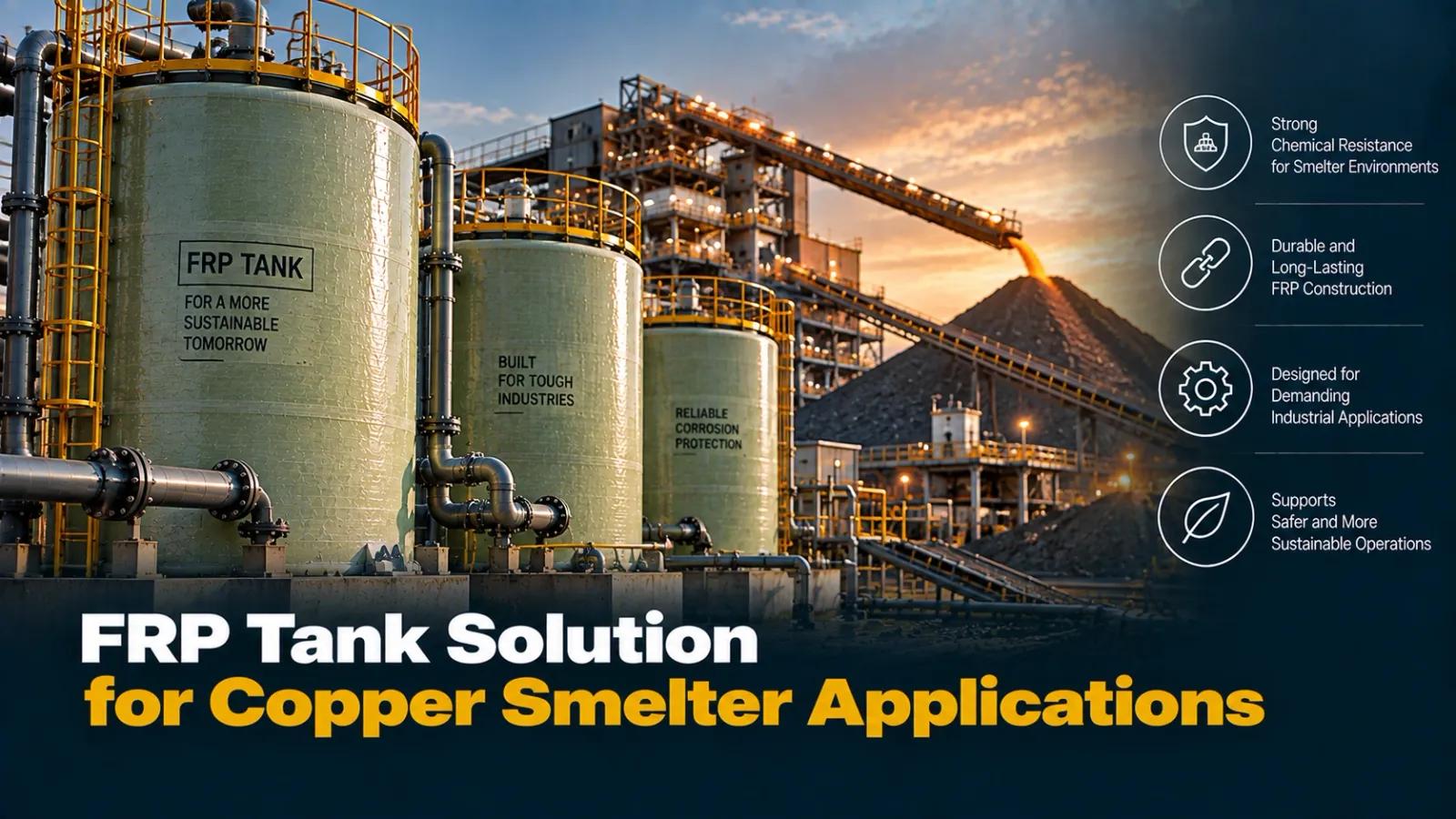
30 Sept 2026
Explore FRP tank solutions for copper smelter applications, including corrosion resistance, resin selection, design factors, material considerations, and GAJA's industrial project experience.
Read More →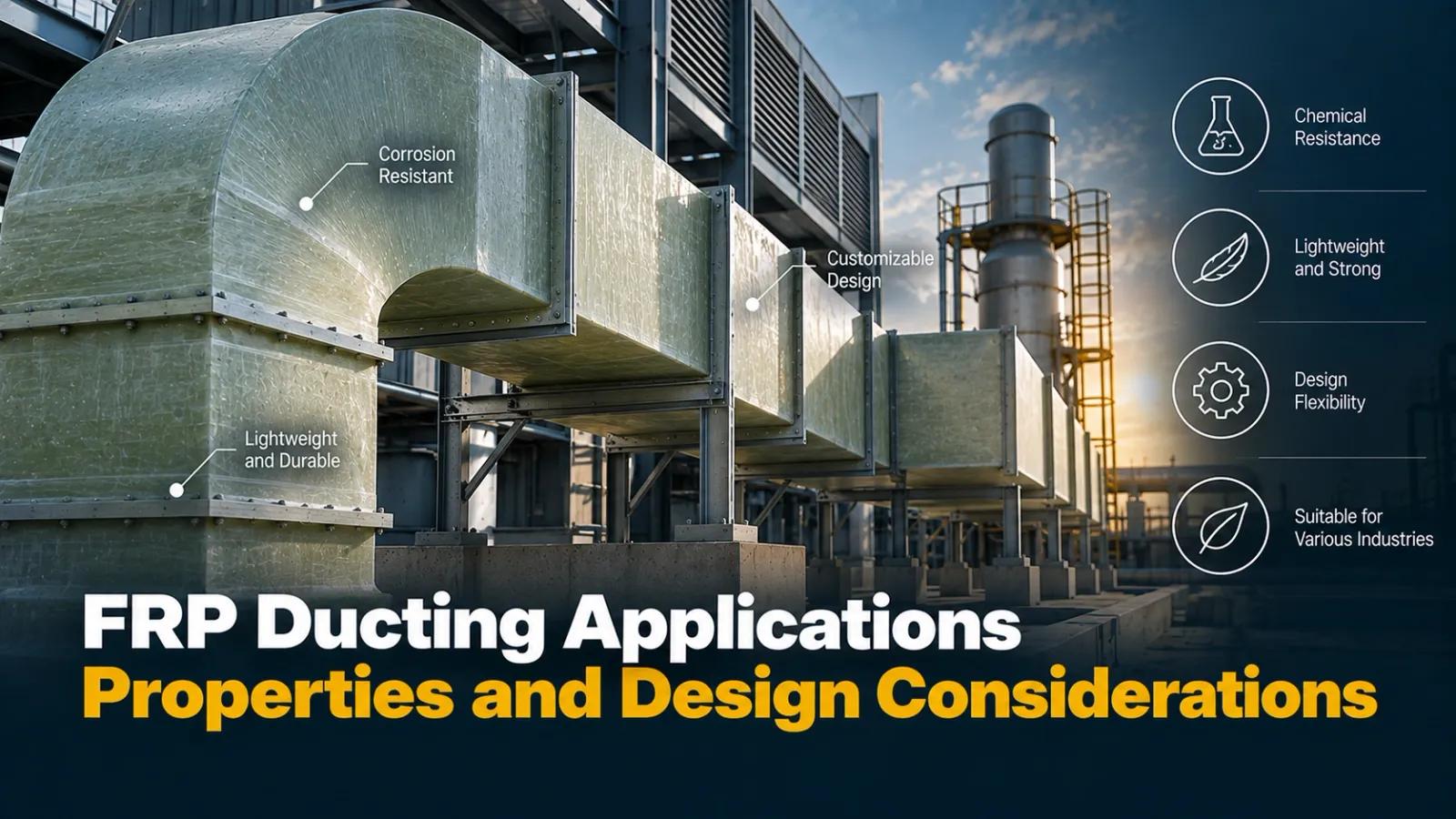
3 Oct 2026
Learn about FRP ducting applications, properties, material selection, and key design considerations for corrosive industrial environments.
Read More →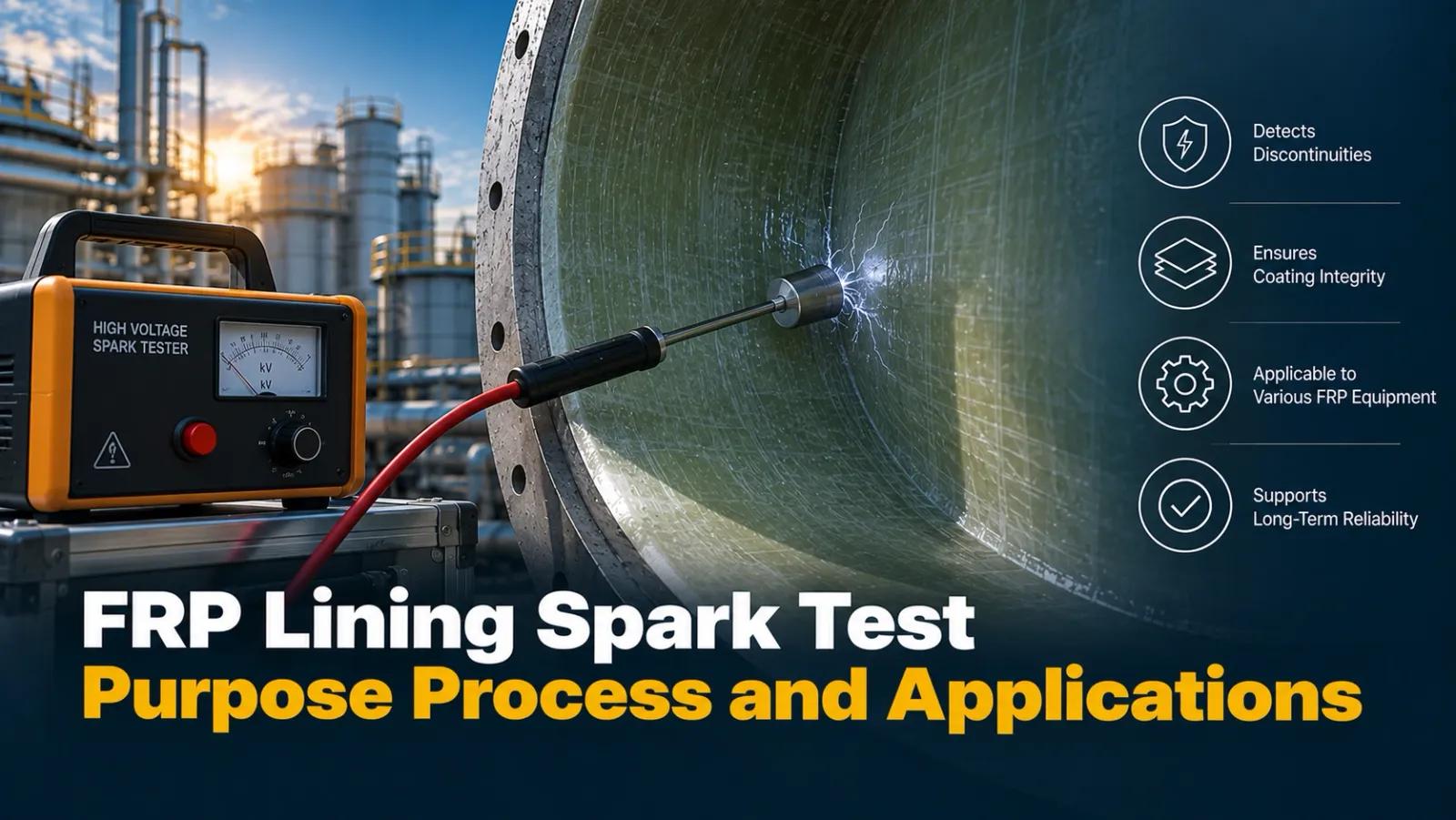
3 Oct 2026
Learn how FRP lining spark tests detect pinholes and defects, including the testing process, applications, safety factors, and inspection considerations.
Read More →