FRP duct design is an important part of developing industrial ventilation, exhaust, and air pollution control systems. The design determines how effectively the duct transports air, fumes, and process gases while maintaining structural integrity under operating conditions.
Fiber Reinforced Plastic (FRP) is a composite material that combines fiberglass reinforcement with a thermosetting resin system. Its relatively low weight and corrosion resistance make it a practical material option for industrial environments exposed to moisture, chemicals, and corrosive gases. However, achieving reliable performance requires more than selecting the duct diameter or material thickness.
A properly engineered FRP ducting system should consider airflow requirements, operating pressure, structural loads, chemical compatibility, connection details, and installation conditions before fabrication begins.
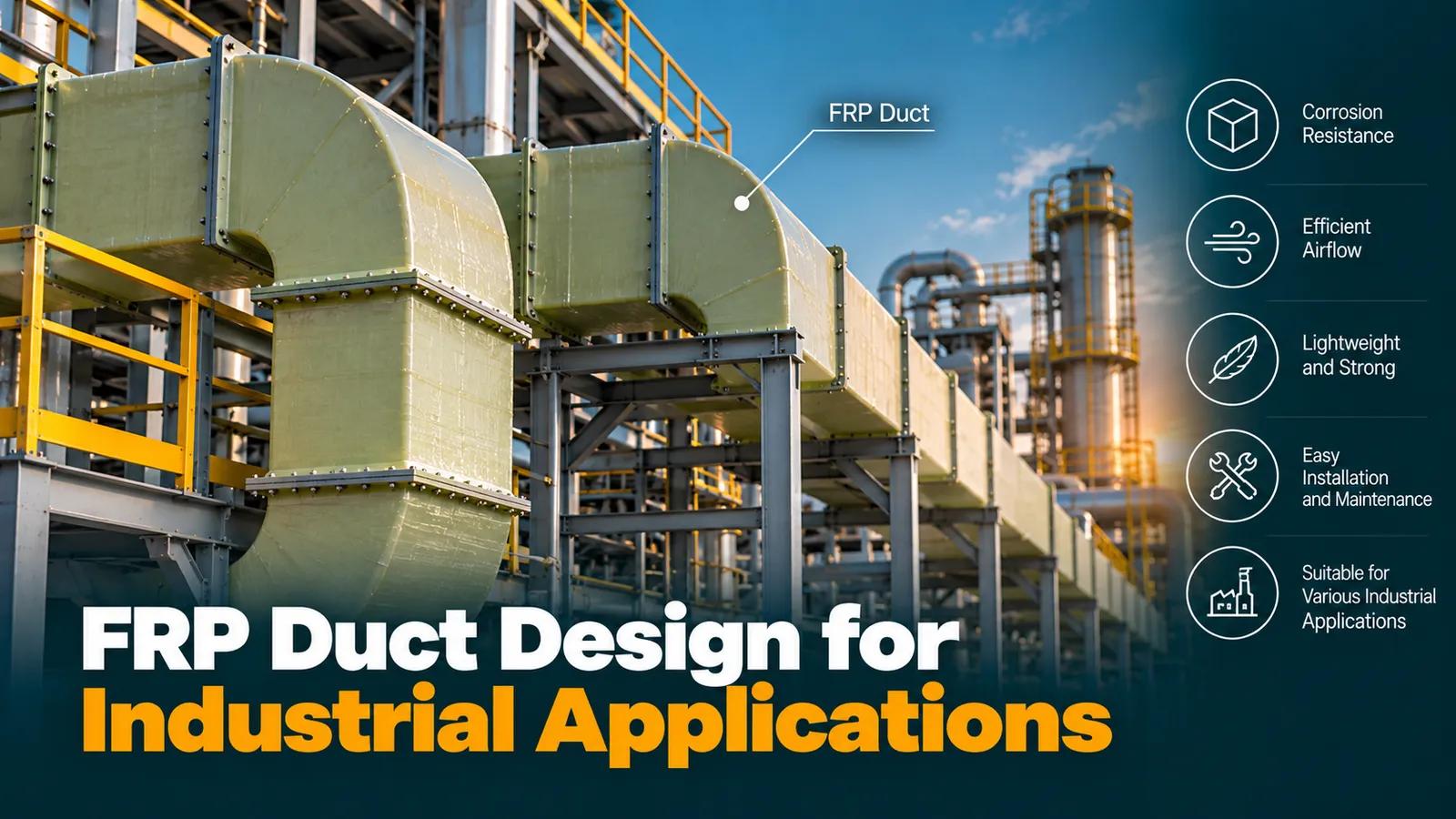
Industrial ductwork must accommodate both process requirements and mechanical conditions. Several engineering parameters should be evaluated during the initial design stage.
Airflow is one of the primary factors determining FRP duct dimensions. The duct must accommodate the required air volume while maintaining an appropriate flow velocity and acceptable pressure loss.
Engineers generally evaluate:
For example, a duct connected to an industrial exhaust fan must be designed according to the required airflow and the resistance of the entire ventilation network. Undersized ductwork can increase pressure loss and affect system performance, while unnecessarily oversized ductwork may increase material and installation requirements.
The duct layout should therefore be evaluated together with fans, scrubbers, dampers, and other connected equipment.
FRP duct design must account for the pressure conditions inside the system. Depending on the application, ductwork may operate under positive pressure, negative pressure, or vacuum conditions.
Negative pressure is particularly relevant in exhaust and fume extraction systems. If the duct wall is not adequately designed, external atmospheric pressure can cause deformation or buckling.
Engineers should identify:
These parameters help determine the required wall construction, reinforcement, and structural configuration. The design should also consider pressure variations during equipment startup, shutdown, and changes in operating conditions.
Wall thickness is another important consideration when designing fiberglass ductwork. However, selecting a thicker wall does not automatically guarantee better performance. The required construction depends on several factors, including duct diameter, operating pressure, vacuum loading, temperature, material properties, and support spacing.
Fiberglass reinforcement provides structural strength, while the resin system contributes to chemical and environmental resistance. Their combination must be appropriate for the intended operating conditions. For larger diameter ducts, engineers may also need to evaluate additional reinforcement to maintain dimensional stability and limit excessive deformation.
Support design is essential for maintaining the alignment and stability of an FRP ducting system. Supports carry the duct's self-weight and other applicable loads while limiting excessive deflection.
Important considerations include:
Supports should be positioned according to the structural requirements of the duct. Additional consideration may be necessary near elbows, branches, flanges, equipment connections, and other locations where loads or stresses can become concentrated. The support arrangement should be coordinated with the duct design rather than determined only after fabrication.
Material selection directly influences the service performance of industrial FRP ductwork. Two important elements are the resin system and fiberglass reinforcement.
The resin provides an important protective barrier against the conveyed medium and surrounding environment. Different resin systems offer different levels of resistance to chemicals, temperature, and moisture.
Before selecting a resin, project teams should identify:
For example, an exhaust duct handling corrosive chemical fumes may require a different resin specification from a general ventilation duct. Chemical compatibility should always be verified against the actual operating conditions.
Fiberglass reinforcement contributes to the mechanical strength of FRP ductwork. Its configuration and distribution influence the structural properties of the finished component.
The reinforcement design should be evaluated alongside wall thickness, duct dimensions, pressure requirements, and manufacturing methods. This helps ensure that the finished duct can accommodate its intended mechanical loads.
An industrial FRP ducting system consists of more than straight duct sections. It may also require elbows, reducers, branches, flanges, access openings, and equipment connections. Each component should be included in the design drawings because its geometry can influence airflow, pressure loss, and structural performance.
Connection details are particularly important where FRP ductwork interfaces with fans, scrubbers, tanks, or other equipment manufactured from different materials. For projects involving additional corrosion-resistant piping components, GAJA's FRP Pipe & Fittings can also be considered as part of a broader industrial FRP solution.
Air pollution control applications require careful coordination between ductwork and air treatment equipment. FRP ducts may transport exhaust gases or fumes from industrial processes toward scrubbers and other treatment systems.
The duct design should consider the required airflow, gas composition, operating temperature, pressure conditions, and equipment arrangement.
For example, an exhaust duct connected to a wet scrubber may experience moisture, chemical exposure, and potential condensation. These conditions should be considered when determining the resin system, duct configuration, and connection details.
GAJA also provides Air Pollutant System solutions for industrial applications involving the removal of pollutants from gas streams. Integrating ductwork considerations with the overall air pollution control system helps project teams evaluate the requirements of the complete installation.
Manufacturer experience is another consideration when developing an industrial FRP ducting project. GAJA has completed international projects involving engineering and manufacturing of fiberglass ductwork.
One example is the Bondi STP Ventilation Project, commissioned by Sydney Water in Australia. GAJA manufactured FRP Pipe, Fittings, and Duct for plant ventilation and odour management applications. The project included design and engineering based on ASME B31.3 and ASTM 2996 standards, followed by manufacturing at GAJA's Jakarta factory.
Another example is the Winmalee Wastewater Treatment Plant Project, also commissioned by Sydney Water. GAJA manufactured FRP ducting with dimensions ranging from DN200 to DN300. The scope included duct engineering, fabrication, and factory inspection before transportation to the project site.
These projects demonstrate GAJA's experience in manufacturing FRP ducting for industrial and wastewater treatment applications.
Before proceeding with fabrication, project teams should prepare the engineering information required to establish the appropriate duct specification.
A typical design and fabrication checklist includes:
Providing these details early helps engineers and manufacturers evaluate the duct configuration, material requirements, and fabrication scope before production begins.
A reliable FRP ducting system starts with an appropriate engineering design. Airflow, pressure conditions, structural reinforcement, resin compatibility, support arrangements, and connection details should all be evaluated according to the intended application.
GAJA provides FRP engineering and manufacturing solutions for industrial projects, including customized FRP ducting for ventilation and air pollution control applications.
If your project requires industrial FRP duct design, engineering, or fabrication, contact GAJA to discuss your duct dimensions, operating conditions, material requirements, and project specifications.
FRP duct design is the engineering process of determining duct dimensions, material construction, reinforcement, support arrangements, and connections to meet industrial airflow and operating requirements.
Wall thickness depends on duct diameter, internal pressure, vacuum conditions, temperature, structural loads, reinforcement configuration, and allowable deformation. It should be established through engineering evaluation.
The appropriate resin depends on the chemical composition, concentration, operating temperature, exposure duration, and environmental conditions. Chemical compatibility should be verified before final material selection.
Support spacing affects duct deflection, stability, and mechanical stress. Supports that are too far apart may cause excessive deformation, so their locations should follow the approved structural design.
Yes. FRP ducting can be used to transport exhaust gases and corrosive fumes in industrial air pollution control systems. Its material and structural specifications should match the gas composition and operating conditions.
13 Oct 2026
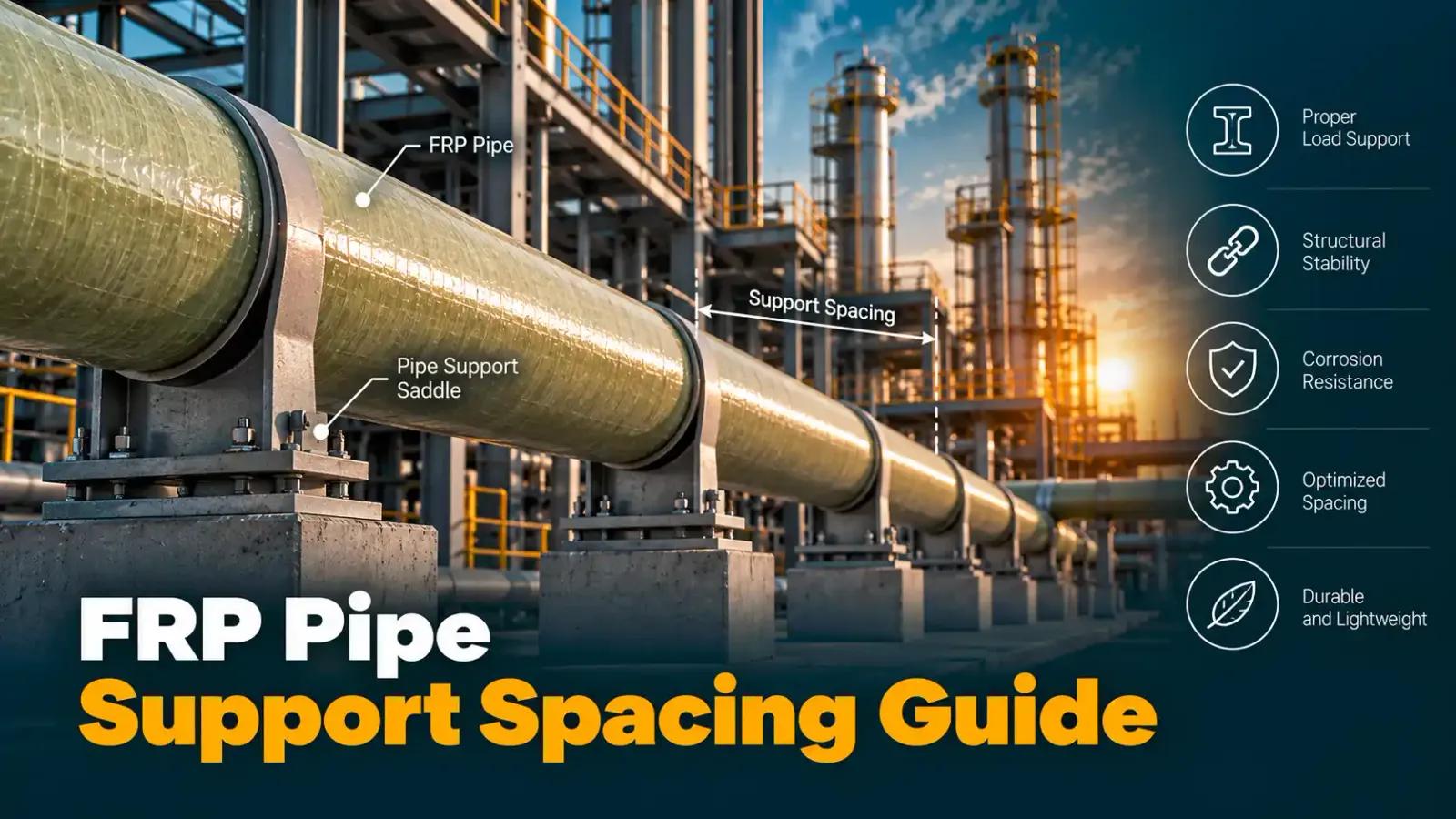
Learn about FRP pipe support spacing, recommended distances, key design factors, installation practices, and how to prevent pipe sagging.
Read More →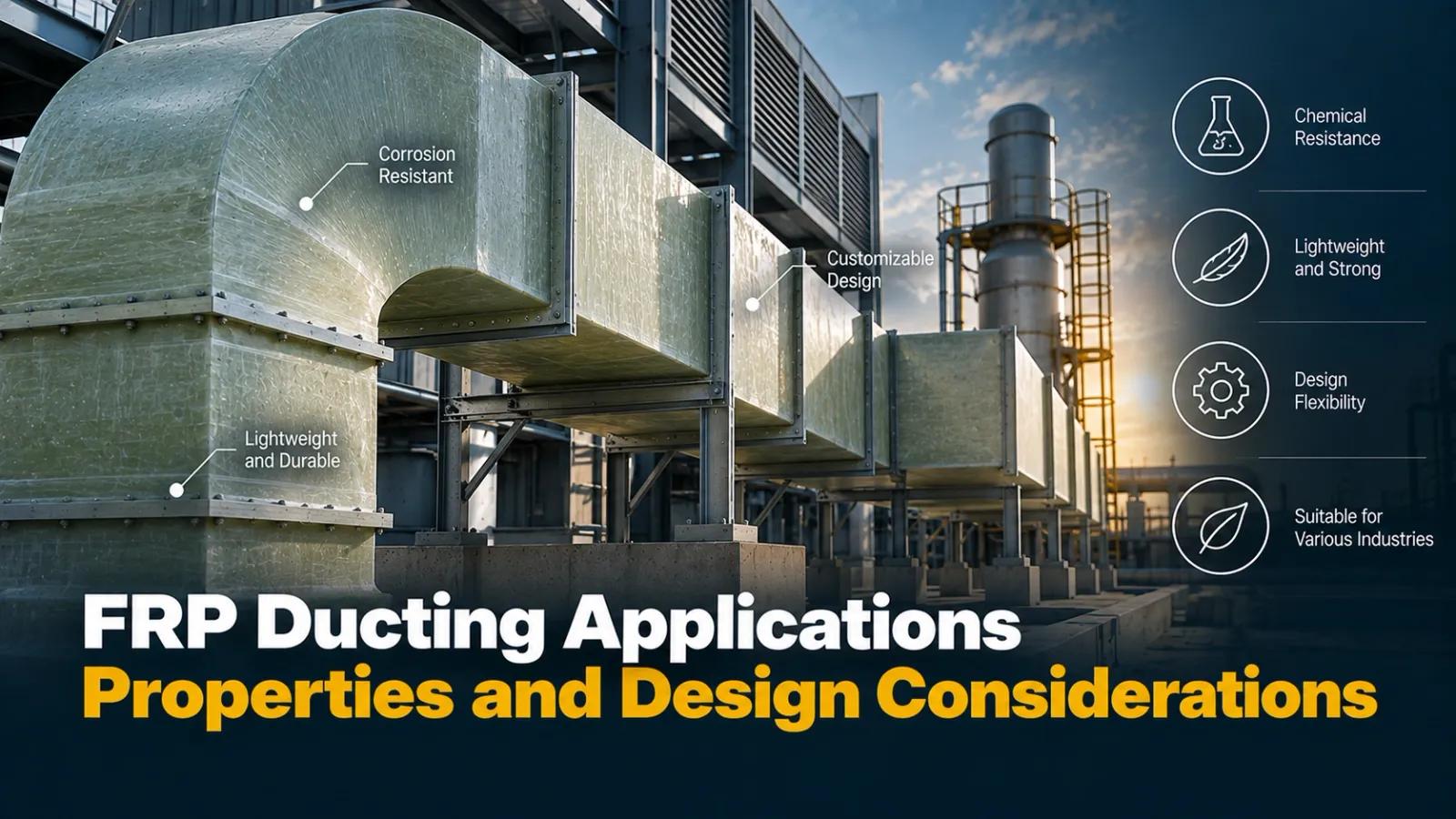
3 Oct 2026
Learn about FRP ducting applications, properties, material selection, and key design considerations for corrosive industrial environments.
Read More →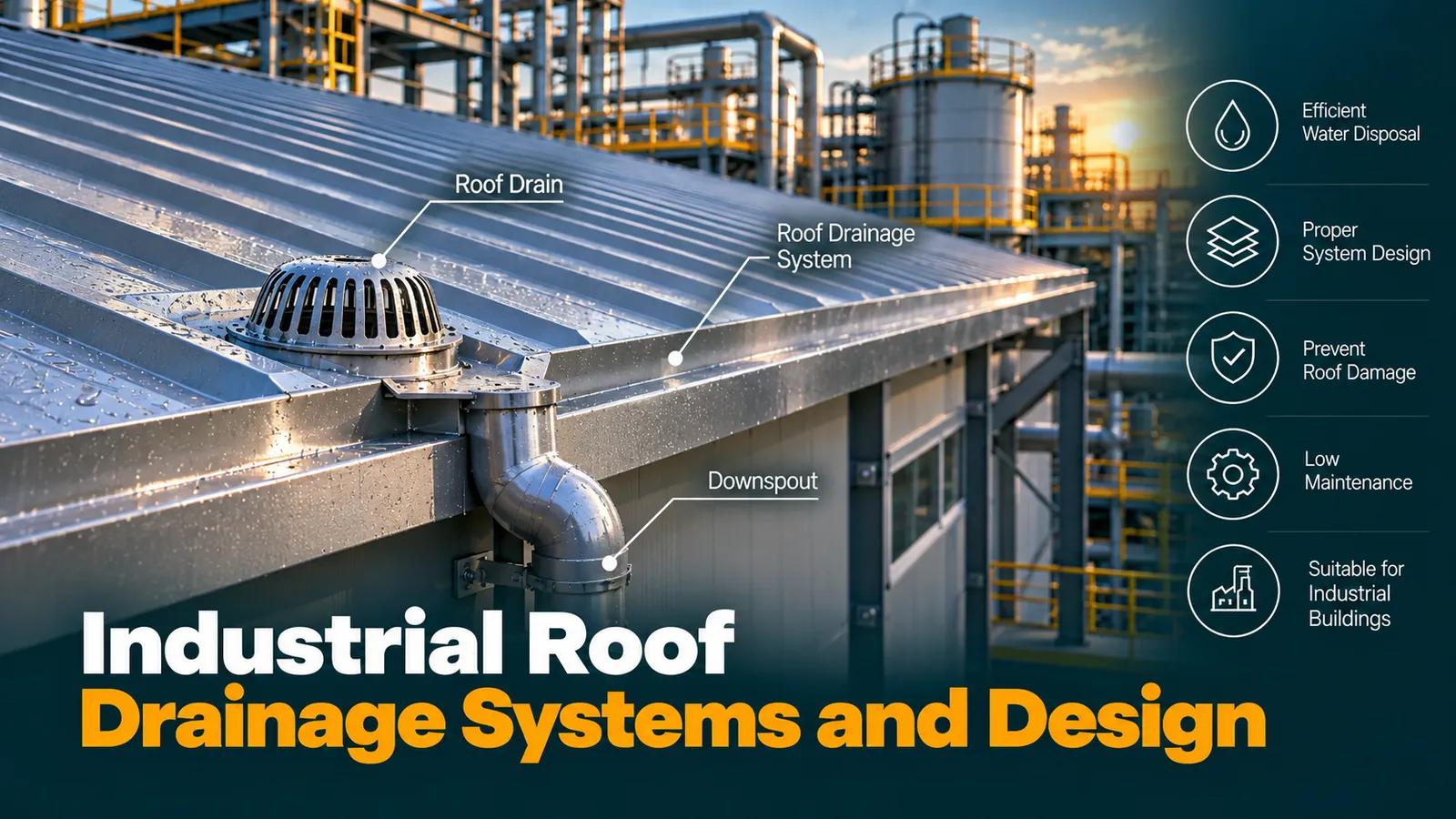
18 Nov 2026
Learn how industrial roof drainage systems are designed, including gutters, outlets, downpipes, drainage capacity, materials, and maintenance.
Read More →