FRP ducting is a corrosion-resistant ductwork solution used to transport air, exhaust gases, fumes, and other process gases in industrial environments. It is particularly relevant for facilities where moisture, chemicals, or corrosive gases may affect conventional metal ductwork.
FRP stands for Fiber Reinforced Plastic, a composite material that combines fiberglass reinforcement with a thermosetting resin system. The fiberglass provides structural reinforcement, while the resin contributes to resistance against chemical and environmental exposure.
However, selecting FRP ducting requires more than determining the duct diameter. Chemical exposure, operating temperature, airflow, pressure or vacuum, wall construction, support spacing, resin type, and installation conditions should all be considered before establishing the final specification.
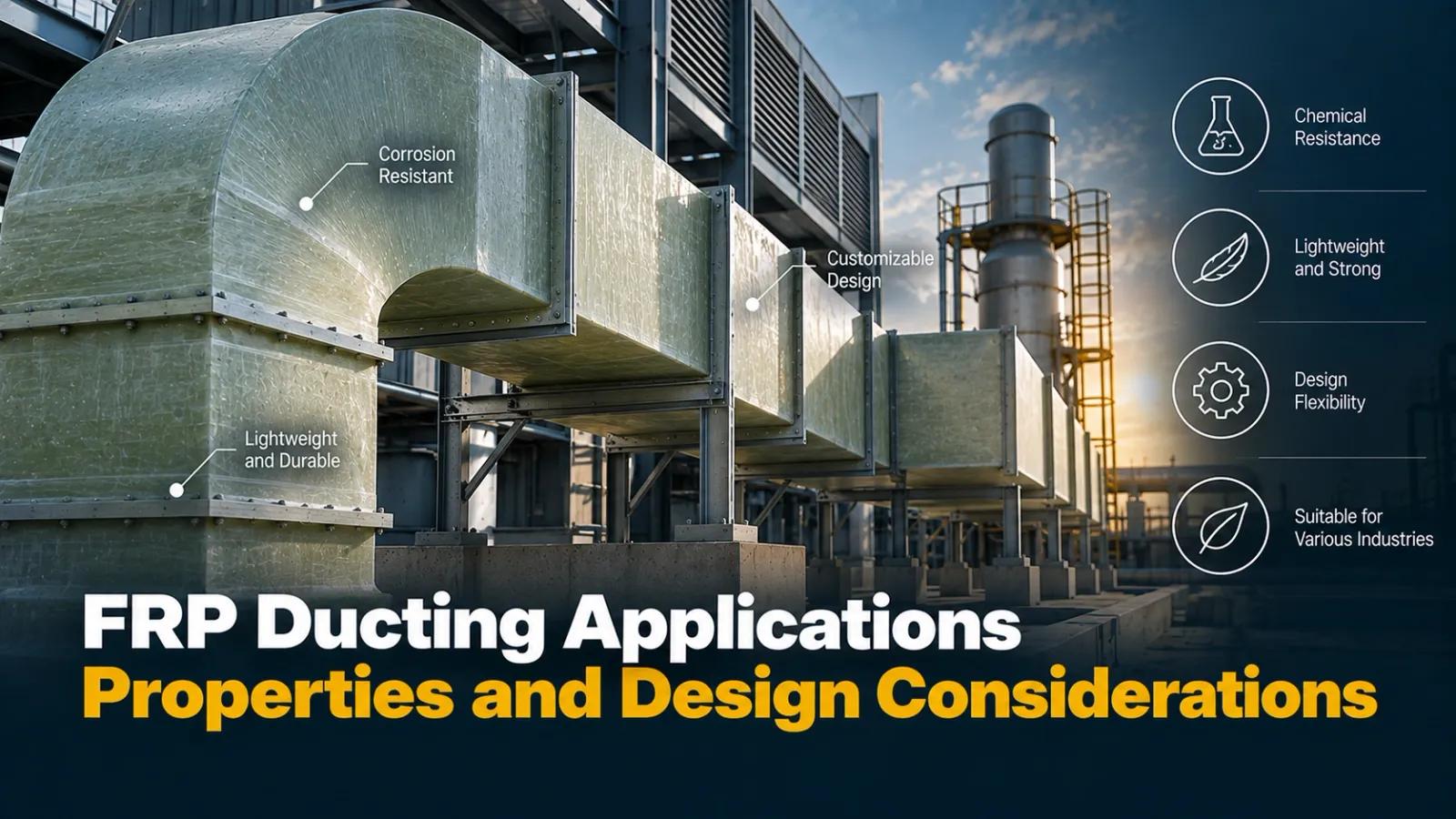
FRP ducting is a ductwork system manufactured using fiberglass-reinforced polymer materials. The system can be fabricated into straight duct sections as well as elbows, reducers, branches, flanges, and other fittings required for an industrial ventilation system.
Unlike carbon steel ductwork, fiberglass ducting does not rust through the same electrochemical process associated with exposed steel. Its resin system can also be selected according to the chemical environment. For this reason, FRP ductwork can be considered for applications where corrosion resistance and relatively low weight are important design considerations.
The application of an FRP ducting system depends on the type of air or gas being transported and the surrounding environment. Common applications include:
For example, an FRP exhaust duct may be used to convey corrosive fumes from a process area to a scrubber or other air treatment equipment. Different locations within the same facility can also have different requirements. Therefore, the ducting specification should be based on the actual process conditions rather than applying one specification to the entire facility.
Several characteristics make FRP ducting relevant for industrial ventilation and exhaust applications.
Corrosion resistance is one of the main reasons FRP ductwork is considered for industrial applications. Depending on the resin system, FRP can be designed for exposure to moisture, chemicals, and corrosive gases. The chemical resistance of an FRP duct should not be assumed to be universal. The chemical type, concentration, operating temperature, and exposure duration should be evaluated when selecting the resin.
FRP ducting is generally lighter than many conventional metallic duct configurations. This can simplify handling, transportation, and installation, particularly for large duct sections or systems installed on elevated structures. Lower weight can also be useful when ductwork needs to be positioned around existing tanks, process equipment, or other structures.
Fiberglass reinforcement provides structural strength while maintaining relatively low material weight. However, the structural performance of an FRP duct depends on its diameter, wall construction, reinforcement, support spacing, and operating conditions. For this reason, duct thickness should be determined based on engineering requirements rather than duct diameter alone.
The resin-rich surface of fiberglass reinforced plastic ducting forms an important barrier between the conveyed medium and the reinforcing fibers. This characteristic can be useful when handling corrosive fumes or gases. The surface construction and resin system should be selected according to the intended service environment.
Designing an FRP ducting system requires consideration of both process and structural requirements.
Duct dimensions should be established according to the required airflow, velocity, and acceptable pressure loss. Duct diameter, bends, transitions, branches, and other components can influence the performance of the ventilation system. The complete duct routing should therefore be considered during the design stage instead of sizing individual sections independently.
Operating temperature is another important consideration because resin performance can vary with temperature. The design should account for both normal and maximum expected operating temperatures. Internal pressure or vacuum should also be evaluated. A duct operating under negative pressure may have different structural requirements from one operating under positive pressure.
Support arrangement is important for maintaining the structural integrity of FRP ductwork. Support spacing should consider duct diameter, wall construction, weight, operating conditions, and allowable deflection. Large unsupported spans may increase deflection and mechanical stress. The support system should therefore be established together with the duct design.
An FRP ventilation duct can incorporate elbows, reducers, branches, flanges, dampers, access points, and other components. Connections need to maintain system integrity while accommodating installation and maintenance requirements. For projects that also require corrosion-resistant piping components, FRP Pipe & Fittings can be considered as part of a broader FRP solution for industrial facilities.
Resin selection is a critical part of FRP duct design because the resin contributes significantly to chemical and environmental resistance.
Before selecting an FRP duct material, project teams should identify:
For example, ductwork handling chemical fumes may require a different resin system from ductwork operating in a general ventilation environment. Chemical compatibility should therefore be verified against the actual operating conditions.
Metal ductwork remains widely used in industrial ventilation because of its structural characteristics and availability. Depending on the material and operating environment, however, corrosion protection, coatings, or maintenance may be required.
FRP ducting provides a non-metallic alternative for applications where corrosion resistance and relatively low weight are important considerations. The comparison between FRP and metal ductwork should include:
The appropriate material depends on the actual operating conditions and engineering requirements of the project.
Proper fabrication and installation are important for achieving the intended performance of an FRP ducting system. Before fabrication, project teams should establish duct dimensions, routing, connection details, fittings, support locations, resin requirements, and operating conditions.
During installation, duct sections should be properly aligned and adequately supported. Connections should follow the specified joining method to help maintain system integrity and minimize leakage. Coordination with other equipment is also important, particularly when the ductwork connects to scrubbers, fans, tanks, piping, or other process equipment.
Before requesting an FRP ducting quotation, project teams should ideally provide:
These details allow the manufacturer to evaluate the appropriate duct construction, resin system, dimensions, fittings, and fabrication requirements according to the actual application.
FRP ducting can be considered for industrial ventilation, exhaust, and fume-handling systems where corrosion resistance, relatively low weight, and material durability are important considerations. Its performance depends on the appropriate combination of resin system, fiberglass reinforcement, duct construction, dimensions, support arrangement, and connection method.
Before selecting fiberglass ducting, project teams should evaluate chemical exposure, temperature, airflow, pressure or vacuum, support conditions, and installation environment. This approach helps ensure that the final specification is aligned with the actual operating requirements rather than based only on standard duct dimensions. GAJA provides FRP solutions for industrial applications, including FRP ducting and other fiberglass-reinforced products. If you are planning an industrial ventilation or exhaust project, contact GAJA to discuss your duct dimensions, chemical exposure, operating conditions, fittings, fabrication requirements, and other project specifications.
FRP ducting is commonly used to transport air, fumes, exhaust gases, and corrosive process gases in industrial ventilation, exhaust, and air pollution control systems.
FRP combines fiberglass reinforcement with a resin system that can be selected according to the chemical and environmental conditions. Unlike carbon steel, it does not rust through the same electrochemical mechanism.
Resin selection should consider the chemical composition, concentration, operating temperature, exposure duration, moisture, and other service conditions.
Yes. FRP ductwork is generally relatively lightweight compared with many metallic duct configurations, which can simplify handling, transportation, and installation.
Important considerations include airflow, duct dimensions, temperature, pressure or vacuum, chemical exposure, wall construction, support spacing, connections, fittings, and installation conditions.
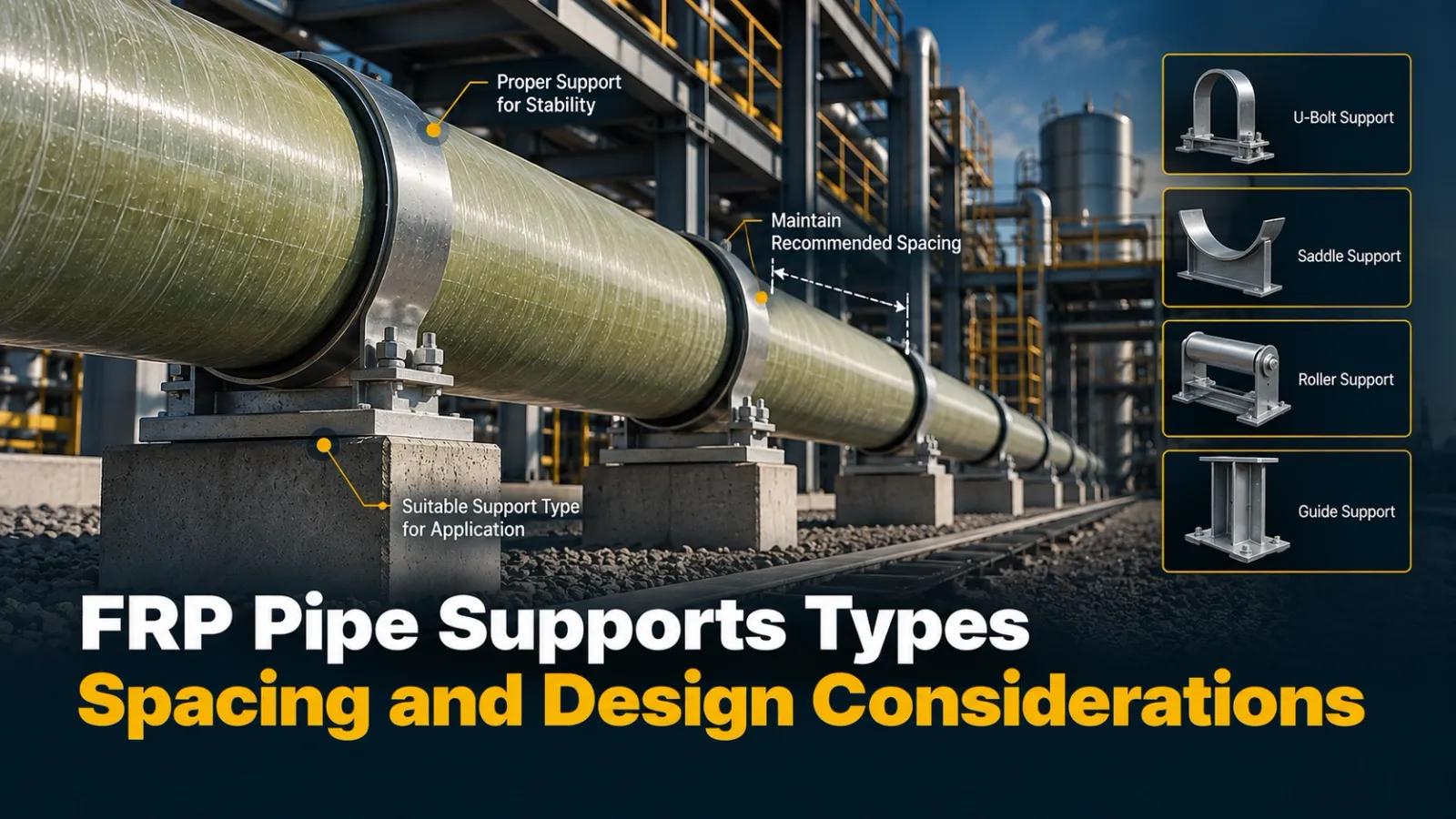
3 Oct 2026
Learn about FRP pipe supports, types, spacing, load considerations, and design factors for safe and reliable FRP piping systems.
Read More →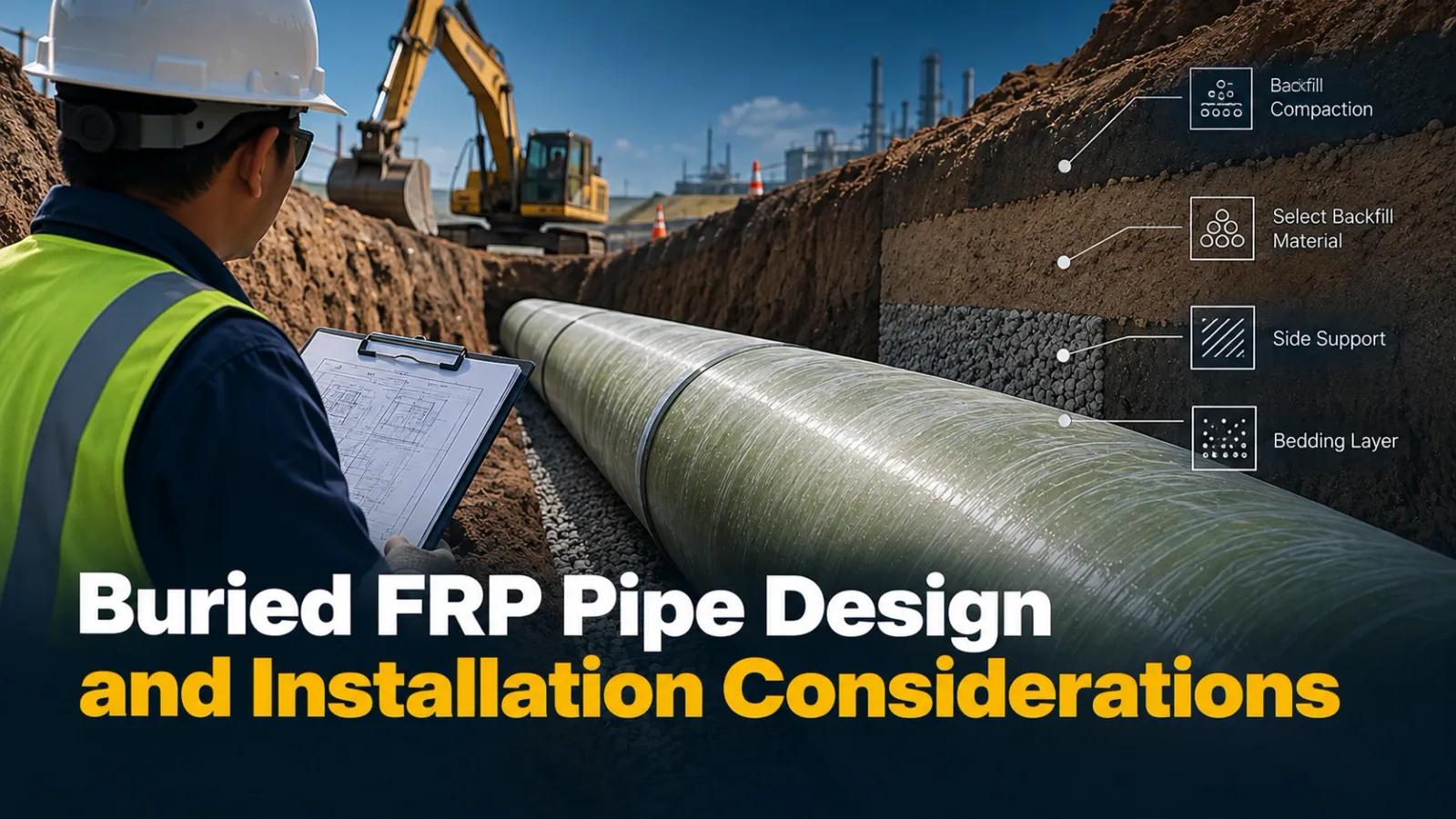
3 Oct 2026
Learn key buried FRP pipe design and installation considerations, including soil loads, burial depth, bedding, backfilling, and external pressure.
Read More →
30 Sept 2026
Learn how FRP grating is used in chemical plants, including applications, corrosion resistance, load capacity, resin selection, molded vs pultruded grating, and key selection factors.
Read More →