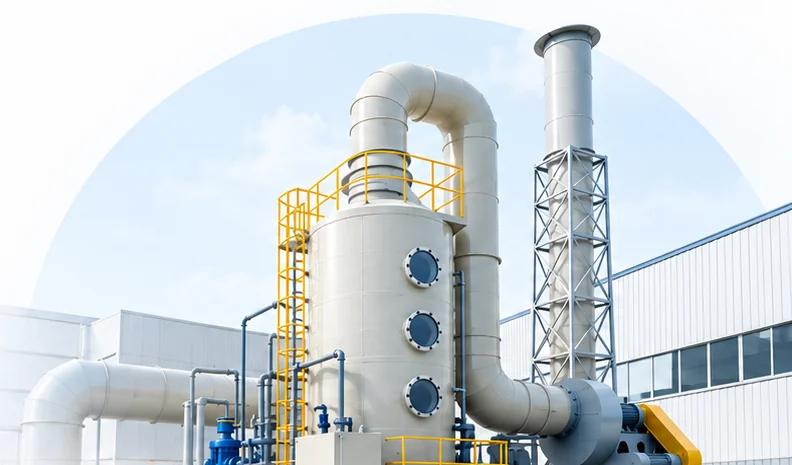
Scrubber have been engineered to remove corrosive gases and liquid from the air that contains either a single pollutant or a combination of pollutants. All GAJA Scurbber has been designed to achieve optimal efficiency in removing the pollutants and is designed to be corrosion-resistant with minimum maintenance Scrubber is designed meticulously by our professional engineers to prevent corrosion on the scrubber by utilizing non-metal materials(FRP/PP/PVC/PVDF) on the main unit and blowers. Moreover, our scrubber has a compact package for an easy installation and a pull or push system for the ease of usage.
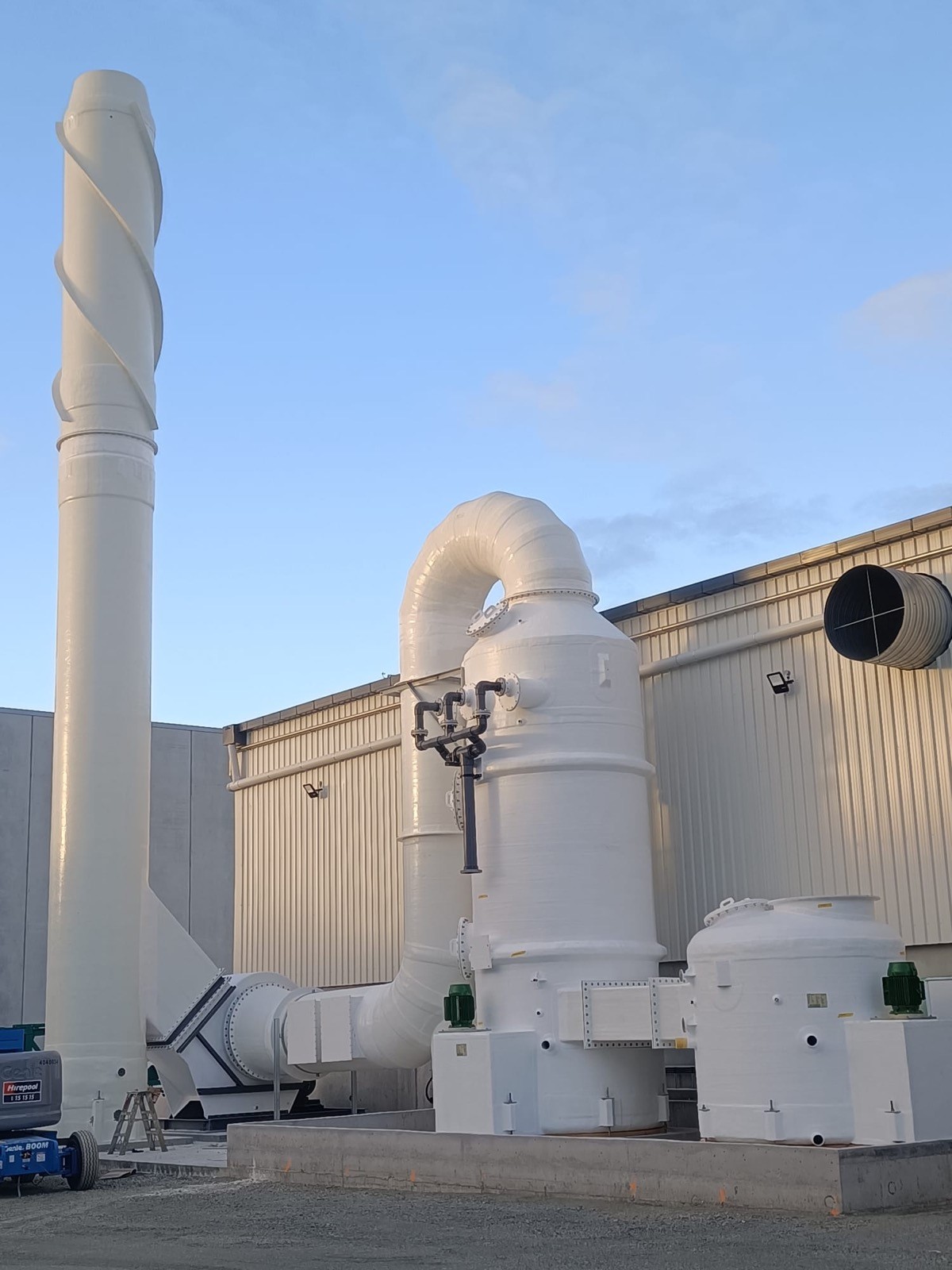
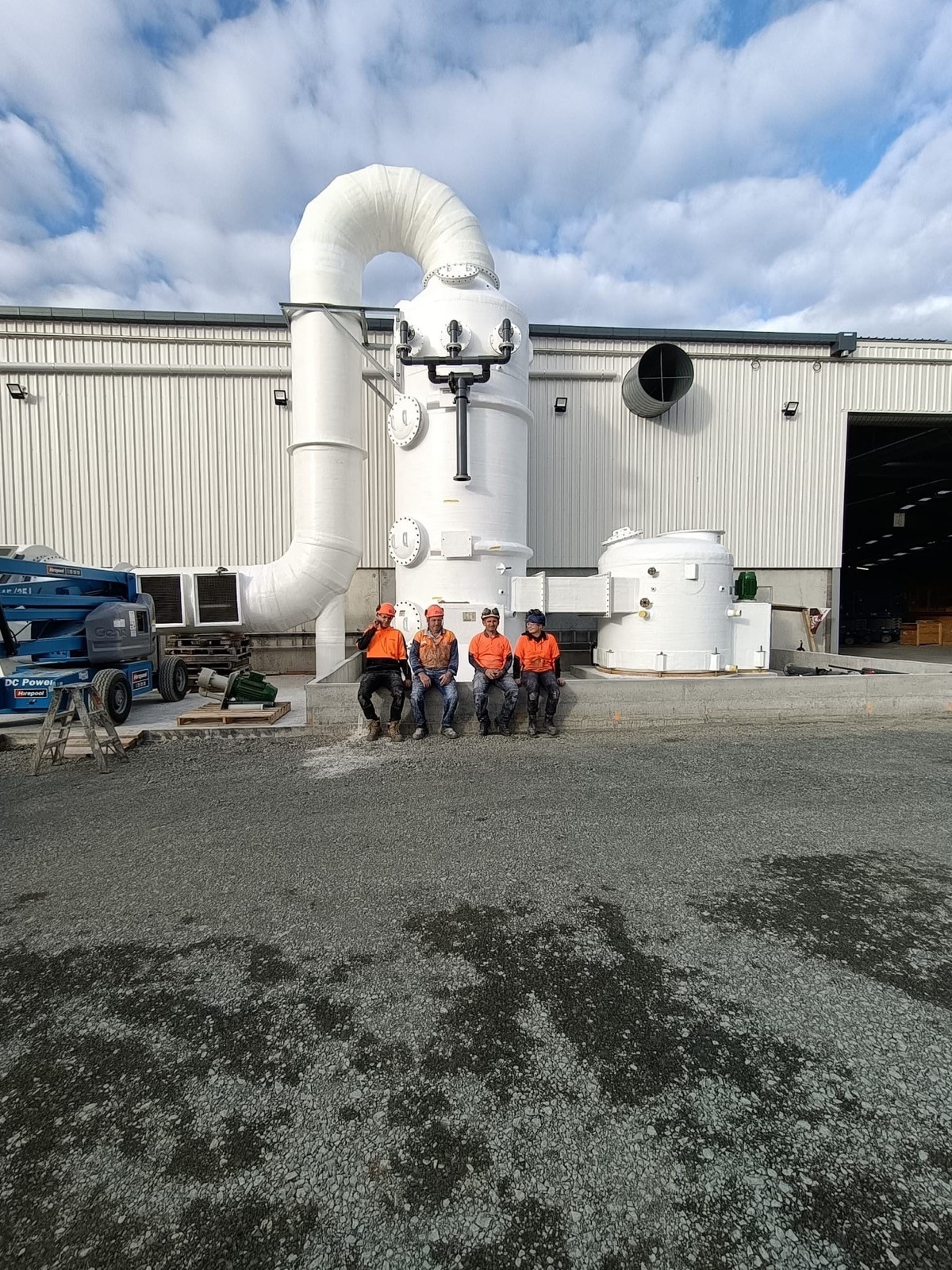
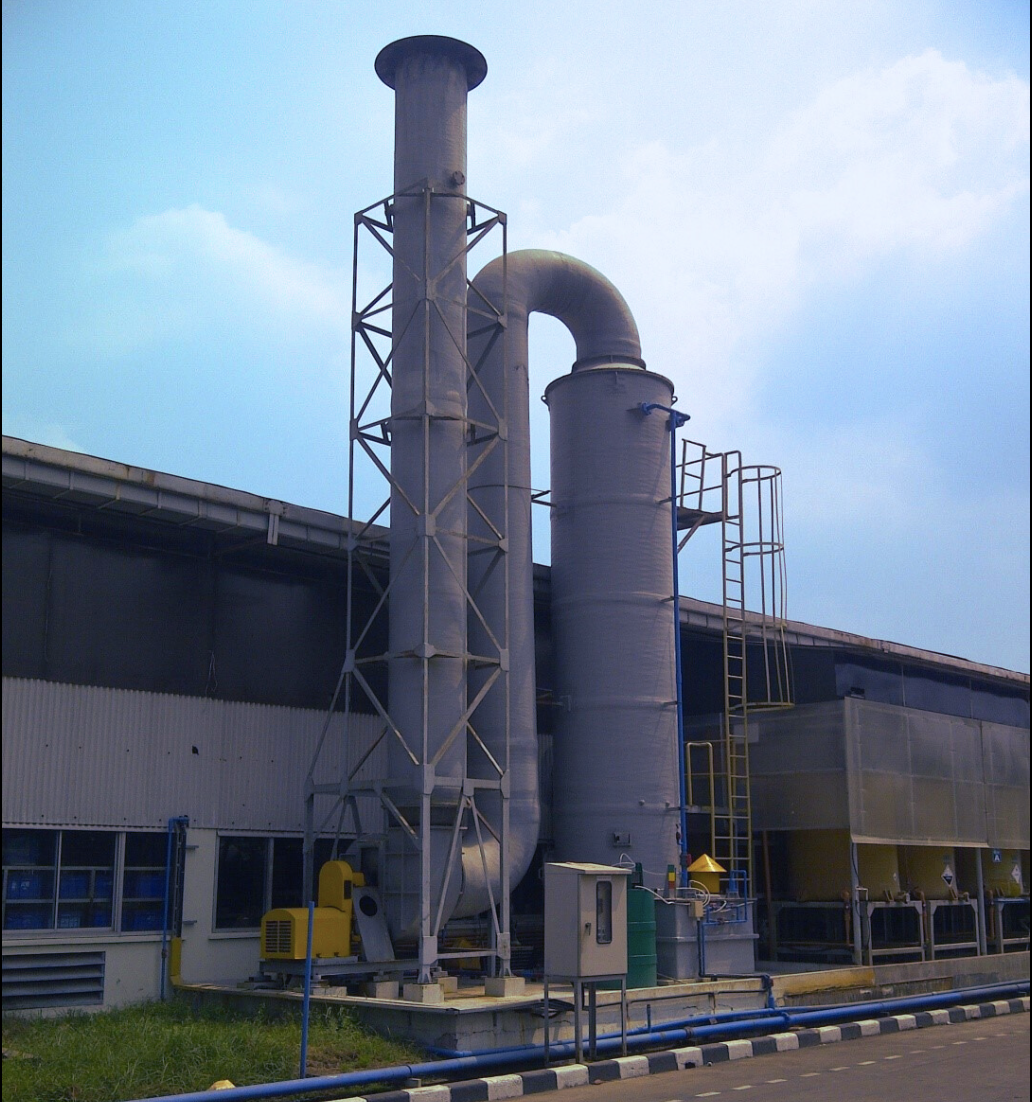
GAJA scrubbers use a wet scrubbing process to capture harmful gases before they are released into the atmosphere.
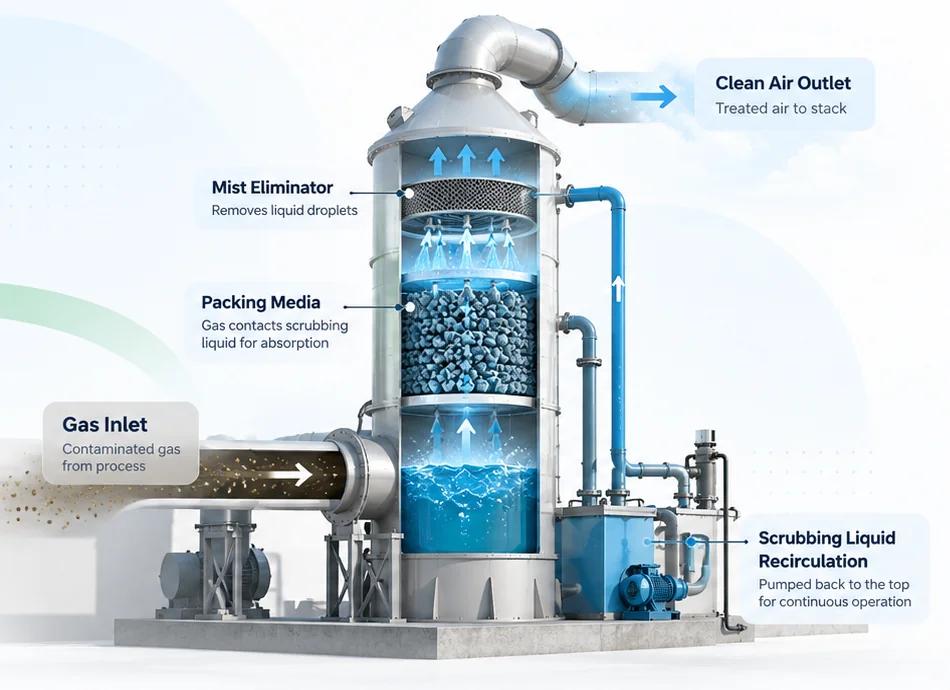
Contaminated gas from your process is drawn into the scrubber by an exhaust fan.
The gas passes through the packing media, where it meets a scrubbing liquid that absorbs and neutralizes pollutants.
A mist eliminator removes remaining liquid droplets from the gas stream.
Treated air is safely released through the stack, while the scrubbing liquid is recirculated for continuous operation.
Since 2007, PT. Graha Adhi Jaya Abadi has specialized in FRP engineering and manufacturing.
Certified ISO 9001, ISO 14001, and ISO 45001, with multi-stage quality checks in every production process.
Removes at least 90% of HCl, Cl₂, HF, NH₃, SO₂, H₂S, H₂SO₄, CrO₃, and NaOH, and at least 80% of mercury mist.
Built with non-metal materials for long service life with minimal maintenance.
Designed to match your pollutant characteristics, gas volume, and operating conditions.
One team handles design planning, manufacturing, installation, and after-sales support.
Experienced in large-scale infrastructure projects, including supplying GRP pipe for MRT Jakarta Phase 2, and serving markets in Japan, South Korea, Malaysia, Papua New Guinea, and New Zealand.
From the first consultation to after-sales support, our engineering team handles every stage of your scrubber project.
Share your pollutant type, gas volume, and operating conditions with our engineers.
Our team visits your facility to assess the installation area and existing ducting.
We design the scrubber system and send a technical proposal with a quotation.
The scrubber is fabricated in our own workshop using corrosion-resistant non-metal materials.
Our team installs, tests, and makes sure the system runs at optimal efficiency.
Maintenance and technical support to keep your system performing over the long term.
A wet scrubber is an air pollution control system designed to remove harmful pollutants from industrial exhaust air. Its main function is to reduce corrosive gases, chemical vapors, liquid droplets, and certain particulate contaminants before the treated air is released into the atmosphere.
GAJA wet scrubbers are designed to handle various pollutants depending on the application and system design. These may include corrosive and hazardous gases such as HCl, Cl₂, HF, NH₃, SO₂, H₂S, H₂SO₄, CrO₃, NaOH, and mercury mist, as well as other single or combined pollutants generated in industrial processes.
Yes. GAJA provides custom wet scrubber design services based on the customer’s process conditions, airflow requirements, pollutant characteristics, installation area, and operational needs. Each system can be engineered to match specific industrial applications and performance targets.
GAJA wet scrubber systems are commonly manufactured using corrosion-resistant non-metal materials such as FRP, PP, PVC, and PVDF. These materials are selected to help improve durability, resist chemical corrosion, and reduce maintenance requirements in demanding industrial environments.
Yes. GAJA supports customers from design planning and manufacturing to installation and technical support. Customers can also request a quotation by providing project details such as industry type, pollutant type, airflow capacity, operating conditions, and installation requirements so the GAJA team can recommend a suitable wet scrubber solution.
Discuss your pollutant characteristics, operating conditions, and project requirements with the GAJA engineering team.