Buried FRP pipe is used in underground piping systems where corrosion resistance, structural performance, and long-term durability are important considerations. Fiber Reinforced Plastic (FRP) pipe can be designed for applications involving water, wastewater, chemicals, and other industrial fluids.
Unlike above-ground piping, an underground FRP pipe is affected not only by internal pressure but also by soil loads, burial depth, groundwater, traffic loads, and the quality of surrounding backfill. These factors can influence pipe deflection and long-term structural performance.
For this reason, selecting a buried FRP pipe requires more than choosing the correct pipe diameter and pressure rating. Pipe stiffness, soil conditions, trench preparation, bedding, embedment, backfilling, and installation procedures should also be evaluated during the design stage.
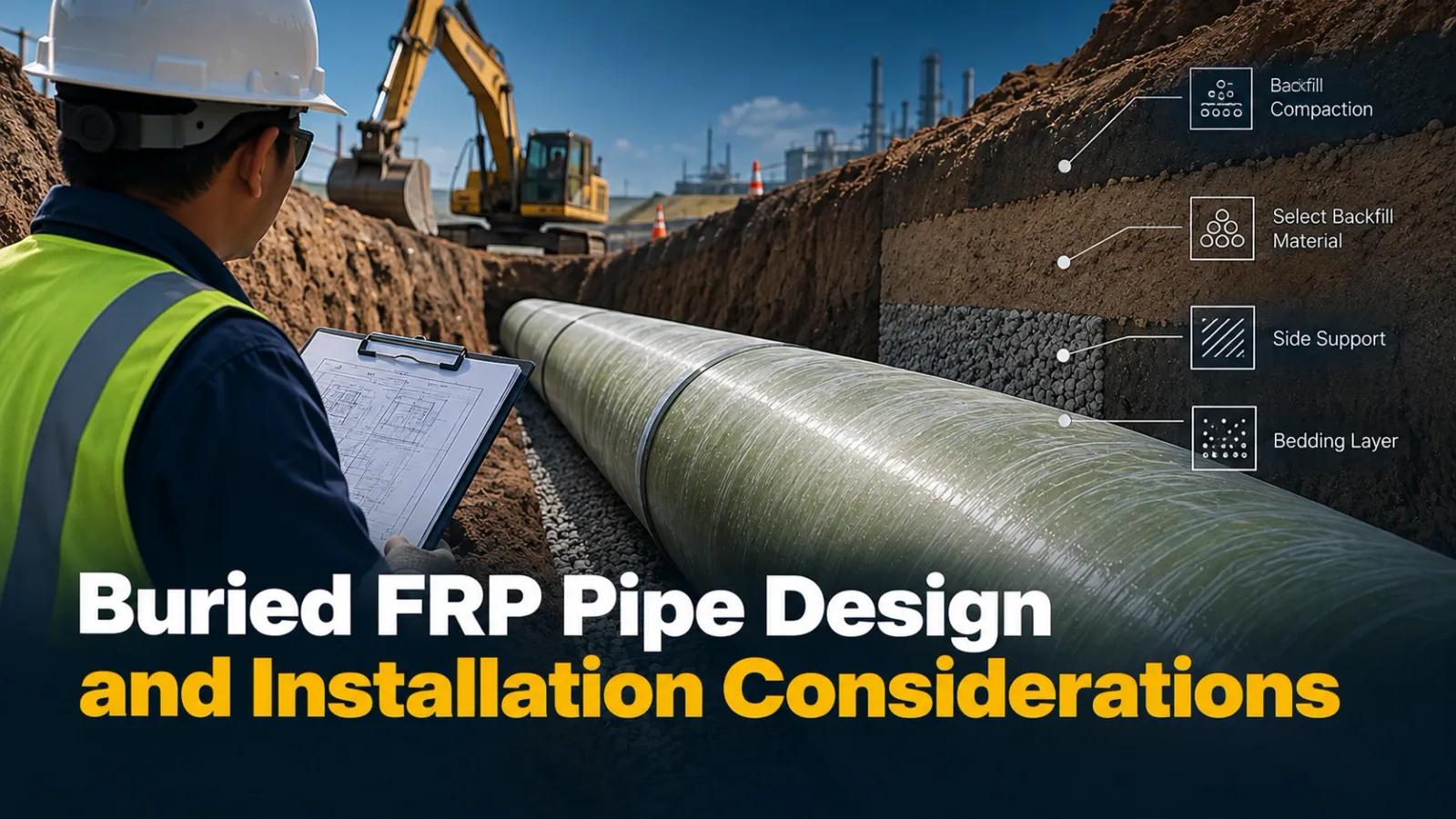
A buried FRP pipe is a fiberglass reinforced plastic pipe installed below ground level to transport water, chemicals, wastewater, or other fluids. Compared with metallic piping, FRP can offer corrosion resistance and relatively low weight, making it relevant for underground applications where moisture and aggressive soil conditions may be concerns.
However, installing an underground FRP pipe is not simply a matter of placing the pipe inside a trench and covering it with soil. The pipe and surrounding soil work together as a structural system. Trench dimensions, bedding, soil conditions, backfill quality, pipe stiffness, burial depth, groundwater, and external loads should therefore be evaluated during design.
ASTM D3839-25 is the current ASTM guide specifically addressing underground installation of fiberglass-reinforced thermosetting-resin pipe. It covers considerations including trenching, pipe placement, joining, bedding, embedment, backfill, and monitoring deflection levels.
Depending on the pipe design and service requirements, buried FRP pipes can be considered for various industrial and infrastructure applications, including:
The required specification depends on the fluid being transported, operating pressure and temperature, soil characteristics, installation depth, and expected external loads.
For projects requiring corrosion-resistant piping, FRP Pipe & Fittings can be considered as part of an engineered piping system. GAJA's project portfolio includes FRP pipe and fittings supplied for applications such as MRT Jakarta Phase 2 and the Bondi STP Ventilation project for Sydney Water.
Designing a buried FRP pipe requires consideration of both internal operating conditions and external loading.
Once an FRP pipe is installed underground, the pipe is subjected to loads from the surrounding soil. Additional loads may come from vehicles, construction equipment, groundwater, or structures located above the pipeline.
Fiberglass pipe is generally considered a flexible pipe system in buried applications, where the surrounding soil provides an important part of the structural support. ASTM F1668 explains that appropriate soil support and compaction are important for buried fiberglass and other plastic pipes. Therefore, the pipe specification should not be selected independently from the proposed installation conditions.
FRP pipe burial depth affects the amount of soil cover and resulting external loading. A deeper installation generally introduces greater soil loading, while shallow installations may require additional consideration of traffic or other surface loads.
There is no single burial depth that applies to every FRP pipe. The appropriate depth should be evaluated based on pipe diameter, stiffness, soil characteristics, groundwater conditions, surface loading, and project requirements.
FRP pipe stiffness is an important consideration for underground applications because the pipe may experience external loading even when internal pressure is relatively low.
The selected stiffness should correspond to the anticipated installation conditions rather than being chosen solely according to pipe diameter or pressure rating. ASTM D3839 also makes clear that product-performance parameters such as minimum pipe stiffness and maximum service deflection are outside the scope of the installation guide and should be established through applicable product standards or project specifications.
A buried FRP pipe may still operate as a pressure pipeline. Therefore, engineers should evaluate:
Pressure class and stiffness class address different design requirements. A pipe that meets the required internal pressure rating does not automatically mean that it is suitable for the proposed underground loading conditions.
Proper installation is essential because the surrounding soil provides an important part of the support system.
The trench should provide sufficient space for placing the pipe, installing joints, and compacting the required embedment material. The trench bottom should also provide stable and continuous support.
Poor trench preparation can create localized loading or inadequate support beneath the pipe. The required trench configuration should therefore follow the project design and manufacturer's installation recommendations.
FRP pipe bedding provides the initial support beneath the pipe. Suitable embedment material should be placed around the pipe according to the project specification and manufacturer's recommendations.
Particular attention should be given to the haunch area around the lower sides of the pipe. Proper placement and compaction in this region helps establish the soil support required for the pipe-soil structural system.
FRP pipe backfilling should be carried out progressively rather than simply filling the entire trench at once. Embedment and backfill materials should be placed and compacted according to the specified procedure.
ASTM D3839-25 specifically includes bedding, embedment, backfill, and compaction within its underground fiberglass pipe installation guidance. Improper backfilling can affect soil support and may contribute to excessive pipe deflection or localized deformation.
Installation quality should also be verified through appropriate inspection and monitoring. ASTM D3839-25 includes monitoring deflection levels as part of its underground installation guidance. This is particularly relevant for larger-diameter or lower-stiffness pipes where installation conditions can have a significant influence on structural behavior.
Groundwater can change the loading conditions around a buried FRP pipe. Buoyancy, saturated soil, reduced soil stability, and changes in effective soil support may need to be evaluated where groundwater is present.
Special site conditions such as expansive soils, collapsing soils, landfills, or waterlogged ground may require site-specific installation procedures. ASTM F1668 identifies these conditions as situations that require additional consideration rather than relying solely on general buried-pipe installation practices. For this reason, geotechnical information should be considered alongside the pipe design before finalizing the installation method.
Before specifying an underground FRP pipe, project teams should ideally establish:
The final pipe selection should be based on the complete pipe-soil system and actual site conditions. ASTM D3839-25 notes that installation recommendations may need to be modified for specific job or regional conditions, while the manufacturer or project engineer is responsible for verifying that the specified pipe can provide satisfactory long-term performance for the intended application.
Choosing the right manufacturer is another consideration when developing an underground FRP piping system. GAJA's project portfolio includes manufacturing FRP Pipe and Fittings for MRT Jakarta Phase 2, as well as FRP Pipe, Fittings, and Duct for the Bondi STP Ventilation project commissioned by Sydney Water. GAJA also lists pipe and fittings projects for industrial applications such as the Acid Gas Spool Pipe project for Newcrest Mining in Papua New Guinea.
This project experience covers different FRP applications and should not be interpreted as proof that every GAJA pipe is suitable for every buried installation. The required diameter, pressure, stiffness, installation depth, soil conditions, and transported fluid still need to be evaluated for each project.
For projects involving buried FRP pipe, contact GAJA to discuss your FRP piping requirements, project conditions, dimensions, and application before determining the final specification.
Yes. FRP pipe can be designed for underground applications, provided the pipe specification and installation method are appropriate for the soil, loading, groundwater, burial depth, and operating conditions.
Important factors include pipe stiffness, diameter, burial depth, soil conditions, external loads, groundwater, internal pressure, temperature, and the characteristics of the transported fluid.
There is no universal maximum burial depth for every FRP pipe. The allowable depth should be determined through project-specific evaluation considering soil loading, pipe stiffness, installation conditions, and other external loads.
Backfilling helps establish the soil support around the pipe. Proper embedment and compaction are important because buried FRP pipe can rely on the surrounding soil for structural support.
ASTM D3839-25 is the current ASTM guide specifically covering underground installation of fiberglass-reinforced thermosetting-resin pipe. It addresses trenching, pipe placement, joining, bedding, embedment, backfill, and deflection monitoring.
3 Oct 2026
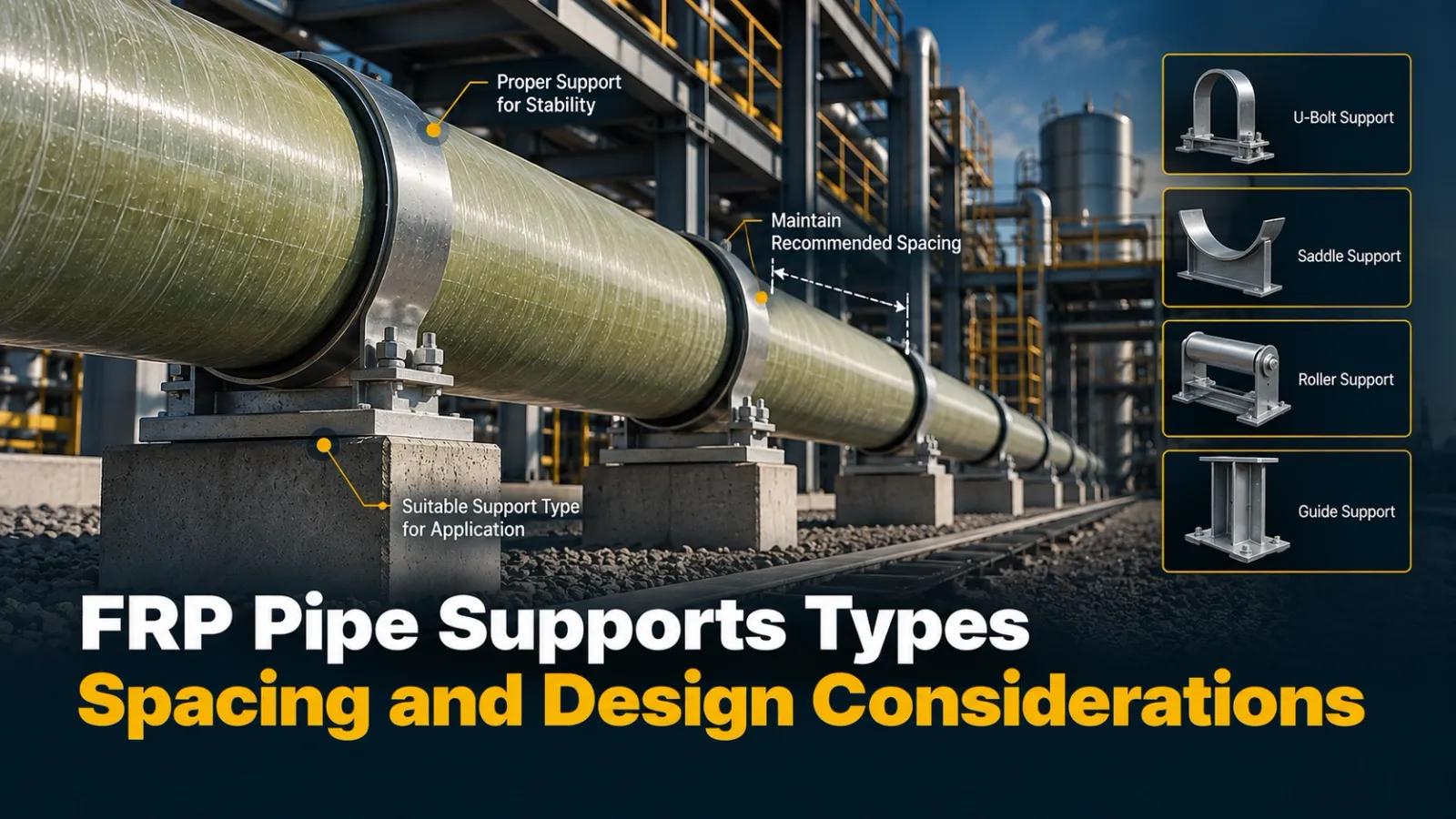
Learn about FRP pipe supports, types, spacing, load considerations, and design factors for safe and reliable FRP piping systems.
Read More →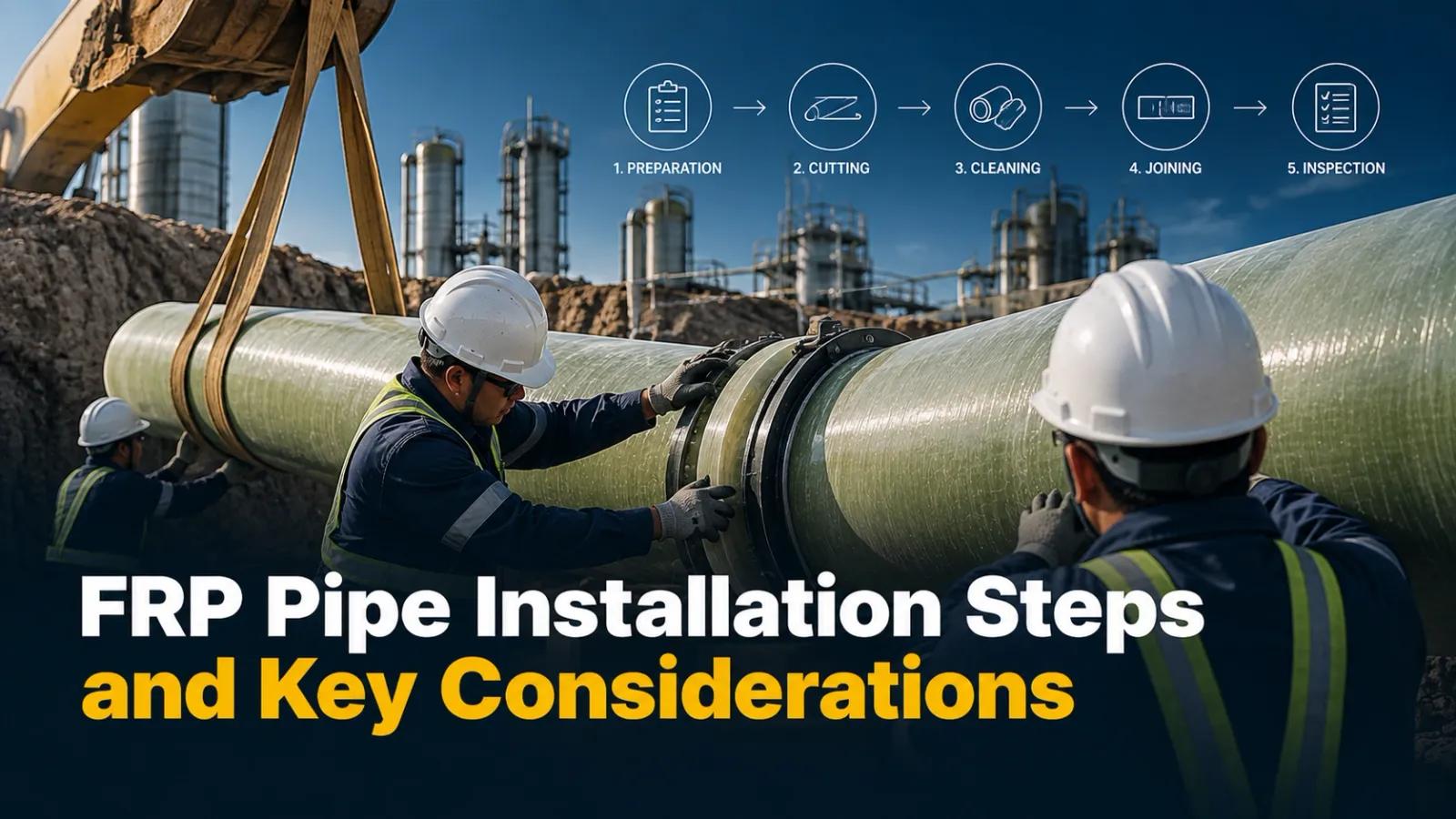
3 Oct 2026
Learn FRP pipe installation steps, joining methods, support requirements, alignment, and key considerations for safe and reliable piping systems.
Read More →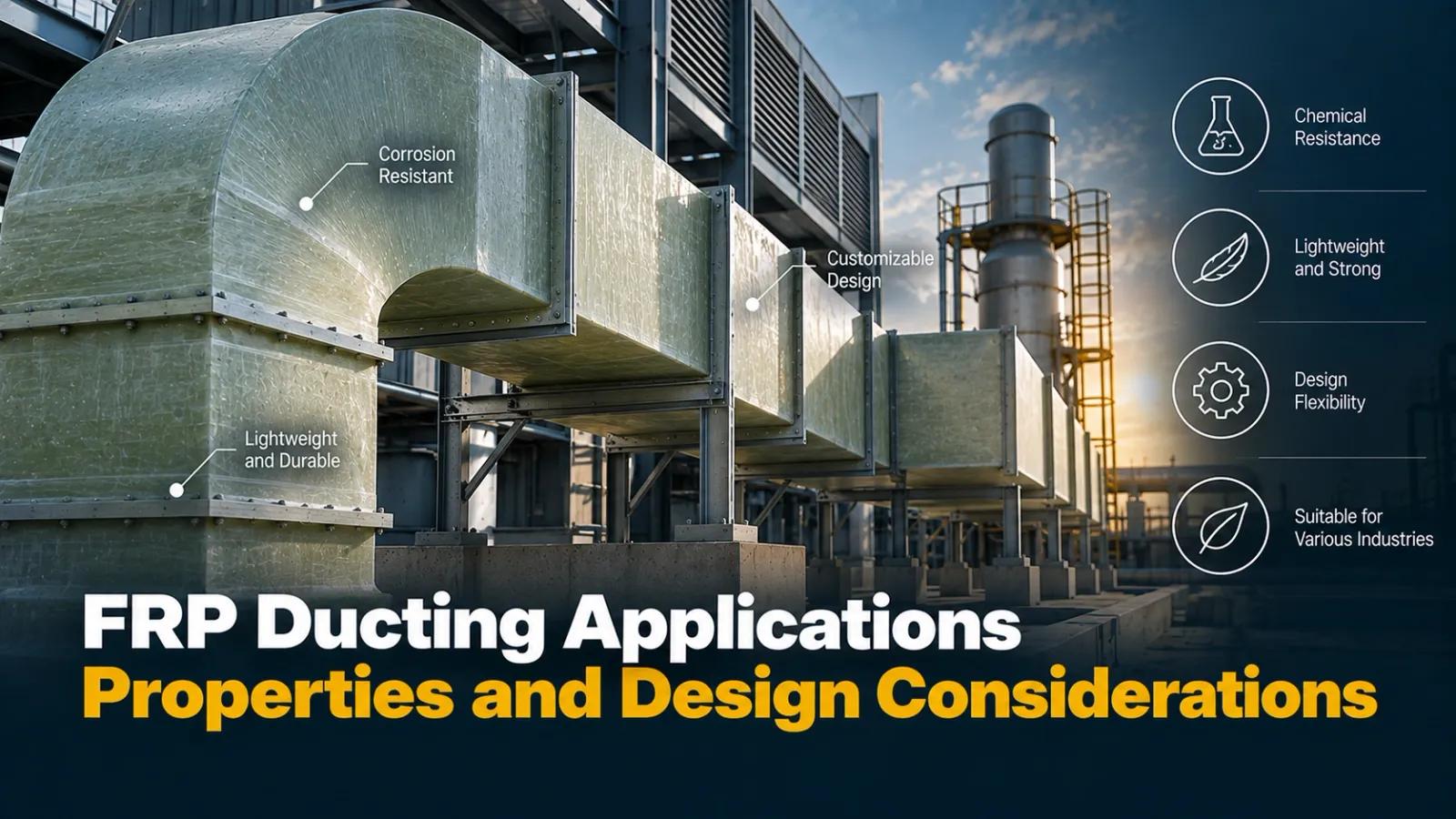
3 Oct 2026
Learn about FRP ducting applications, properties, material selection, and key design considerations for corrosive industrial environments.
Read More →