FRP pipe installation requires careful preparation, proper joining techniques, accurate alignment, and adequate pipe support. Fiber Reinforced Plastic (FRP) pipes are used in various industrial applications because of their corrosion resistance, relatively low weight, and ability to be manufactured for different operating conditions.
However, installing an FRP piping system is not simply a matter of connecting one pipe to another. Pipe dimensions, resin system, pressure and temperature requirements, chemical exposure, joint configuration, support spacing, and site conditions should all be considered before installation. Following the appropriate FRP pipe installation procedure can help reduce installation problems and support the long-term performance of the piping system.
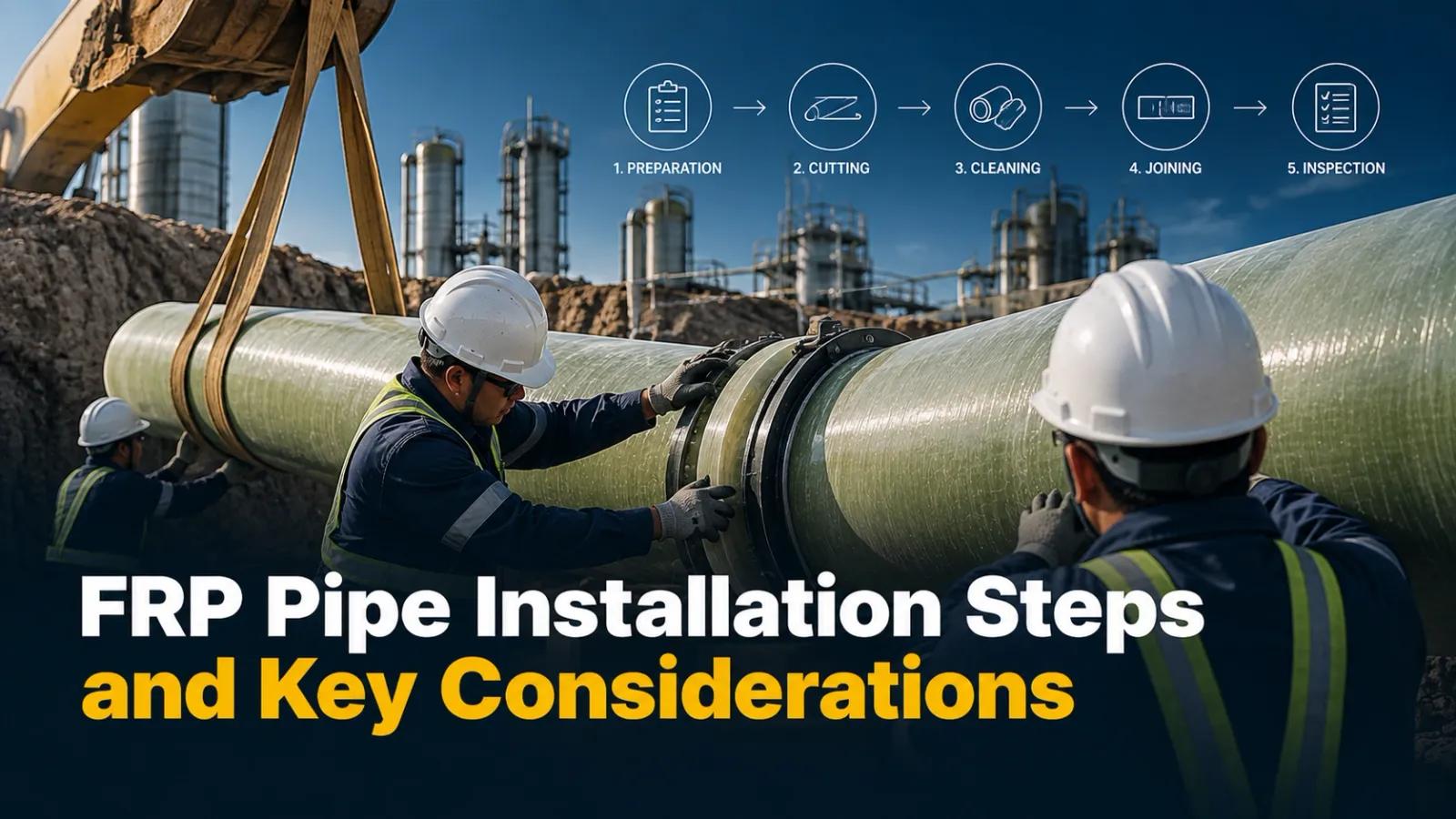
FRP pipe installation is the process of preparing, positioning, joining, supporting, and testing fiberglass reinforced plastic pipes and fittings within a piping system. Depending on the project design, FRP pipes may be connected using different methods, including adhesive or bonded joints and flanged connections. The selected connection should be compatible with the pipe and fitting design as well as the operating requirements. Before installation begins, the project team should review the manufacturer's installation instructions, approved drawings, pipe specifications, and applicable engineering requirements.
A systematic installation process can help ensure that the piping system is assembled correctly. The main FRP pipe installation steps generally include the following.
Before installation, inspect the work area and confirm that the required pipes, fittings, joints, supports, and installation tools are available. The installation area should provide sufficient space for handling and positioning the pipe. Pipes and fittings should also be stored in a way that prevents unnecessary impact, contamination, or damage.
Each pipe and fitting should be inspected before installation. Look for visible cracks, delamination, damaged ends, surface defects, or other conditions that could affect installation. Dimensions and identification markings should also be checked against the approved project specifications. Damaged components should be evaluated before being incorporated into the piping system.
When field cutting is required, measurements should be taken carefully to achieve the required pipe length and joint configuration. FRP pipe cutting should use suitable tools and follow the manufacturer's recommendations. After cutting, the pipe end should be prepared according to the specified joining method. Poorly prepared pipe ends can affect the quality of the final FRP pipe connection.
Proper FRP pipe alignment is important before making permanent joints. Pipes should be positioned according to the approved layout without forcing components into alignment. Misalignment can place unnecessary stress on joints, fittings, and supports. Flanges should also be properly aligned before bolts are tightened.
The next step is connecting the pipe sections and fittings using the specified FRP pipe joining method. For bonded connections, joint surfaces must be properly prepared and the recommended adhesive or resin system should be applied according to the manufacturer's procedure. For flanged connections, the flange faces should be aligned correctly and bolts tightened using an appropriate sequence and torque requirements. The exact joining procedure can vary depending on the pipe design and manufacturer.
Proper FRP pipe support helps maintain the designed position of the piping system and controls movement under operating conditions. Support spacing should not be selected based solely on pipe diameter. Pipe size, wall construction, fluid density, operating temperature, span, and project requirements may affect the required support arrangement. The pipe should be supported without creating excessive point loading or damaging the FRP surface.
After installation, the completed piping system should be inspected before commissioning. The inspection may include checking:
Where specified by the project, pressure or leak testing should be performed according to the approved testing procedure and manufacturer's requirements.
Several factors can influence the performance of an FRP piping system after installation. Proper FRP pipe installation requirements should therefore be established before work begins.
FRP resin systems can be selected for different chemical environments, but chemical resistance is not universal. The chemical type, concentration, temperature, and exposure duration should be reviewed when selecting the pipe specification.
FRP piping can experience movement caused by thermal expansion, operating conditions, or other system effects. Supports, guides, anchors, and expansion arrangements should therefore follow the engineering design.
Although FRP pipes are generally lighter than comparable metallic piping, they should still be handled carefully. Dropping, dragging, or using inappropriate lifting methods can damage the pipe or its ends.
The quality of an FRP pipe joint depends heavily on proper surface preparation and installation. Dirt, moisture, incorrect adhesive application, or inadequate curing can compromise the connection.
Several installation problems can be reduced through proper planning and quality control. Common issues include:
These issues can affect the integrity and service life of the piping system.
The appropriate FRP pipe specification depends on the actual operating environment. Before purchasing or installing the system, project teams should consider:
GAJAINDO provides FRP Pipe & Fittings for industrial applications where FRP piping solutions are required. Selecting the right pipe and fitting configuration should be based on the project's technical requirements rather than pipe size alone.
Proper FRP pipe installation starts with selecting a piping system that matches the project's operating conditions. Pipe specifications, joining methods, support requirements, chemical exposure, and installation conditions should be evaluated before fabrication and field installation. If you need assistance discussing FRP pipe and fittings for your project, contact GAJAINDO to discuss your application, dimensions, operating conditions, and installation requirements.
FRP pipe installation is the process of preparing, positioning, joining, supporting, inspecting, and testing FRP pipes and fittings within a piping system.
The main steps include site preparation, material inspection, pipe cutting, alignment, joining, support installation, inspection, and testing.
FRP pipes can use different connection methods, including bonded or adhesive joints and flanged connections. The appropriate method depends on the pipe design and project requirements.
Yes. Proper supports help maintain pipe position and control movement and loading. Support spacing should follow the engineering design and manufacturer's recommendations.
Check the pipe and fitting condition, dimensions, chemical and temperature requirements, joining method, support arrangement, installation drawings, and applicable manufacturer instructions.
3 Oct 2026
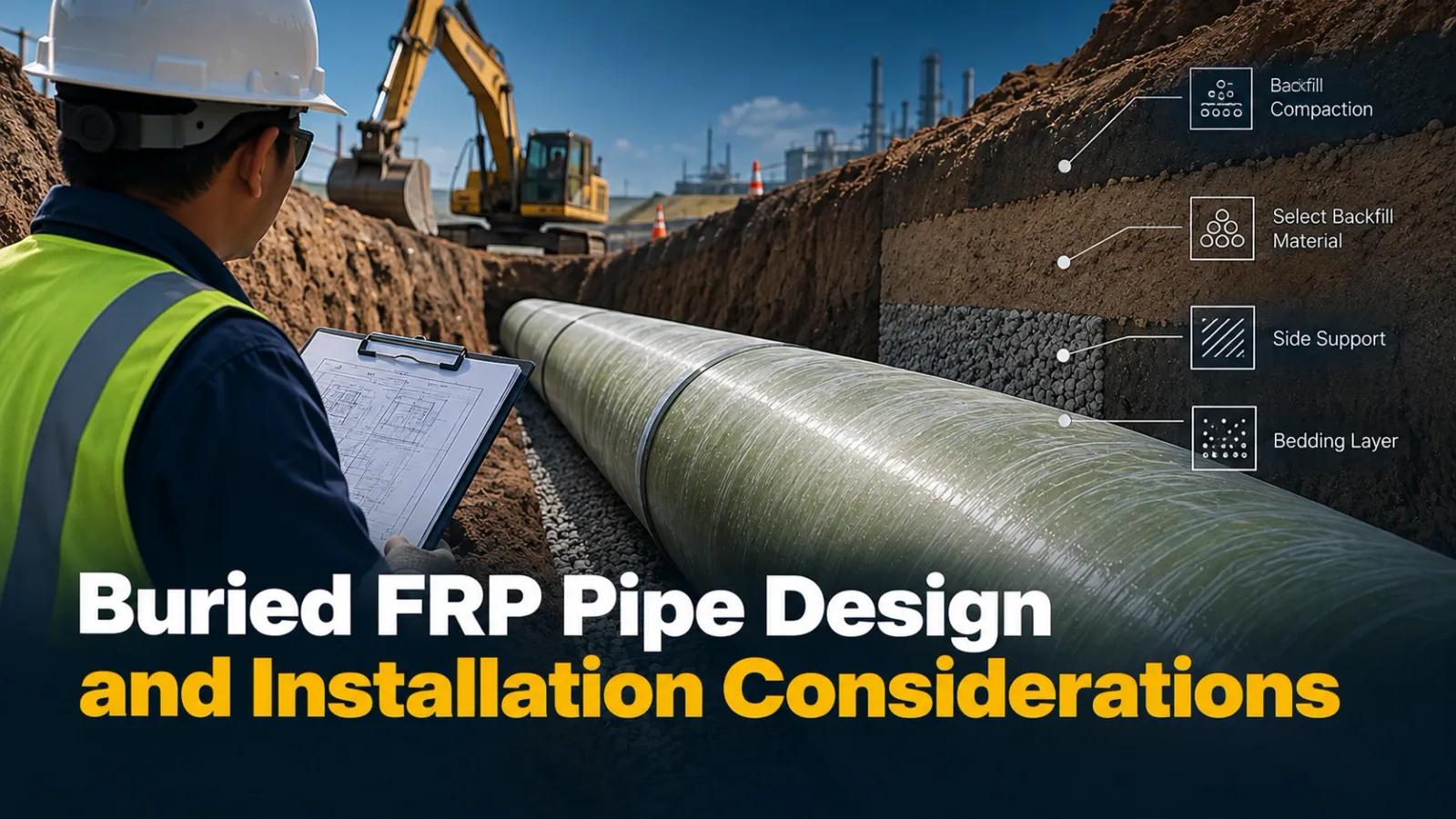
Learn key buried FRP pipe design and installation considerations, including soil loads, burial depth, bedding, backfilling, and external pressure.
Read More →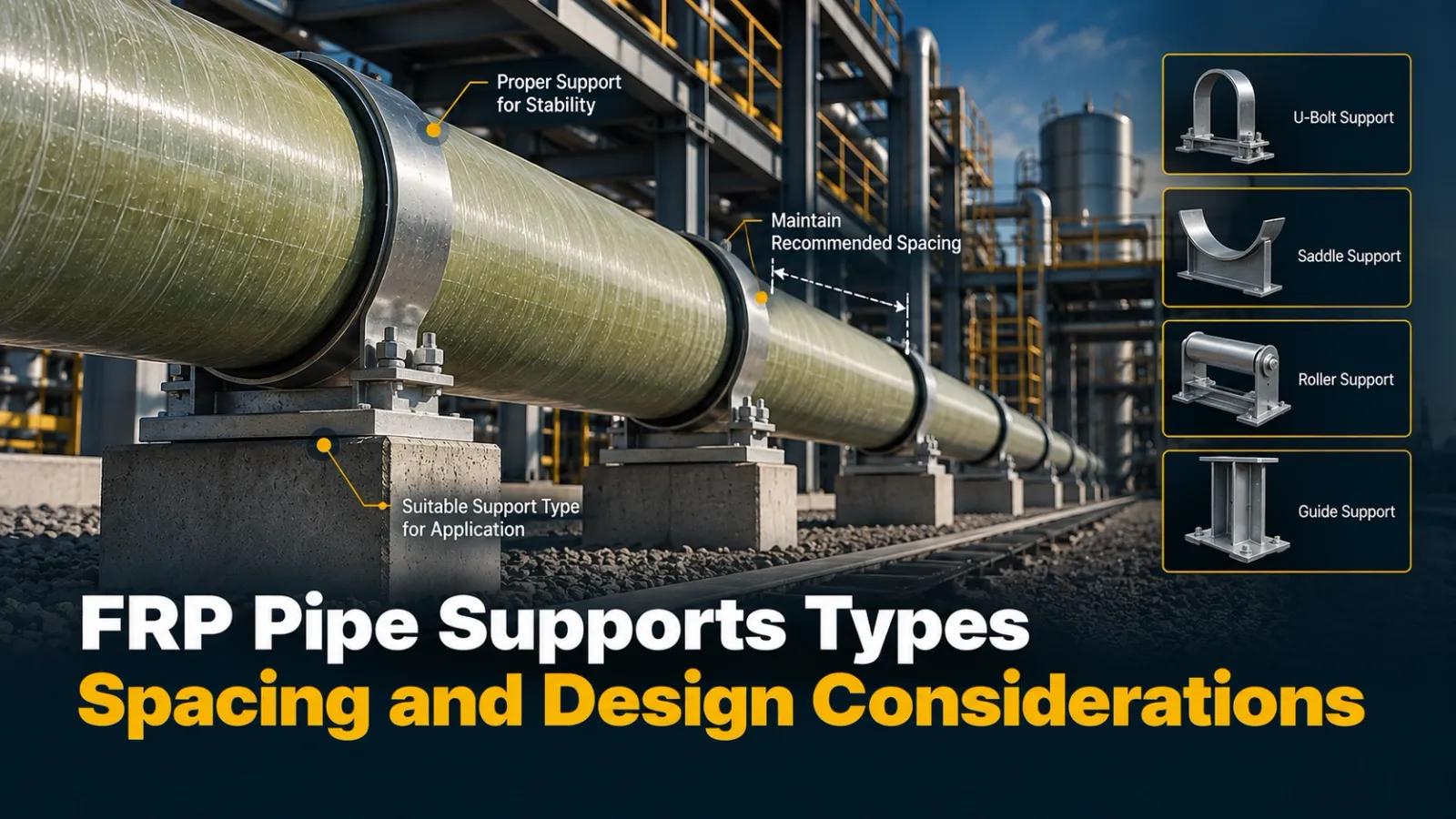
3 Oct 2026
Learn about FRP pipe supports, types, spacing, load considerations, and design factors for safe and reliable FRP piping systems.
Read More →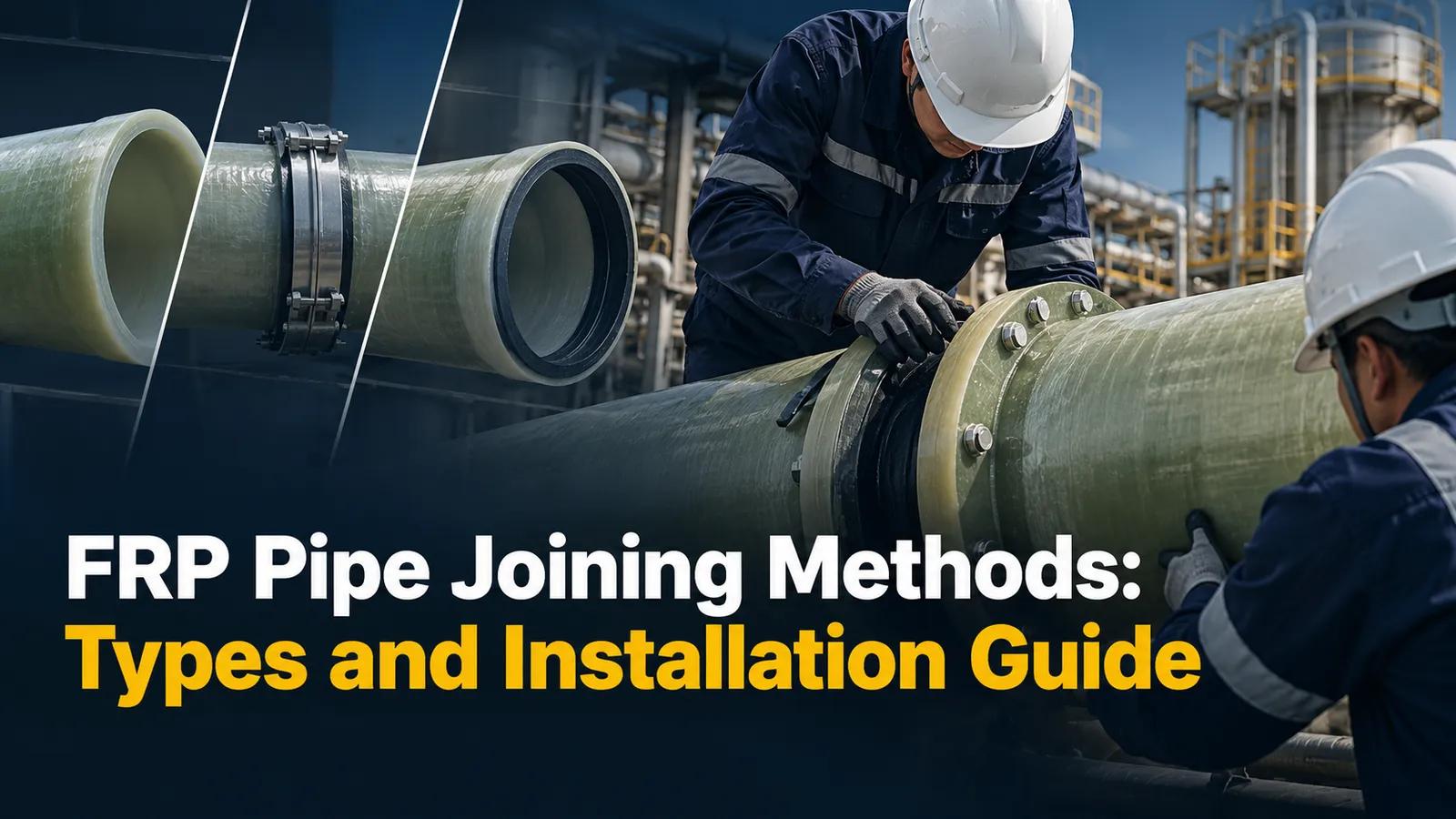
3 Oct 2026
Learn FRP pipe joining methods, including flanged, adhesive, lamination, and mechanical joints, plus key installation considerations.
Read More →