FRP pipe installation methods play an important role in ensuring the safety, durability, and long term performance of industrial piping systems. Proper installation involves pipe handling, joint connections, alignment, support placement, and pressure testing. Each step must follow the manufacturer's specifications to prevent leaks, structural damage, and premature system failure.
Understanding these methods helps engineers, contractors, and project owners select suitable installation techniques for chemical processing plants, water treatment facilities, and other industrial applications.
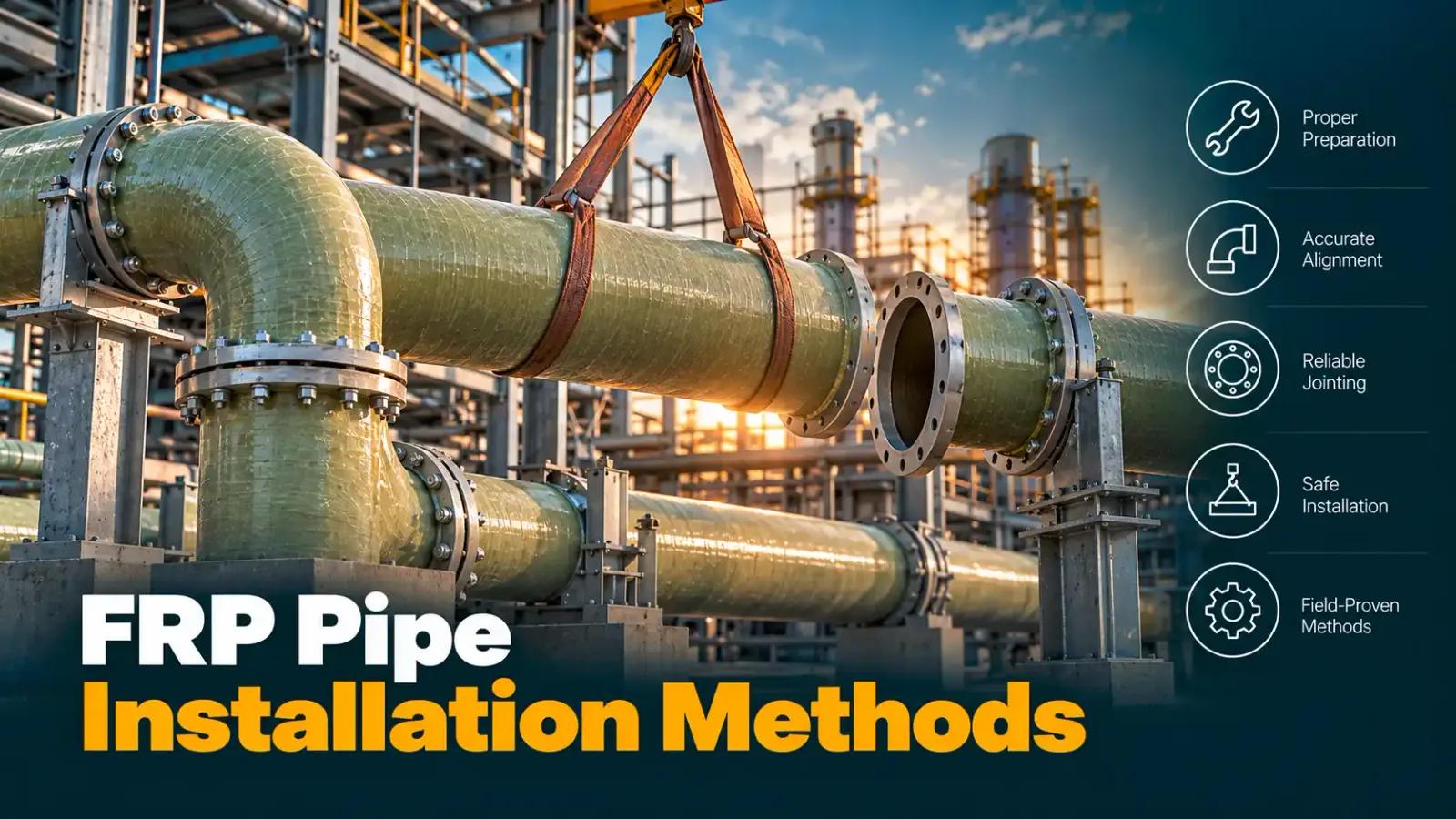
FRP pipe installation refers to the process of assembling and connecting Fiberglass Reinforced Plastic pipes into a complete piping system. Unlike conventional metallic pipes, FRP pipes are manufactured using fiberglass reinforcement combined with polymer resin.
This composite structure provides corrosion resistance, mechanical strength, and relatively lightweight construction. However, proper handling and connection techniques are essential because FRP materials behave differently from steel pipes.
Industrial manufacturers such as GAJA offer FRP Pipe & Fittings designed for chemical transportation, water treatment, and other demanding industrial applications.
Different FRP piping systems require different joining techniques depending on operating pressure, pipe diameter, installation environment, and project specifications.
Adhesive bonding is commonly used to connect compatible FRP pipes and fittings. This method involves applying a specified adhesive to properly prepared connection surfaces.
The pipe ends are aligned and assembled according to the manufacturer's instructions. Once the adhesive has fully cured, the connection forms a rigid joint. Surface cleanliness, correct adhesive preparation, and curing conditions are essential for achieving reliable bonding performance.
Laminated joining, sometimes called butt and wrap joining, connects FRP pipe sections using fiberglass reinforcement and resin. The process involves preparing the pipe surfaces before applying reinforcement layers around the joint. These layers create a structural connection after curing.
This method is commonly considered for industrial piping systems requiring customized connections or field fabricated components. Installation should be performed by qualified technicians following approved lamination procedures.
Mechanical couplings connect FRP pipes using engineered coupling components, which may include elastomeric seals. Depending on the coupling design, this method can simplify assembly and allow limited movement or angular deflection within specified limits.Proper alignment, gasket inspection, and manufacturer approved assembly procedures are important to prevent leakage and connection damage.
Flanged connections are often used where FRP piping systems connect to pumps, valves, tanks, and other equipment. The connection typically uses compatible flanges, gaskets, and bolts to create a sealed joint.
Correct bolt tightening sequences and specified torque values help prevent uneven loading. Excessive tightening should be avoided because it may damage composite flanges.
Although installation requirements vary between projects, the following steps provide a general overview of the FRP piping installation process.
Before installation, inspect FRP pipes and fittings for cracks, scratches, deformation, or transportation damage. Review engineering drawings, pipe specifications, installation requirements, and site conditions. Pipes should be stored on suitable supports and protected from accidental impact.
Position each pipe section according to the approved piping layout. Proper alignment reduces unnecessary stress on joints and fittings. Suitable lifting equipment should be used for larger pipes to avoid damage during handling.
Select the joining method specified for the piping system, whether adhesive bonding, lamination, mechanical coupling, or flanged connections. Ensure all connection surfaces are prepared correctly and that the required jointing materials are compatible with the pipe system. For bonded connections, allow sufficient curing time before applying pressure or mechanical loads.
FRP pipes require properly designed supports to control movement, vibration, and mechanical loads. Support spacing depends on pipe diameter, stiffness, operating conditions, and manufacturer recommendations. For underground installations, suitable bedding and controlled backfilling are also essential to maintain structural stability.
After completing installation, inspect pipe alignment, connections, supports, and joint conditions. Hydrostatic pressure testing is commonly performed to verify system integrity. Testing pressure, duration, and safety procedures must follow the approved project specifications. The system should only be commissioned after the required inspections and acceptance tests are completed.
FRP piping installation is commonly required in chemical plants, wastewater treatment facilities, industrial processing systems, and infrastructure projects. Installation planning becomes especially important for large diameter pipelines, where handling, connection design, and structural support require careful coordination.
For example, GAJA's MRT Jakarta Phase 2 project involved GRP pipe engineering, on-site fabrication, installation, and supervision. Another application is the Bondi Sewage Treatment Plant project in Australia, where GAJA supplied FRP piping and ducting for ventilation and odour management systems. These projects illustrate how fiberglass piping solutions can be adapted to different industrial requirements.
Proper FRP pipe installation starts with selecting the right materials, connection methods, and engineering specifications. Working with an experienced manufacturer can help ensure the piping system meets project requirements.
GAJA provides customizable Rock Plast® FRP Pipe & Fittings, supported by design planning, manufacturing, and installation assistance. Contact GAJA to discuss suitable FRP piping solutions for your industrial project.
Yes. FRP pipes can be installed underground when designed for the expected soil loads, burial depth, groundwater conditions, and operating pressure. Proper bedding and backfilling are essential.
Yes, certain FRP pipes can be cut on site using approved equipment and procedures. Cutting must follow manufacturer recommendations to prevent material damage and ensure proper joint preparation.
Curing time depends on the resin or adhesive system, ambient temperature, and installation conditions. Always follow the manufacturer's specified curing requirements before testing.
Some installation methods require specialized cutting equipment, alignment tools, laminate preparation materials, or controlled tightening equipment. Tool requirements depend on the selected jointing system.
3 Oct 2026
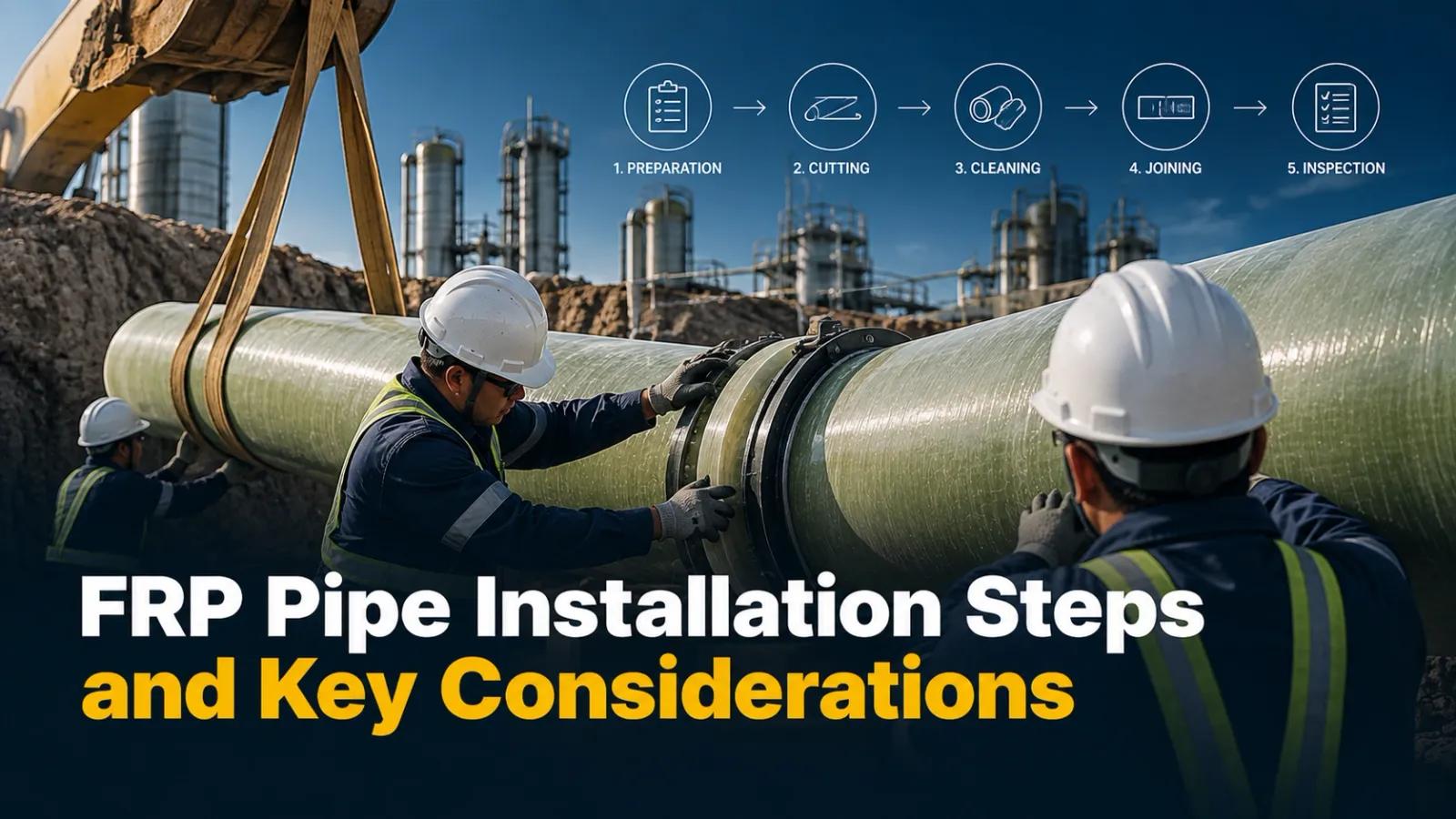
Learn FRP pipe installation steps, joining methods, support requirements, alignment, and key considerations for safe and reliable piping systems.
Read More →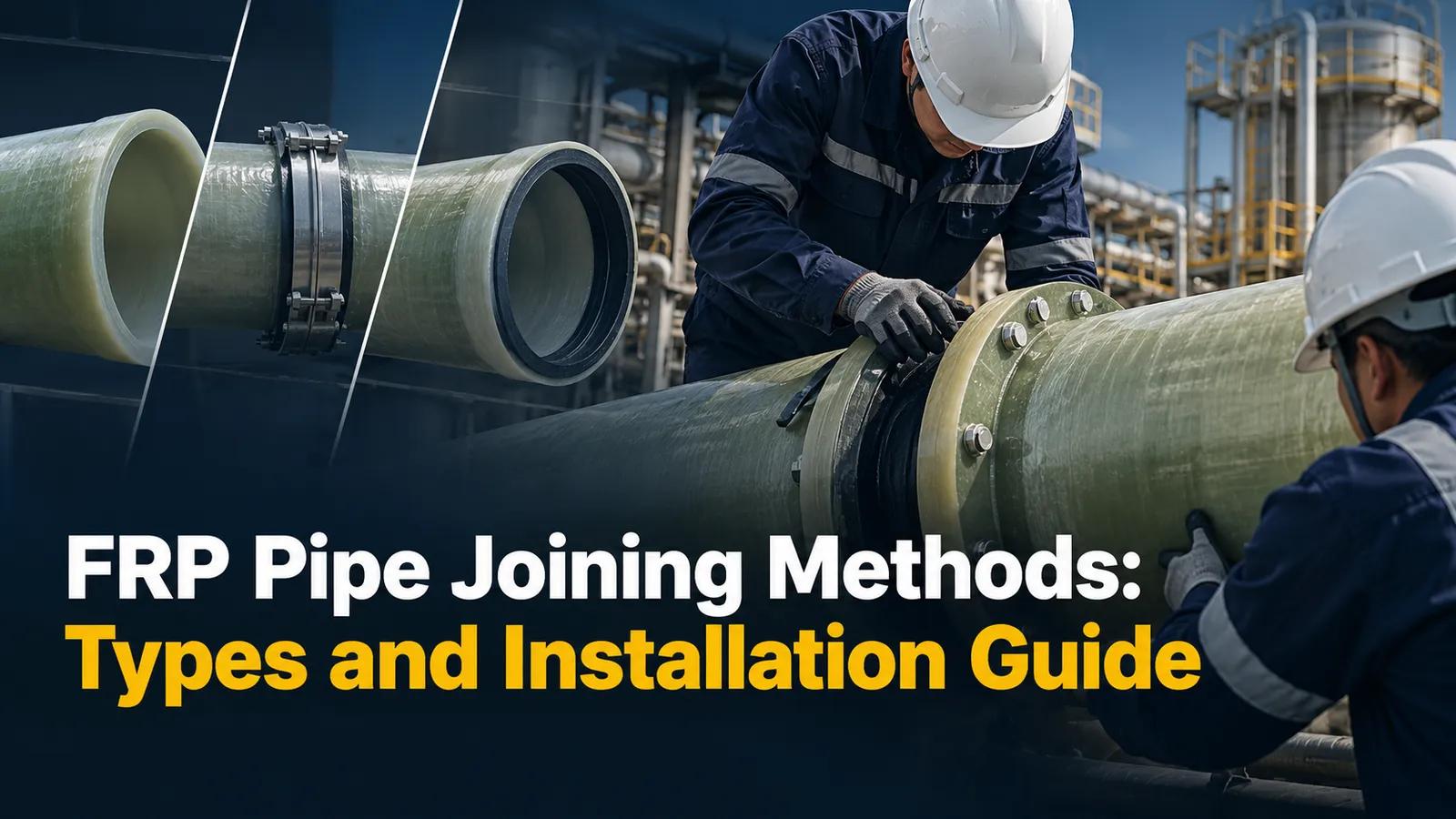
3 Oct 2026
Learn FRP pipe joining methods, including flanged, adhesive, lamination, and mechanical joints, plus key installation considerations.
Read More →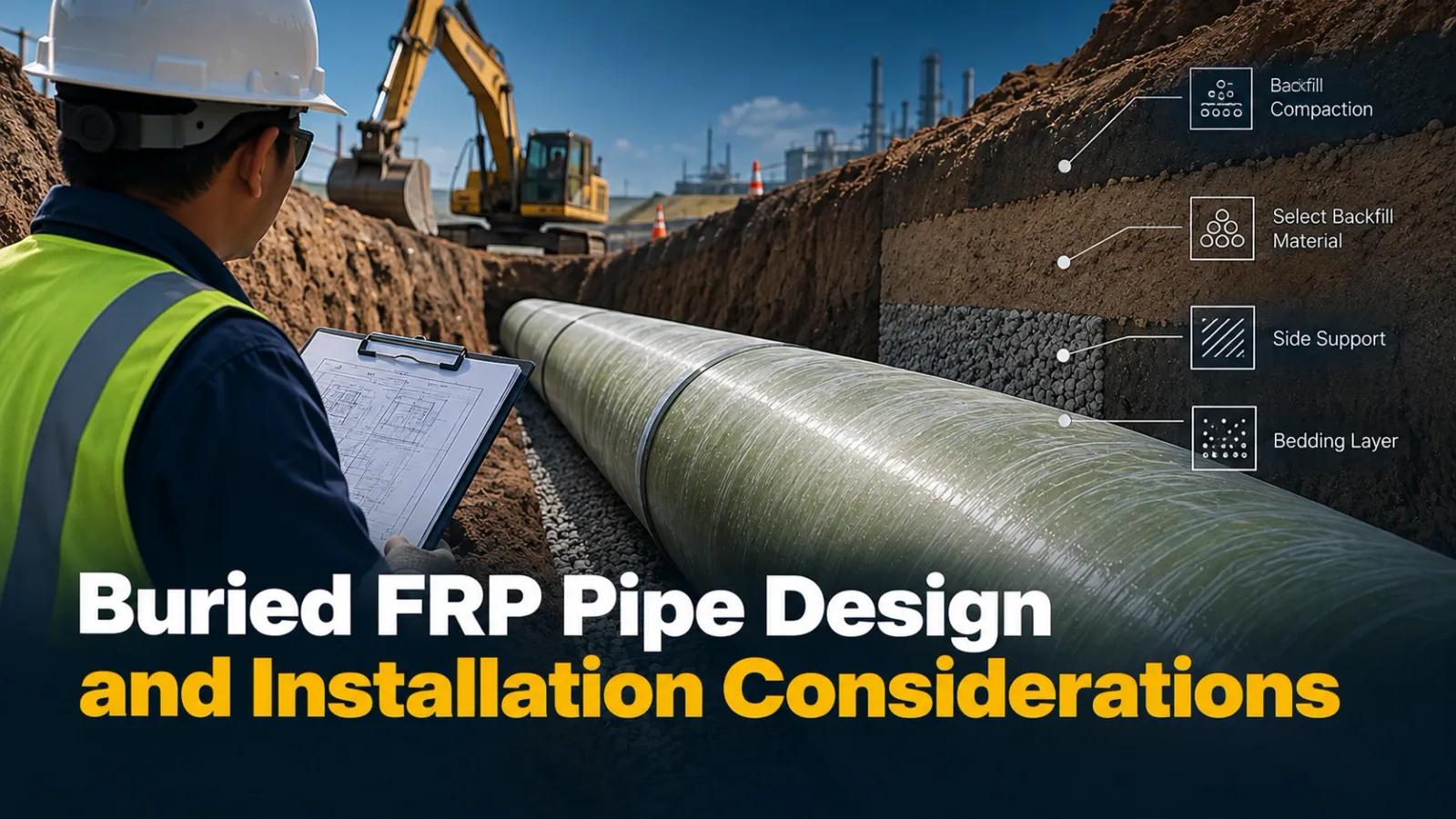
3 Oct 2026
Learn key buried FRP pipe design and installation considerations, including soil loads, burial depth, bedding, backfilling, and external pressure.
Read More →