Proper FRP pipe support spacing is essential for maintaining the strength, stability, and long term performance of industrial piping systems. Supports that are placed too far apart can cause excessive pipe deflection, sagging, and additional stress on joints. Meanwhile, poorly designed supports may damage the fiberglass pipe surface.
Understanding the correct support distance helps engineers and contractors design safer piping installations for chemical processing plants, water treatment facilities, and other industrial environments.
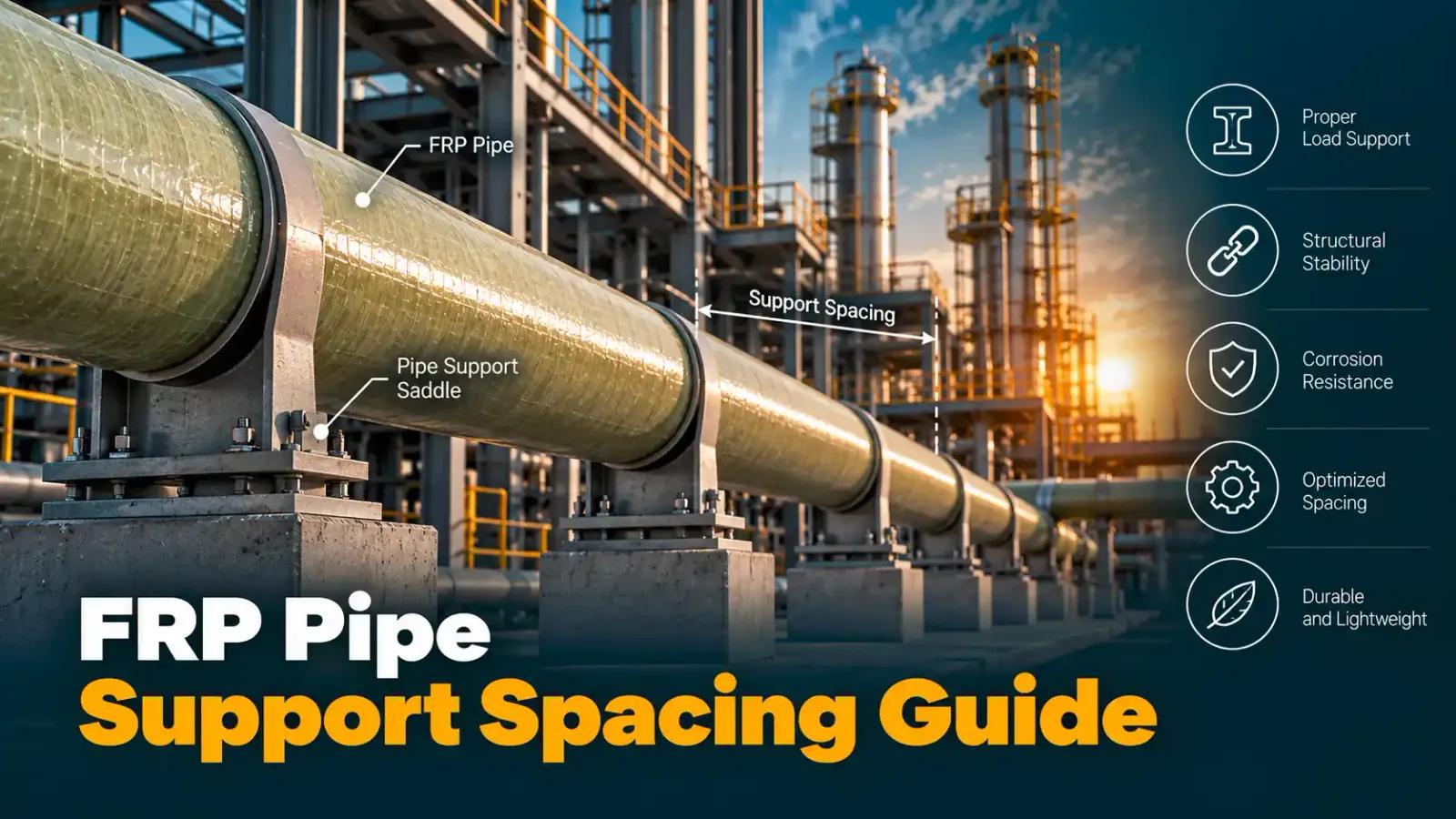
FRP pipe support spacing refers to the distance between two adjacent supports installed along a Fiberglass Reinforced Plastic piping system. These supports carry the weight of the pipe, its contents, and any additional equipment or insulation.
Unlike steel piping, FRP pipes have different mechanical properties because they are manufactured using fiberglass reinforcement and polymer resin. Although FRP offers excellent corrosion resistance and high strength relative to its weight, its flexibility and structural behavior require careful consideration during installation.
For industrial applications, products such as GAJA's Rock Plast FRP Pipe & Fittings are available in different diameters, pressure classes, and stiffness specifications to accommodate project requirements.
Correct support spacing helps distribute mechanical loads evenly throughout the piping system. When supports are installed at appropriate intervals, they reduce excessive bending and help maintain pipe alignment during operation. Improper spacing, however, can lead to several problems, including:
These issues are particularly important in aboveground FRP piping systems, where the pipe's weight and transported fluid must be supported by external structures.
There is no universal support distance suitable for every FRP pipe installation. The appropriate spacing depends on pipe diameter, wall construction, mechanical properties, operating temperature, and fluid weight.
As an illustration, earlier ISO 14692 guidance for water filled, simply supported GRP pipes provided the following indicative distances:
These values are general reference examples, not universal installation limits. Actual allowable spans may be shorter or longer depending on pipe construction, loading conditions, and engineering calculations. Before installation, engineers should verify the manufacturer's recommended maximum support span and applicable project design standards.
Several technical factors influence how far apart pipe supports can be installed.
FRP pipe diameter affects the amount of fluid the pipeline carries and the total load acting on each support. Larger pipes may accommodate longer spans when designed with sufficient structural stiffness. However, their increased weight must also be considered. Wall thickness and fiberglass reinforcement significantly influence bending resistance and allowable deflection.
The weight of the transported liquid directly affects pipe deflection. A pipeline carrying water experiences different loads from one transporting chemicals with higher specific gravity. Engineers should calculate the combined weight of the empty pipe, operating fluid, insulation, and other applicable components when determining support distances.
Temperature changes can influence the mechanical properties of FRP materials. Elevated temperatures may reduce the stiffness of certain resin systems, affecting the pipe's ability to maintain its shape over longer support spans. Thermal expansion and contraction must also be considered, particularly for outdoor installations exposed to changing environmental conditions.
Not all fiberglass pipes have identical structural properties. Different resin systems, reinforcement arrangements, and manufacturing processes affect pipe stiffness and mechanical performance. For this reason, support spacing should be calculated using the mechanical properties of the selected FRP pipe rather than relying on diameter alone.
Industrial piping systems may experience vibration from pumps, machinery, or fluid movement. Additional loads can also result from wind, seismic activity, and connected equipment. These conditions may require shorter support distances, additional guides, or specially designed anchoring arrangements.
Correct support installation is just as important as determining the spacing between supports.
FRP pipes should rest on supports that distribute loads across an adequate contact area. Wide saddles with suitable protective lining can help prevent concentrated pressure and abrasion against the fiberglass surface.
Valves, pumps, and other heavy components should have properly designed support arrangements. Their weight should not place excessive stress on nearby FRP pipe connections.
Guides and anchors help manage pipe movement caused by temperature changes and operating conditions. Their placement should follow approved engineering drawings to prevent unintended restraint or excessive stress.
Routine inspections help identify loose components, damaged support surfaces, unexpected deflection, and signs of vibration. Industrial projects involving large diameter piping require particular attention to structural design. GAJA's MRT Jakarta Phase 2 project, for example, involved engineering, fabrication, and installation support for GRP pipes.
Selecting the appropriate FRP pipe support spacing requires careful consideration of structural loads, operating conditions, and piping specifications. Proper engineering helps maintain reliable performance throughout the system's service life.
GAJA provides customizable FRP Pipe & Fittings for industrial applications, supported by design planning, manufacturing, and installation assistance. Contact GAJA to discuss FRP piping solutions suited to your project requirements.
Aboveground FRP piping generally requires engineered supports to carry its weight and operating loads. Underground installations rely on properly designed bedding and surrounding soil support.
Excessive spacing may cause sagging, increased bending stress, joint misalignment, and vibration. Over time, these conditions can affect pipeline reliability.
Yes. FRP pipes generally require support surfaces designed to distribute loads and avoid localized crushing or abrasion. Steel pipe support arrangements should not automatically be reused without verification.
Yes, but changes should be reviewed by a qualified engineer. Removing, relocating, or adding supports can alter load distribution and pipe movement.
3 Oct 2026
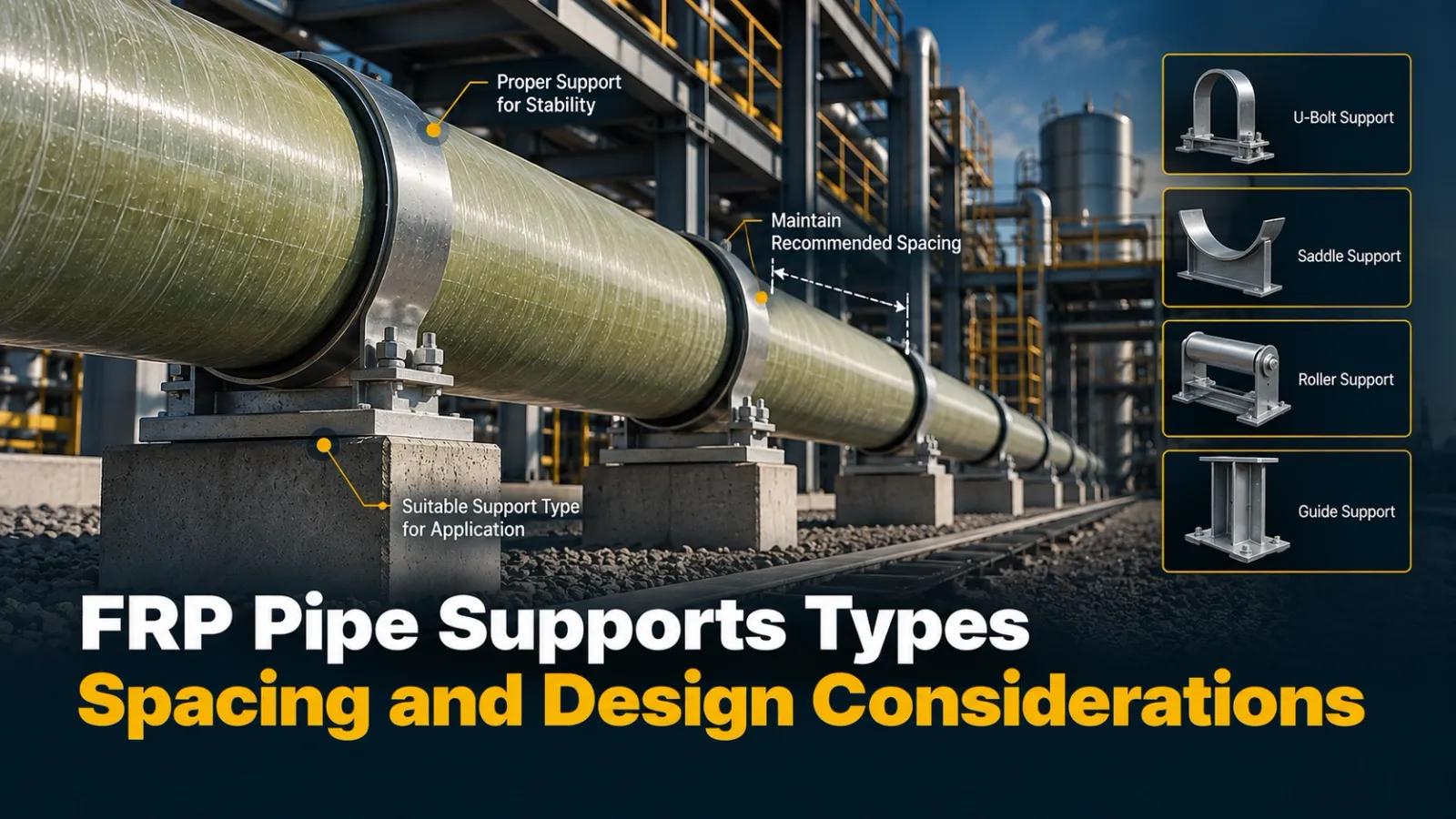
Learn about FRP pipe supports, types, spacing, load considerations, and design factors for safe and reliable FRP piping systems.
Read More →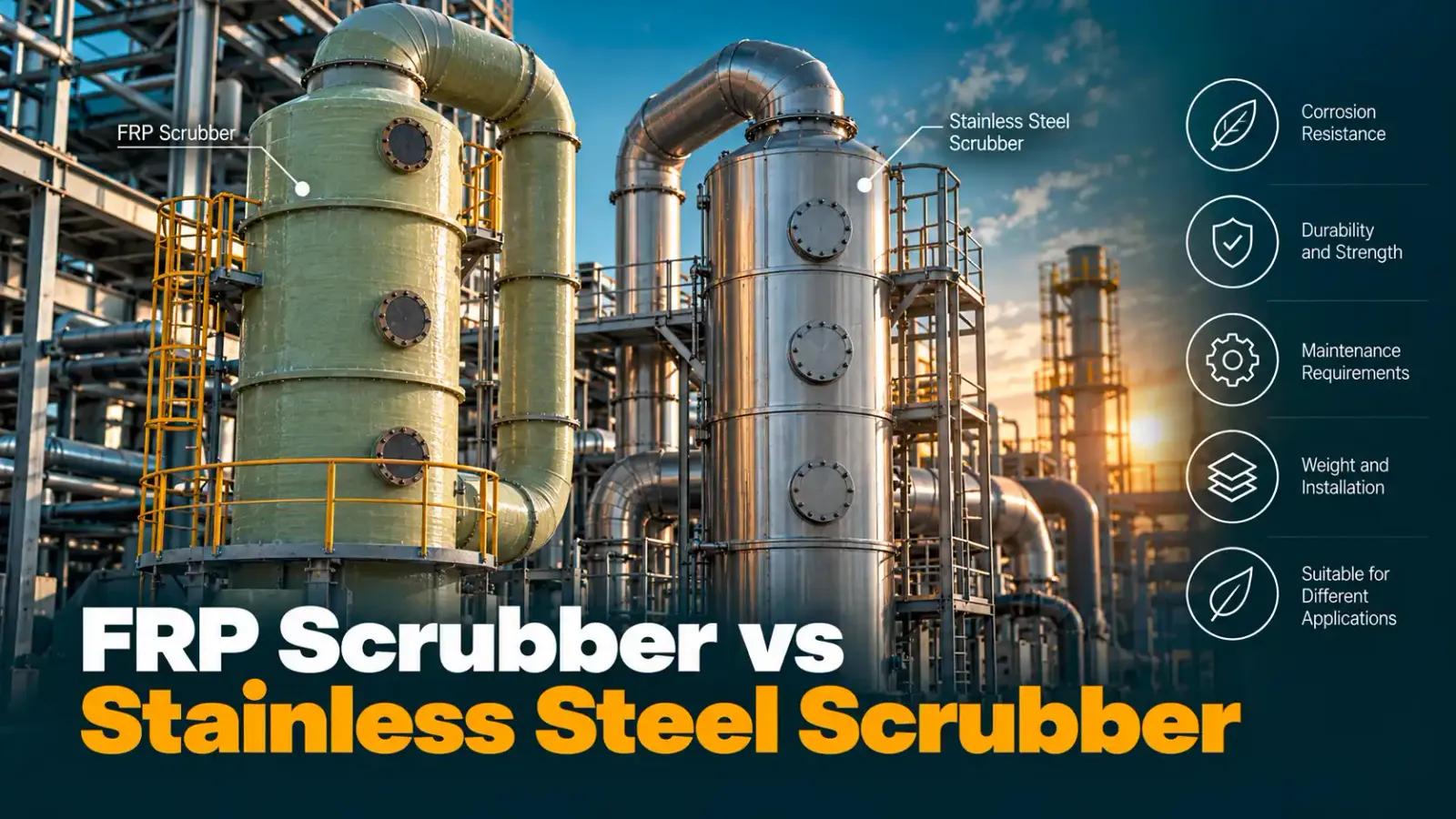
13 Oct 2026
Compare FRP scrubber vs stainless steel scrubber in corrosion resistance, temperature, durability, installation, and cost for industrial applications.
Read More →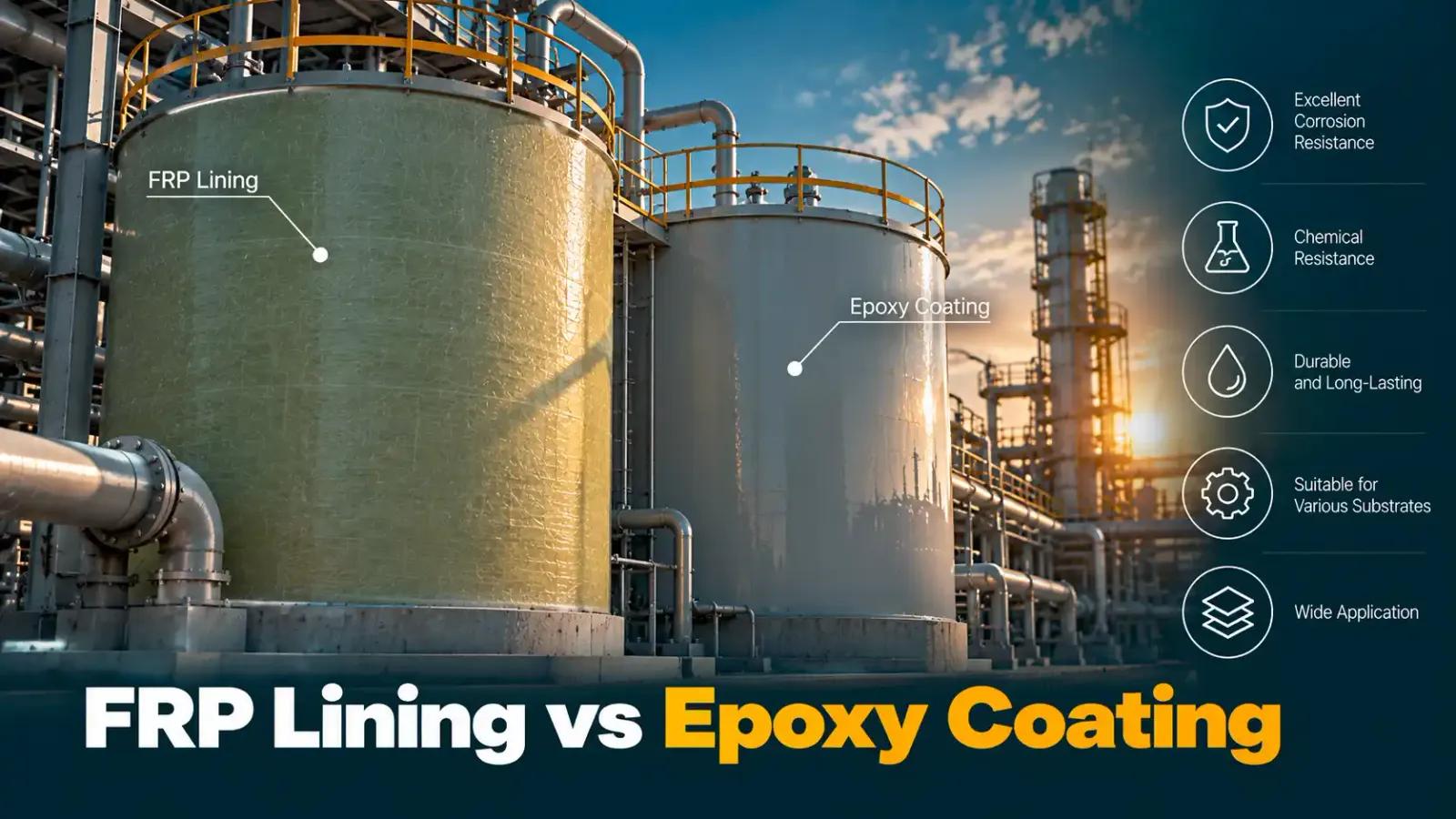
13 Oct 2026
Compare FRP lining vs epoxy coating in chemical resistance, durability, thickness, installation, and cost for industrial applications.
Read More →