RP, steel, and HDPE tanks can all be used to store water, chemicals, and industrial process liquids. However, each material responds differently to corrosion, temperature, mechanical loads, installation conditions, and long term maintenance.
So, which tank is better? The answer depends on your application. FRP tanks are often preferred for corrosive chemicals and customized industrial systems. Steel tanks are suitable when high rigidity, pressure, or elevated temperature is the main concern. HDPE tanks can be practical for relatively simple storage applications at moderate temperatures.
Before making a decision, you need to look beyond the initial price and consider how the tank will perform throughout its service life.
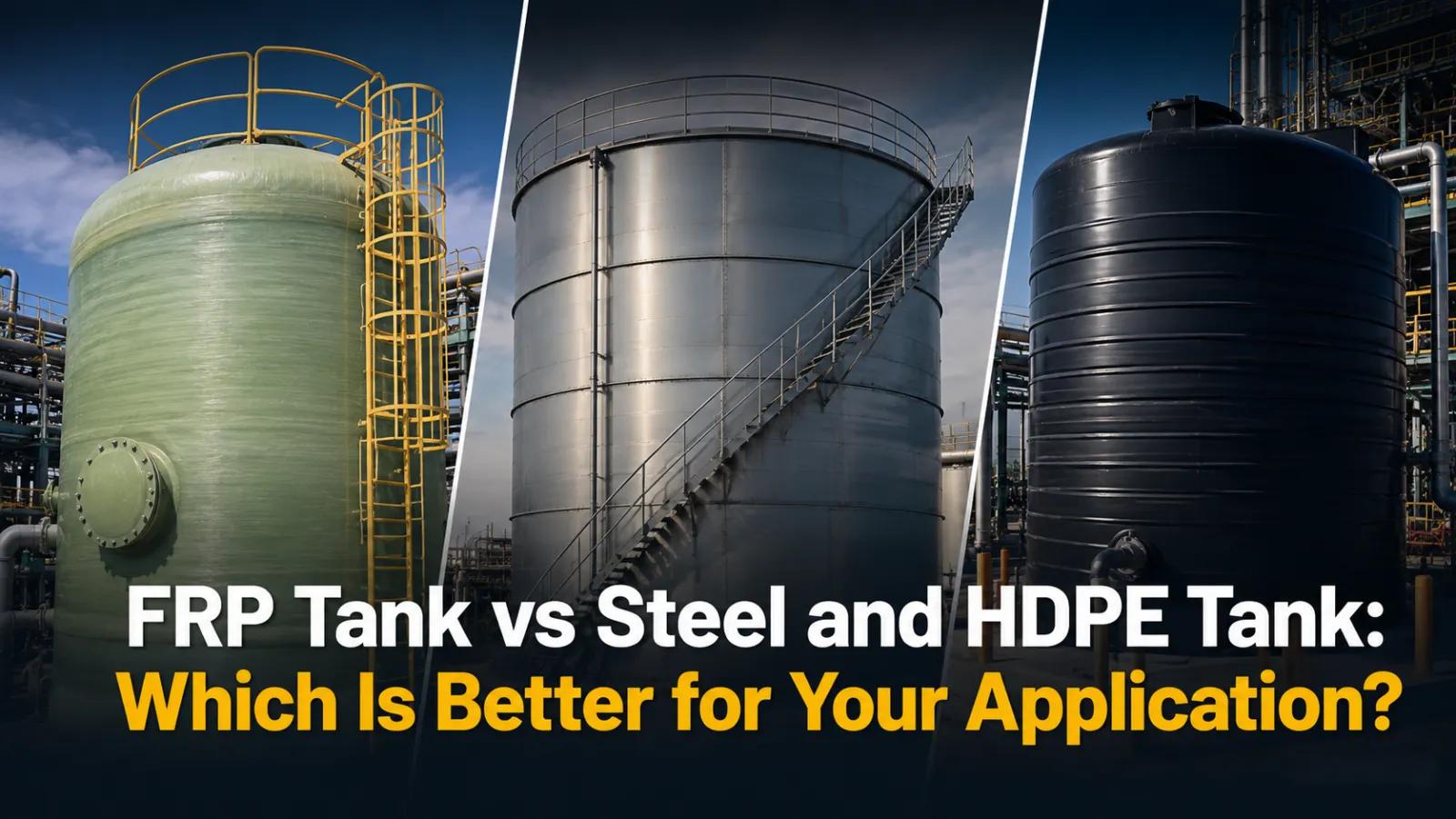
The following comparison provides a general overview. Actual performance will depend on the material grade, resin system, tank design, stored chemical, operating temperature, and applicable engineering standard.
| Comparison factor | FRP tank | Steel tank | HDPE tank |
|---|---|---|---|
Corrosion resistance | Excellent when the correct resin is selected | Carbon steel normally requires coating or lining | Good for many compatible chemicals |
Structural rigidity | Strong and customizable | Very high | Lower than FRP and steel |
Tank weight | Relatively lightweight | Heavy | Very lightweight |
Temperature capability | Depends on resin selection | Generally suitable for higher temperatures | More limited at elevated temperatures |
Impact resistance | Good when properly designed | Very good | Good flexibility and impact resistance |
Chemical customization | Resin and corrosion barrier can be selected | Requires a suitable alloy, coating, or lining | Depends on chemical compatibility |
Installation | Easier to transport than steel | May require heavier lifting equipment | Generally easy to transport |
Maintenance | Low corrosion related maintenance | Coating and corrosion inspection may be required | Generally low maintenance |
Large custom tanks | Highly suitable | Highly suitable | Depends on manufacturing method and design |
Common applications | Chemicals, water treatment, mining, processing | Pressure, fuel, high temperature service | Water and compatible chemical storage |
The important point is that no material is automatically suitable for every liquid. A tank should always be specified according to its actual operating environment.
Corrosion resistance is one of the most important considerations when comparing FRP, steel, and HDPE tanks.
FRP and HDPE do not rust like carbon steel. However, this does not mean that they are resistant to every chemical. Their performance depends on material compatibility, concentration, temperature, exposure time, and mechanical stress.
FRP can be designed with a corrosion resistant inner barrier and a separate structural layer. This allows the manufacturer to select a resin system according to the chemical environment while maintaining the required mechanical strength.
For this reason, FRP is commonly considered for chemical processing, water treatment, pulp and paper, pharmaceutical, food and beverage, and mining applications. GAJA Fiberglass specifically manufactures its Fiber force® FRP Tanks for aggressive chemical environments and industrial storage, processing, reactor, and mixing duties.
Carbon steel can corrode when exposed to water, humidity, salts, and aggressive chemicals. Protective coatings, linings, galvanizing, cathodic protection, or corrosion allowances may therefore be required.
Stainless steel offers better corrosion resistance than carbon steel, but the correct grade must be selected. Certain chemicals, chlorides, temperatures, and operating conditions can still affect stainless steel.
HDPE offers resistance to many chemical environments and will not rust, rot, or pit in the same way as metal. Nevertheless, chemical compatibility is influenced by temperature, applied load, and the surrounding environment.
Before selecting HDPE, you should check the tank manufacturer’s compatibility data for the exact chemical and concentration.
Your final choice should be based on the stored liquid, temperature, pressure, tank capacity, installation conditions, and maintenance strategy.
FRP may be the better option when:
GAJA Fiberglass manufactures FRP tanks using an advanced filament winding system and offers design planning, manufacturing, customization, installation, and support. Its tanks can be engineered for significant capacities of up to 2,000 cubic metres, depending on the project specifications.
Steel may be more appropriate when:
Remember to distinguish between carbon steel, coated steel, lined steel, and stainless steel when comparing quotations.
HDPE may be suitable when:
The tank supplier should still confirm chemical compatibility, wall design, ultraviolet protection, and operating limitations.
Before requesting a quotation, prepare the following information:
Providing accurate information helps the manufacturer recommend the right material instead of simply offering the lowest initial price.
GAJA Fiberglass provides engineered FRP solutions for chemical manufacturing, water treatment, chemical processing, food and beverage, pharmaceutical, pulp and paper, and mining applications.
Its Fiber force® FRP Tank solutions cover design planning, manufacturing, customization, installation, and technical support. The tank specifications can also be developed to meet applicable requirements such as ASME RTP 1 and relevant ASTM standards.
Choosing between FRP, steel, and HDPE requires more than comparing material prices. The right decision should consider chemical compatibility, temperature, pressure, capacity, structural loads, installation conditions, and long term maintenance.
GAJA Fiberglass can help you evaluate these requirements and develop a customized FRP tank for storage, mixing, processing, or reactor applications.
Indonesia Head Office
Email: marketing@gajafiberglass.com
Phone: +62 (21) 4585-3491
WhatsApp: +62 811-186-7919
Address: Jl. Gading Batavia Blok LC11 No. 21-22, Kelapa Gading Permai, Jakarta 14240, Indonesia
Australia Representative
Contact Person: Mr. Victor Bhave
Email: victor.bhave@gajafiberglass.com
Phone: +61-41-424-0017
Address: PO Box 774, Warners Bay, NSW 2282, Australia
FRP generally provides greater stiffness and can be structurally engineered using reinforcing fibers. HDPE is more flexible and impact resistant, but its load capacity depends on wall thickness, geometry, temperature, and reinforcement.
FRP may offer better value for certain corrosive chemicals and large customized tanks. Stainless steel may be better for high temperatures, pressure, hygienic processing, or applications requiring a polished metallic surface.
HDPE can store many compatible chemicals, but suitability depends on the specific substance, concentration, temperature, and mechanical stress. Compatibility must be confirmed before use.
FRP tanks do not normally require the same anti rust coating used on carbon steel. However, the tank may need an appropriate corrosion barrier and external protection based on the chemical and environment.
There is no universal answer. Service life depends on material compatibility, engineering, manufacturing quality, installation, operating conditions, inspection, and maintenance.
13 Oct 2026
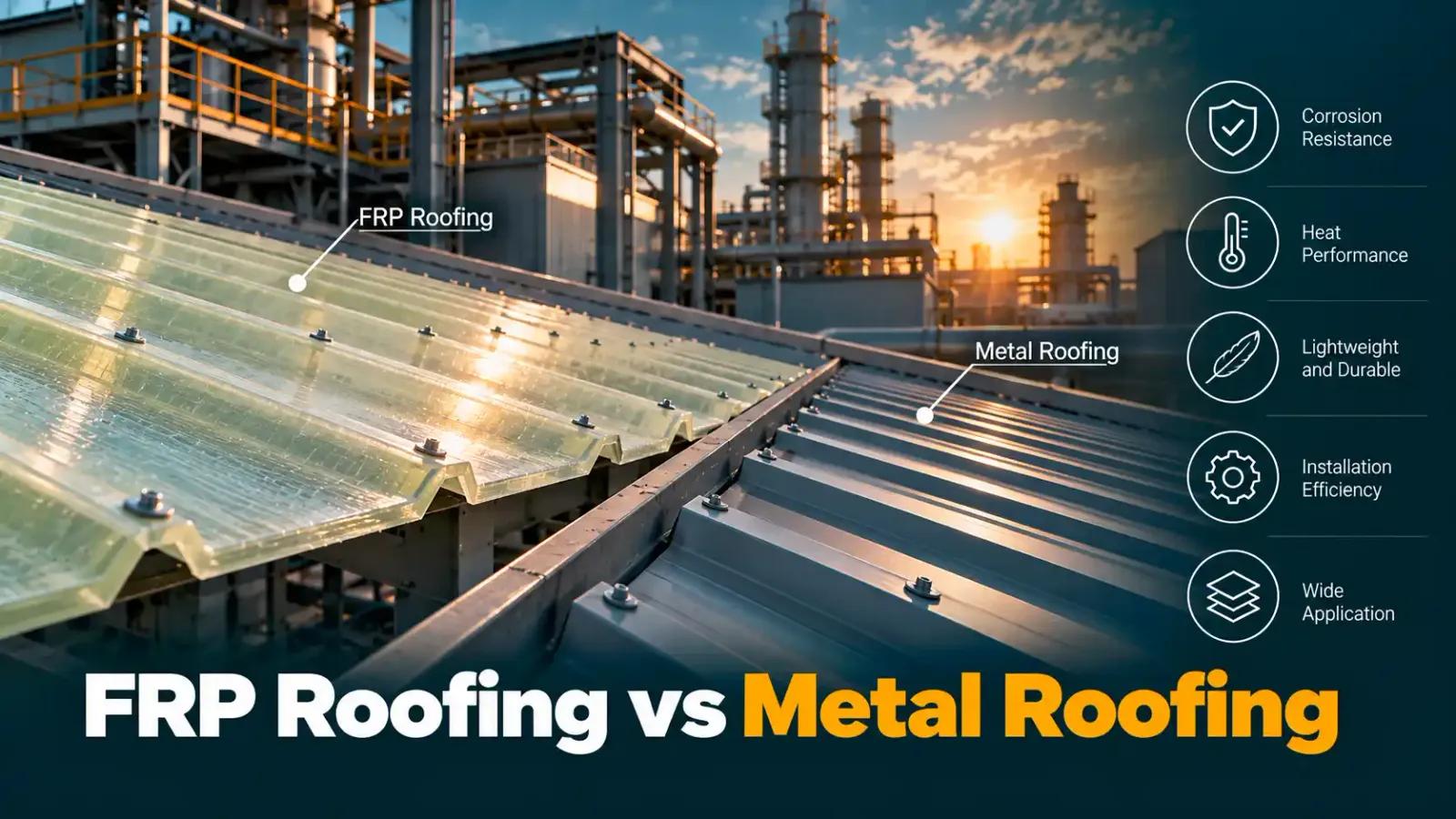
Compare FRP roofing vs metal roofing in corrosion resistance, durability, heat performance, installation, and cost for industrial buildings.
Read More →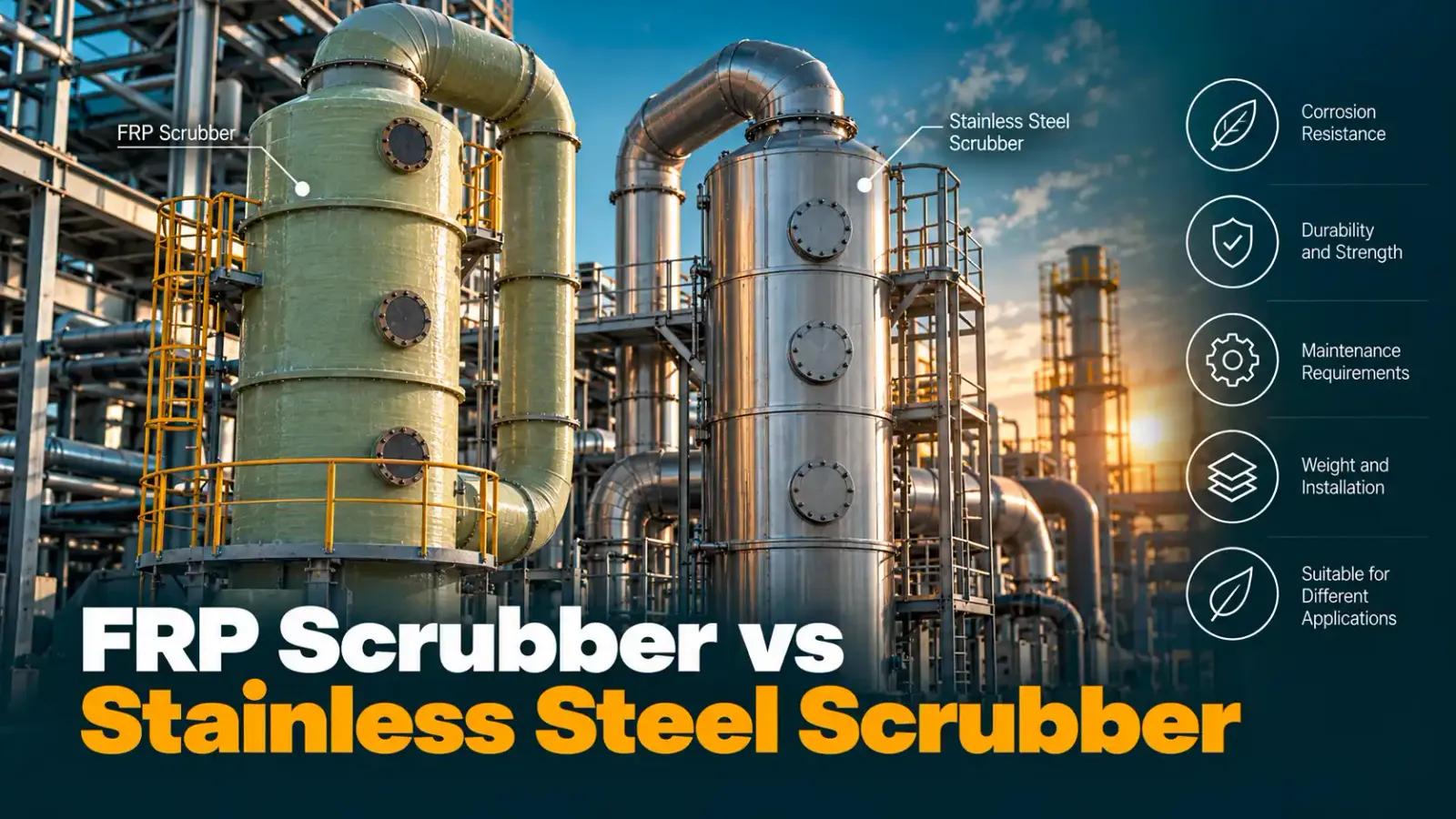
13 Oct 2026
Compare FRP scrubber vs stainless steel scrubber in corrosion resistance, temperature, durability, installation, and cost for industrial applications.
Read More →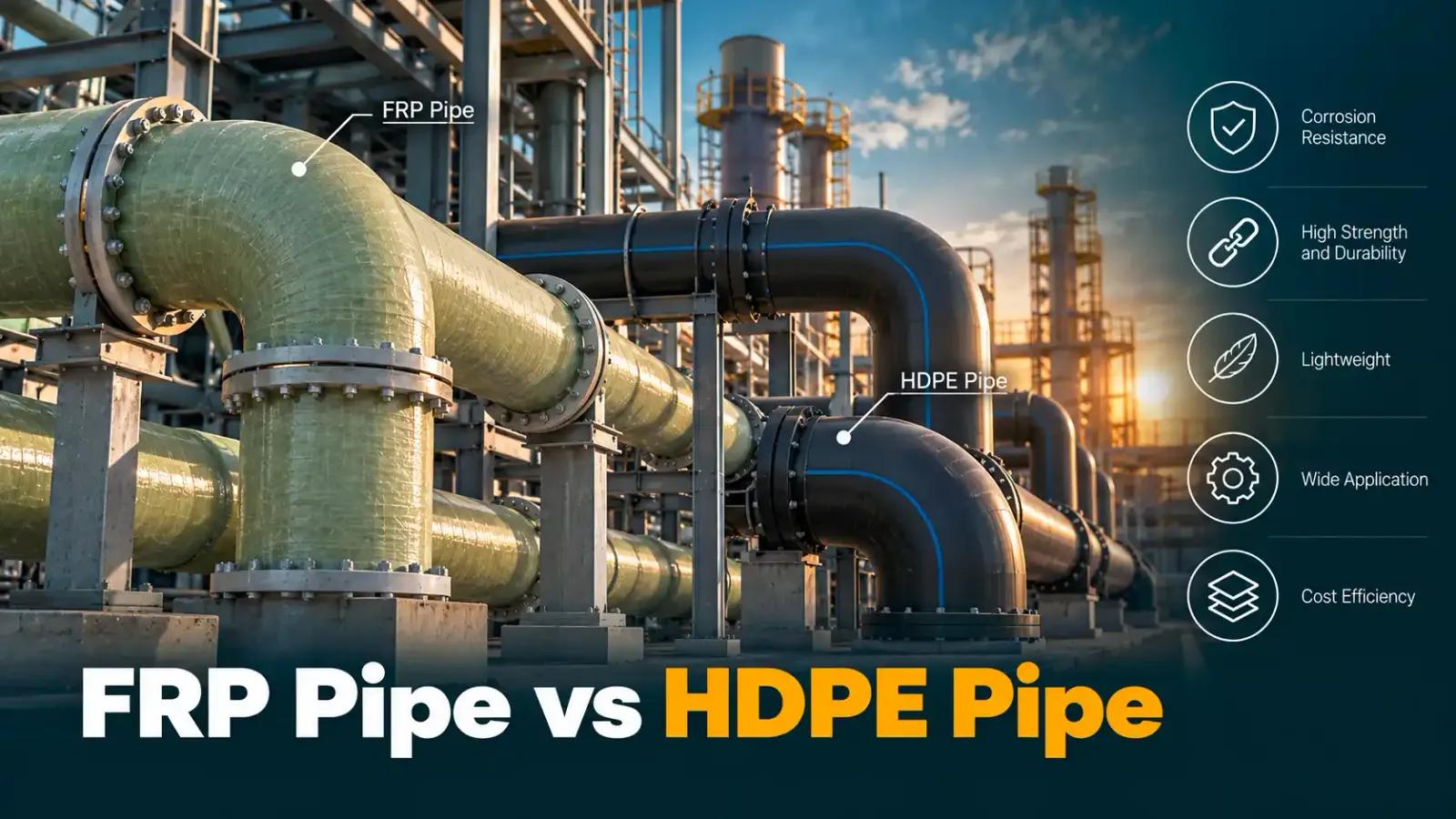
13 Oct 2026
Compare FRP pipe vs HDPE pipe in strength, chemical resistance, durability, installation, and cost to choose the right material for industrial use.
Read More →