FRP tanks for water and wastewater treatment plants are commonly considered for applications where chemical resistance, durability, and flexible design are important. Fiber Reinforced Plastic combines fiberglass reinforcement with a thermosetting resin system that can be engineered according to the liquid being stored and the operating environment.
However, not every tank in a treatment plant requires the same specification. A tank used for clean process water will have different requirements from one storing treatment chemicals or collecting chemically aggressive wastewater.
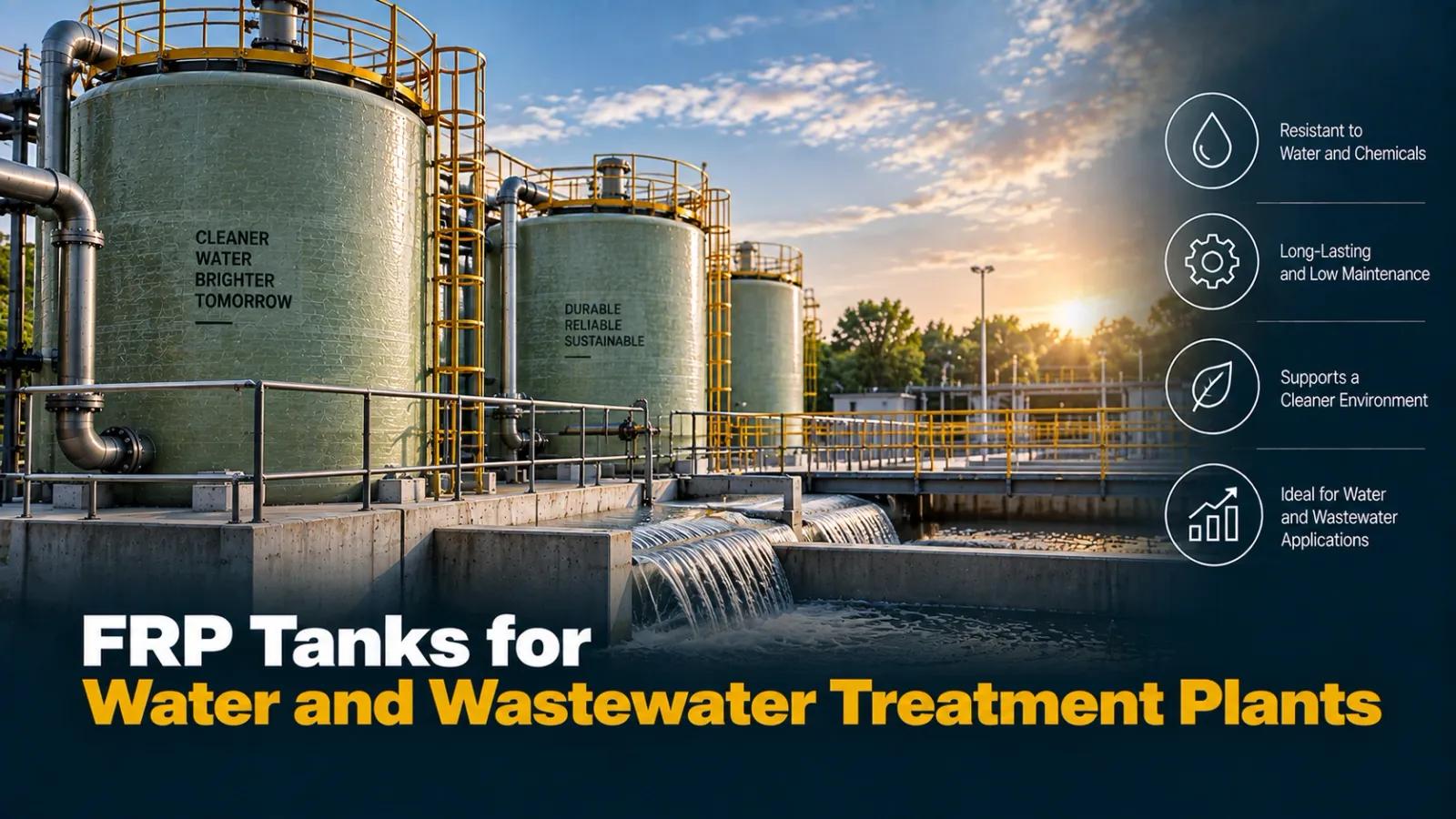
Water treatment plants use tanks at different stages of the treatment process. Depending on plant design and the chemicals involved, FRP tanks can be used for applications such as:
One example is the storage of treatment chemicals such as Poly Aluminium Chloride (PAC), which is commonly used during coagulation processes. Because these chemicals can have different properties and concentrations, the tank material needs to be selected according to the actual chemical service rather than simply choosing a standard storage vessel. GAJA's Fiber force® FRP Tank is designed for chemical storage and processing applications and can be customized according to specific project requirements.
Wastewater treatment creates another set of challenges. Industrial wastewater may contain acids, alkalis, dissolved chemicals, salts, and other contaminants from upstream processes. The composition can also change depending on the manufacturing operation producing the wastewater. FRP tanks may therefore be considered for:
In these environments, corrosion resistance becomes particularly important. Unlike a general water storage tank, an FRP tank used for industrial wastewater should be specified based on the expected chemical composition, concentration, temperature, and other operating conditions.
One of the main reasons FRP is used in water and wastewater treatment facilities is its resistance to corrosion. The resin system and laminate construction can be selected to accommodate specific chemical environments. An appropriate corrosion resistant inner layer helps protect the tank structure from direct exposure to the stored liquid, while fiberglass reinforcement provides structural strength.
FRP also offers practical advantages such as relatively low weight and the ability to manufacture tanks in customized dimensions and configurations. These characteristics can make FRP suitable for treatment plants where tanks need specific nozzle positions, manholes, connections, supports, or dimensional requirements. However, corrosion resistance should never be considered independently from the actual service conditions.
Project teams should provide accurate process data before an FRP tank is designed.
The first consideration is what will actually be stored. Clean water, PAC solution, acids, alkalis, process wastewater, and mixed industrial effluent may each require different material specifications. For wastewater applications, understanding the likely contaminants is particularly important because the stored liquid may contain several chemical components.
Chemical concentration can influence resin compatibility. A diluted treatment chemical may not require exactly the same material specification as a concentrated chemical stored before dosing. The chemical name and expected concentration range should therefore be identified during the design stage.
Temperature can affect the chemical resistance and long term performance of an FRP resin system. Both normal operating temperature and maximum expected temperature should be considered before selecting the resin and laminate construction.
The resin is one of the most important components of an FRP tank used for chemical service. Polyester and vinyl ester systems offer different performance characteristics depending on chemical exposure and temperature. For project teams evaluating this aspect in greater detail, see How to Select Resin for an FRP Chemical Storage Tank?
Treatment facilities may require tanks ranging from small chemical preparation vessels to large volume storage systems. Tank capacity must be evaluated alongside diameter, height, nozzle arrangement, manholes, support configuration, available installation space, and connection to surrounding equipment. GAJA states that Fiber force® FRP Tanks can be engineered for capacities of up to 2,000 m³ depending on project requirements.
Project experience helps demonstrate how FRP products are applied beyond theoretical material advantages. GAJA's project portfolio includes the PAC Plant for Water Treatment, where the company manufactured an FRP Tank commissioned by PT Pacinesia Chemical Industry. This is particularly relevant because PAC handling represents a direct connection between chemical storage and water treatment operations.
GAJA's experience in the wider water and wastewater sector is not limited to tanks. Its international projects include FRP Pipe, Fittings, and Duct for the Bondi STP Ventilation project commissioned by Sydney Water, as well as FRP Ducting for the Winmalee WWT Plant Project. These projects demonstrate broader experience with FRP systems used around water and wastewater treatment infrastructure.
Not every water storage requirement needs the same type of tank. For chemical storage, dosing, wastewater, and process applications, a cylindrical FRP tank may provide the material and configuration flexibility required for the operating conditions.
For larger sectional water storage requirements, an FRP Panel Tank may be another option. The decision should depend on the stored liquid, required capacity, installation space, site access, operating conditions, and project specifications.
Project teams comparing these options can also review Panel Tank vs Cylindrical FRP Tank: How to Choose?
Water and wastewater projects often involve more than supplying a tank of a specified capacity. An FRP manufacturer should be able to evaluate chemical exposure, support resin selection, customize tank dimensions and connections, manufacture according to project requirements, and provide installation or technical support when required. GAJA provides design planning, manufacturing, customization, installation, and support across its range of industrial FRP products.
Before requesting a quotation, project teams should ideally prepare information regarding the stored liquid, chemical concentration, temperature, tank capacity, installation location, nozzle requirements, and applicable project standards. For customized FRP tanks used in water treatment, wastewater treatment, chemical dosing, or other corrosive liquid applications, project teams can contact GAJA to discuss the operating conditions and required specifications before detailed design and manufacturing.
FRP tanks are used for chemical storage, dosing systems, PAC solution storage, neutralization processes, and other treatment stages that involve corrosive or reactive liquids.
FRP is preferred because it offers strong resistance to corrosion from acids, alkalis, and industrial effluents, while also allowing customized design for specific process conditions.
Yes, FRP tanks can store industrial wastewater, but the tank must be designed based on the wastewater’s chemical composition, concentration, and temperature to ensure material compatibility.
FRP tanks can store a wide range of chemicals such as PAC, acids, alkalis, coagulants, flocculants, and other treatment chemicals, depending on the selected resin system.
Service life depends on operating conditions, chemical exposure, and proper material selection, but well designed FRP tanks can provide long term performance in corrosive environments.
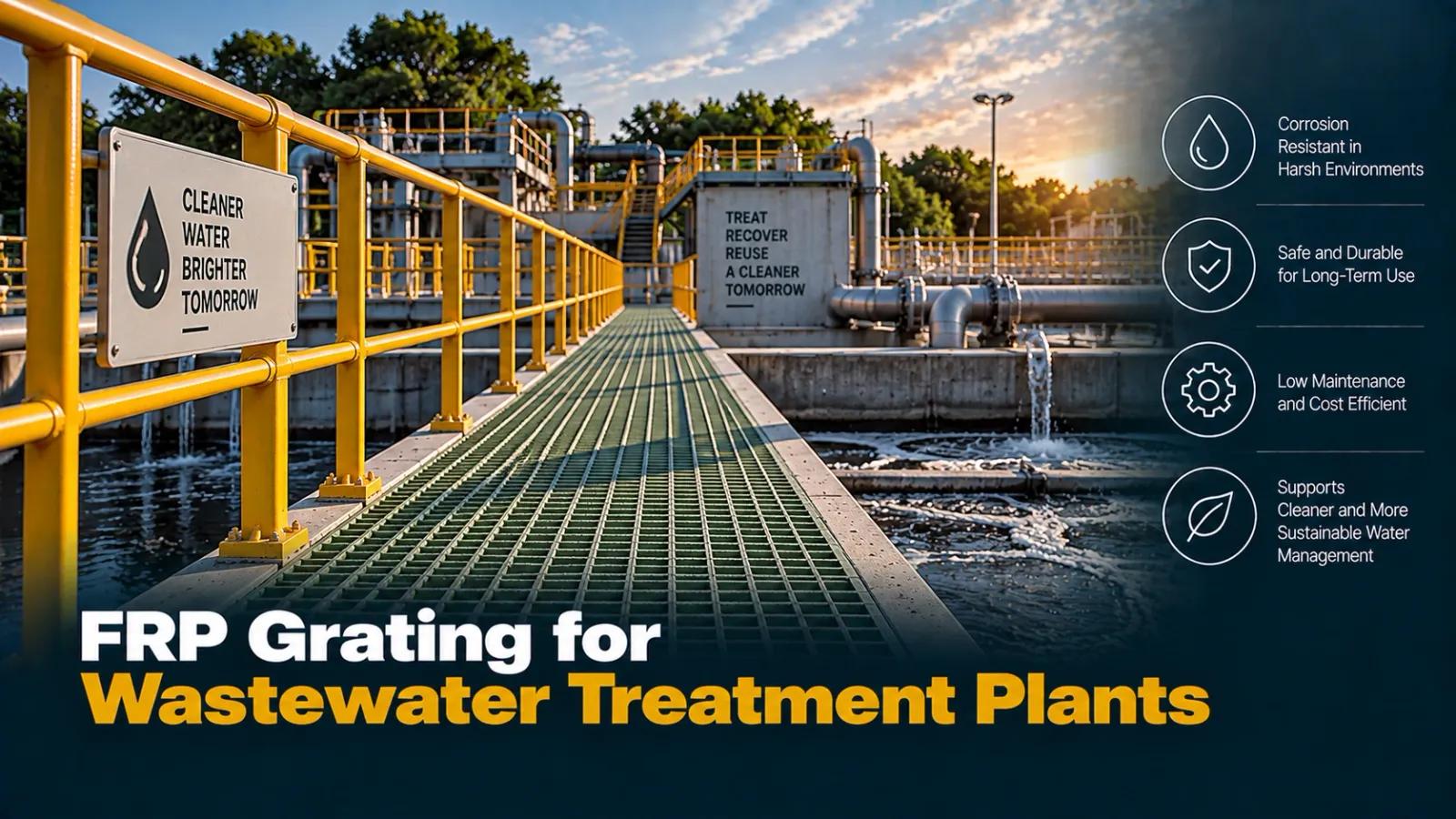
30 Sept 2026
Learn how FRP grating is used in wastewater treatment plants, including walkways, platforms, corrosion resistance, load capacity, resin selection, and key specification factors.
Read More →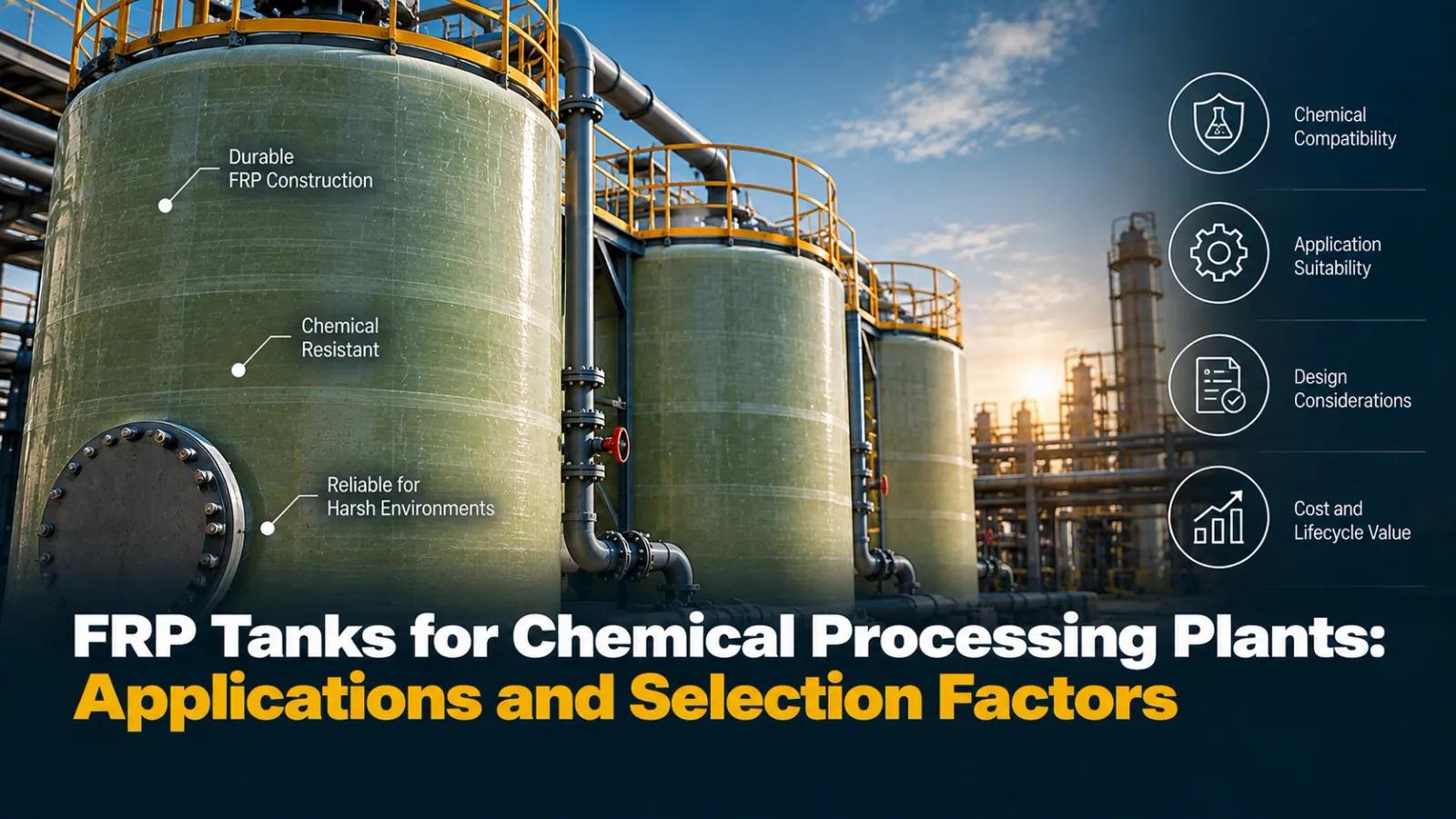
30 Sept 2026
FRP tanks for chemical processing plants offer corrosion resistance, durability, and customizable design for handling acids, alkalis, and industrial chemicals
Read More →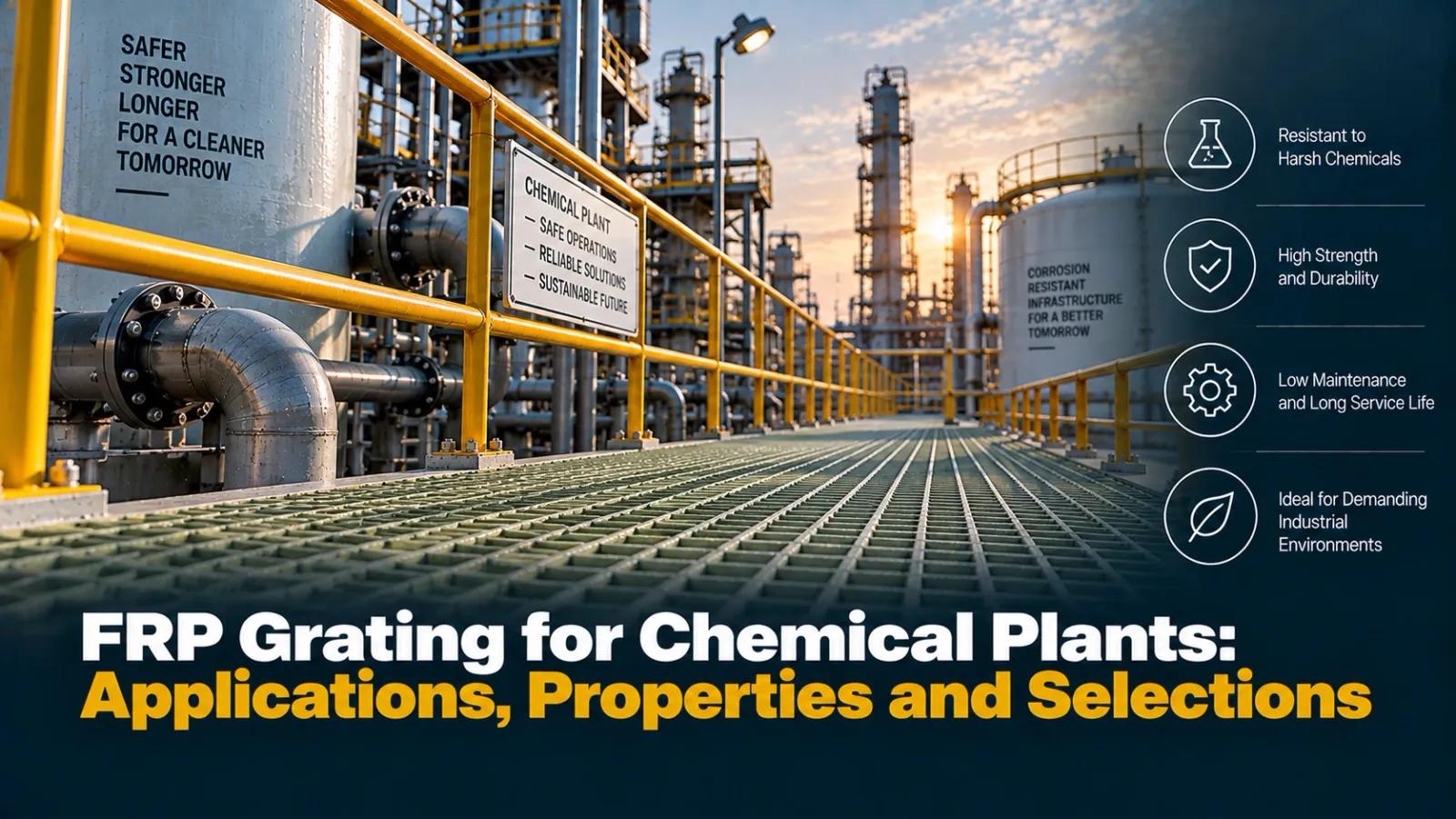
30 Sept 2026
Learn how FRP grating is used in chemical plants, including applications, corrosion resistance, load capacity, resin selection, molded vs pultruded grating, and key selection factors.
Read More →