FRP grating for chemical plants is widely considered for industrial access areas where corrosion resistance, lightweight construction, and durability are important. Fiber Reinforced Plastic (FRP) grating combines fiberglass reinforcement with a thermosetting resin system. The result is a non metallic grating that can be designed for industrial walkways, platforms, trenches, and other access structures.
However, selecting FRP grating should not be based only on dimensions or price. The chemical environment, load requirements, resin system, grating type, support span, and installation conditions all need to be considered.
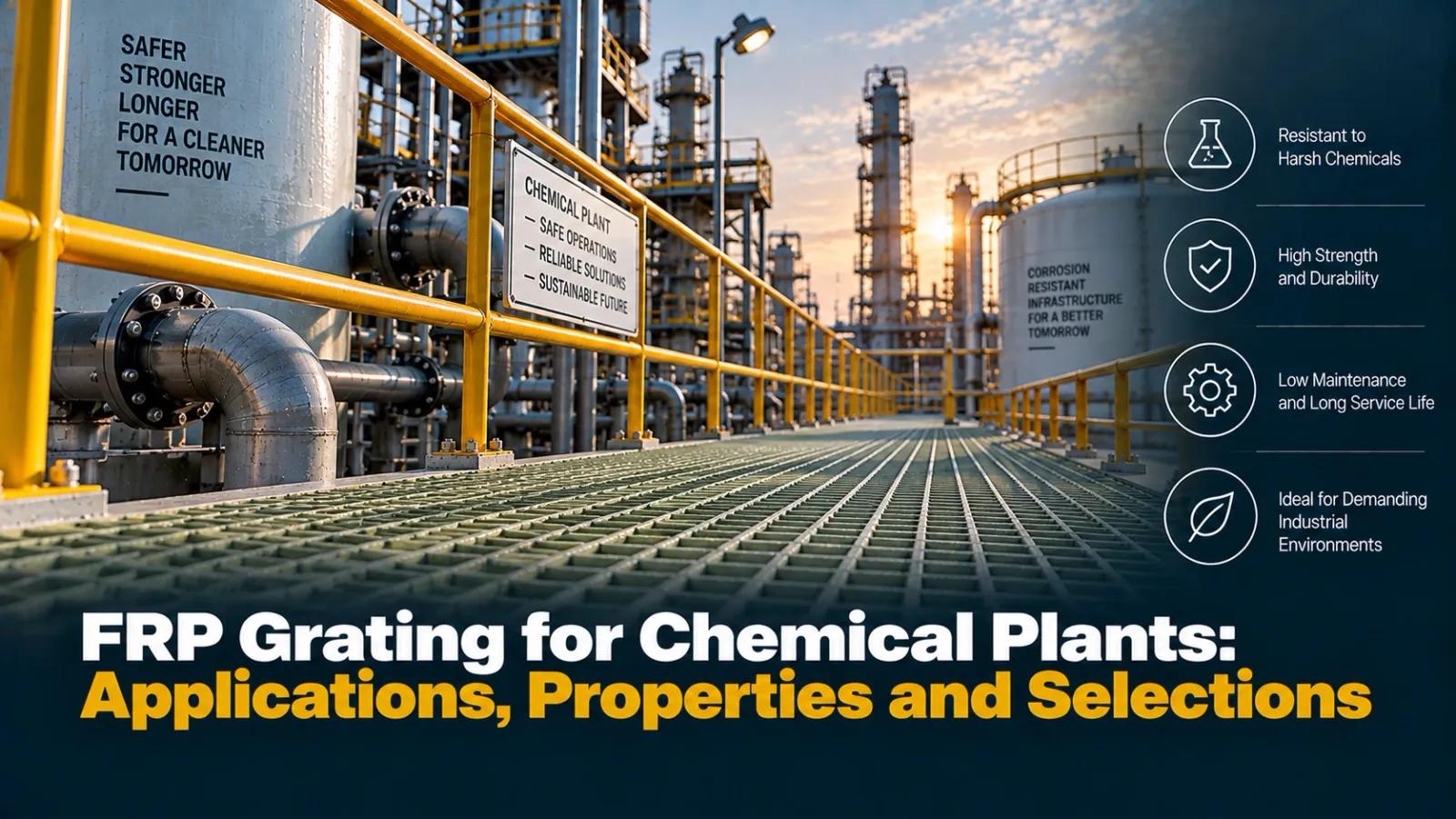
Chemical processing facilities contain many areas where personnel need safe access while equipment is exposed to aggressive operating environments. FRP grating may be used for:
The suitability of FRP grating depends on the actual operating conditions. For example, grating installed near a chemical storage tank may face different exposure than grating used in a general utility area. Chemical splash, temperature, moisture, load, and frequency of use should therefore be evaluated before specifying the product. GAJA includes FRP Grating within its range of industrial FRP products, with grating intended for flooring and walkway applications across different industries.
One of the main reasons FRP grating is considered for chemical plants is corrosion resistance. Steel grating can perform well in many industrial environments, but exposure to aggressive chemicals may require galvanizing, coating, stainless steel, or other corrosion control measures depending on the application.
FRP does not rely on the same metallic corrosion mechanisms. Instead, chemical performance is influenced by the resin system and the environmental conditions to which the grating is exposed. This can make FRP useful in areas where flooring is frequently exposed to:
Corrosion resistance should still be evaluated carefully. Different chemicals, concentrations, and temperatures can affect resin systems differently.
Chemical resistance is only one part of FRP grating selection. Several other properties influence whether the grating is suitable for a particular area.
FRP grating is generally lighter than steel grating. Lower weight can simplify transportation, handling, installation, and replacement, particularly in facilities where access to elevated platforms or confined areas is limited. Lightweight material may also reduce the dead load placed on supporting structures.
Although relatively lightweight, FRP combines fiberglass reinforcement with resin to provide structural strength suitable for many industrial walkway and platform applications. The required grating specification should still be determined from actual design loads and support conditions.
FRP does not rust in the same way as carbon steel. This characteristic can be valuable in chemical processing facilities where moisture and aggressive chemicals may increase corrosion risks for metallic components.
FRP is non metallic and can provide electrical insulation characteristics that may be advantageous in certain industrial environments. However, electrical and safety requirements should always be evaluated according to the specific facility and applicable standards.
Industrial walkways may become wet or contaminated during operation. Depending on surface configuration, FRP grating can be manufactured with surfaces intended to improve footing. Surface requirements should be considered when specifying grating for wet or frequently accessed areas.
Two common types encountered in the FRP industry are molded and pultruded grating. Molded FRP grating is produced as an integrated grid structure and is commonly considered for applications requiring corrosion resistance and multidirectional load distribution.
Pultruded grating is produced using pultruded structural bars assembled into grating panels and can provide different structural characteristics depending on the design. GAJA's company history states that it began manufacturing FRP Molded Grating in 2021 and installed six machine units for grating production. The choice between the two should not be made simply by asking which type is better. Project teams should compare:
For a deeper comparison, see Molded vs Pultruded FRP Grating: Key Differences.
Load capacity is one of the most important technical considerations when selecting FRP grating. A walkway used only for pedestrian access may have different requirements from a platform supporting equipment, maintenance activities, or concentrated loads. The grating specification should therefore consider:
Choosing a thicker grating does not automatically mean the design is correct. Support spacing and load distribution also influence performance. Project teams should refer to the manufacturer's load data rather than selecting grating based on visual dimensions alone.
For more detail, see How to Read FRP Grating Load Tables.
Resin selection is especially important in chemical environments. Different resin systems can provide different levels of chemical and temperature resistance. The correct choice should be determined from actual exposure conditions. Before specifying FRP grating, project teams should ideally identify:
A grating used in occasional splash conditions may not require the same specification as one continuously exposed to aggressive chemicals. A more complete comparison is covered in FRP Grating vs Steel Grating: Performance and Lifecycle Cost.
Before requesting a quotation, project teams should prepare accurate information about the installation area. Useful data includes:
Providing this information allows the manufacturer to recommend a more appropriate grating configuration instead of treating every chemical plant application as identical.
GAJA has more than 19 years of experience in FRP engineering and manufacturing and produces a wider range of industrial FRP solutions, including FRP tanks, pipes and fittings, grating, lining, roofing, and other products.
Its manufacturing history also includes dedicated FRP Molded Grating production, complementing GAJA's wider experience supplying FRP products to chemical, mining, water treatment, oil and gas, and other industrial applications.
For chemical plants requiring corrosion resistant flooring, walkways, platforms, or customized grating systems, project teams can contact GAJA to discuss the chemical environment, load requirements, dimensions, and installation conditions before finalizing the specification.
FRP grating provides resistance to many corrosive environments and does not rust like carbon steel. Its suitability depends on resin type, chemical exposure, concentration, temperature, and load requirements.
FRP grating can be considered for walkways, operating platforms, tank access areas, stair treads, trenches, drainage areas, maintenance platforms, and other industrial access structures.
Molded FRP grating is commonly used in corrosive environments because of its integrated grid construction and available resin systems. Chemical compatibility should still be verified for the specific application.
Load capacity depends on factors such as grating thickness, bar configuration, support span, load type, panel dimensions, and allowable deflection. Manufacturer load tables should be reviewed during selection.
Neither material is universally better. Steel may provide greater structural capability for certain applications, while FRP can offer advantages in corrosion resistance, weight, and maintenance in aggressive environments.
30 Sept 2026
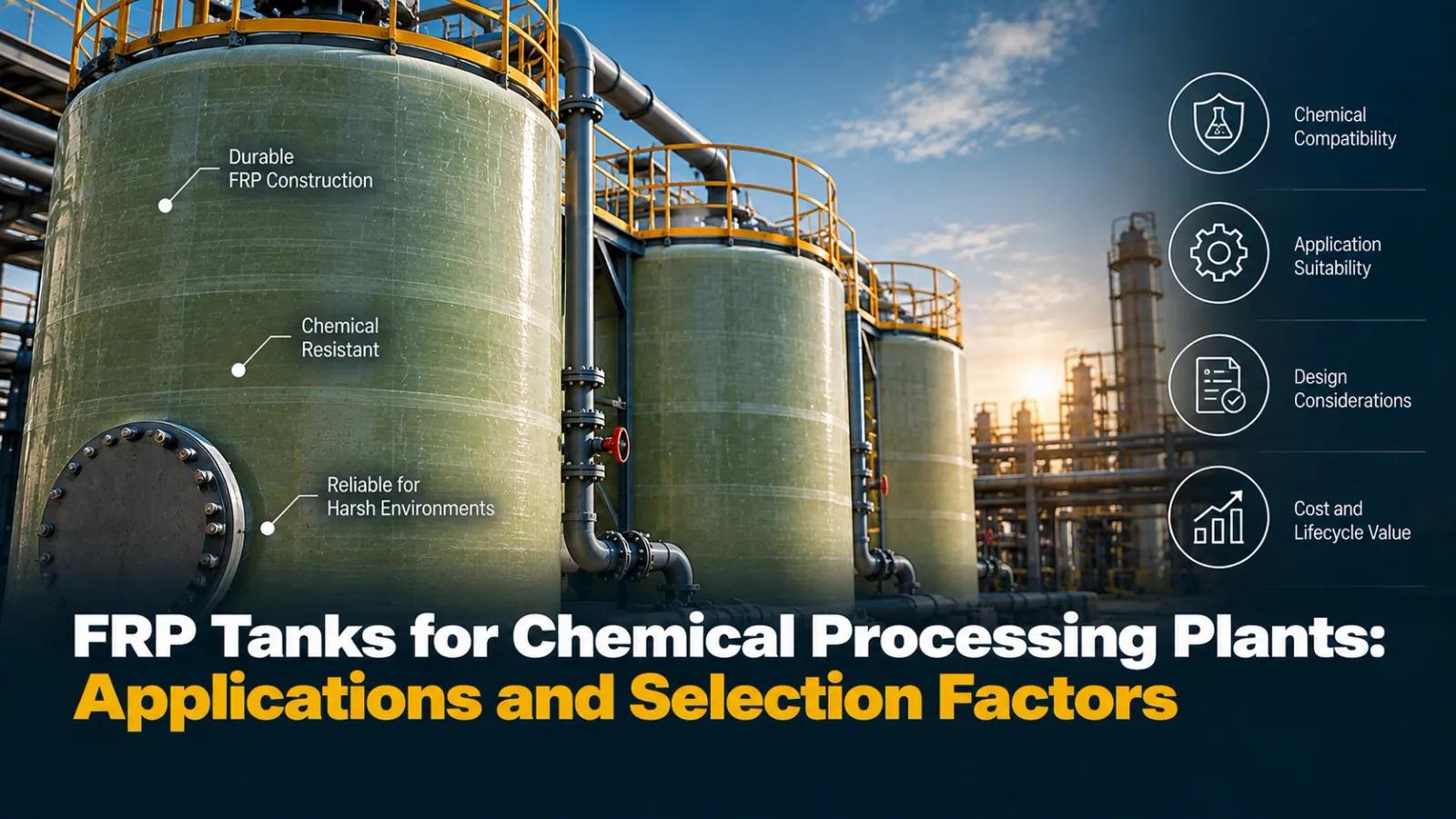
FRP tanks for chemical processing plants offer corrosion resistance, durability, and customizable design for handling acids, alkalis, and industrial chemicals
Read More →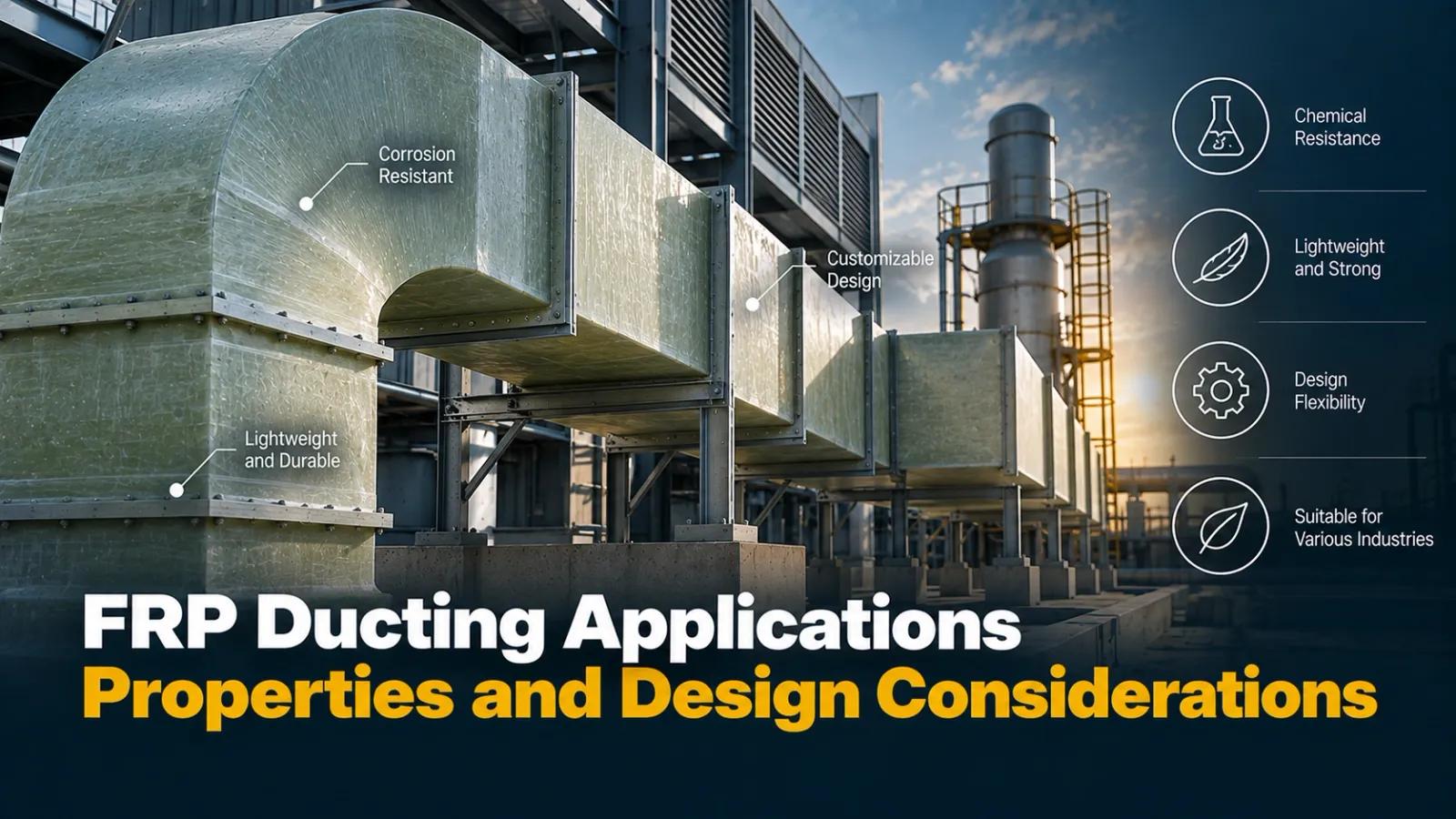
3 Oct 2026
Learn about FRP ducting applications, properties, material selection, and key design considerations for corrosive industrial environments.
Read More →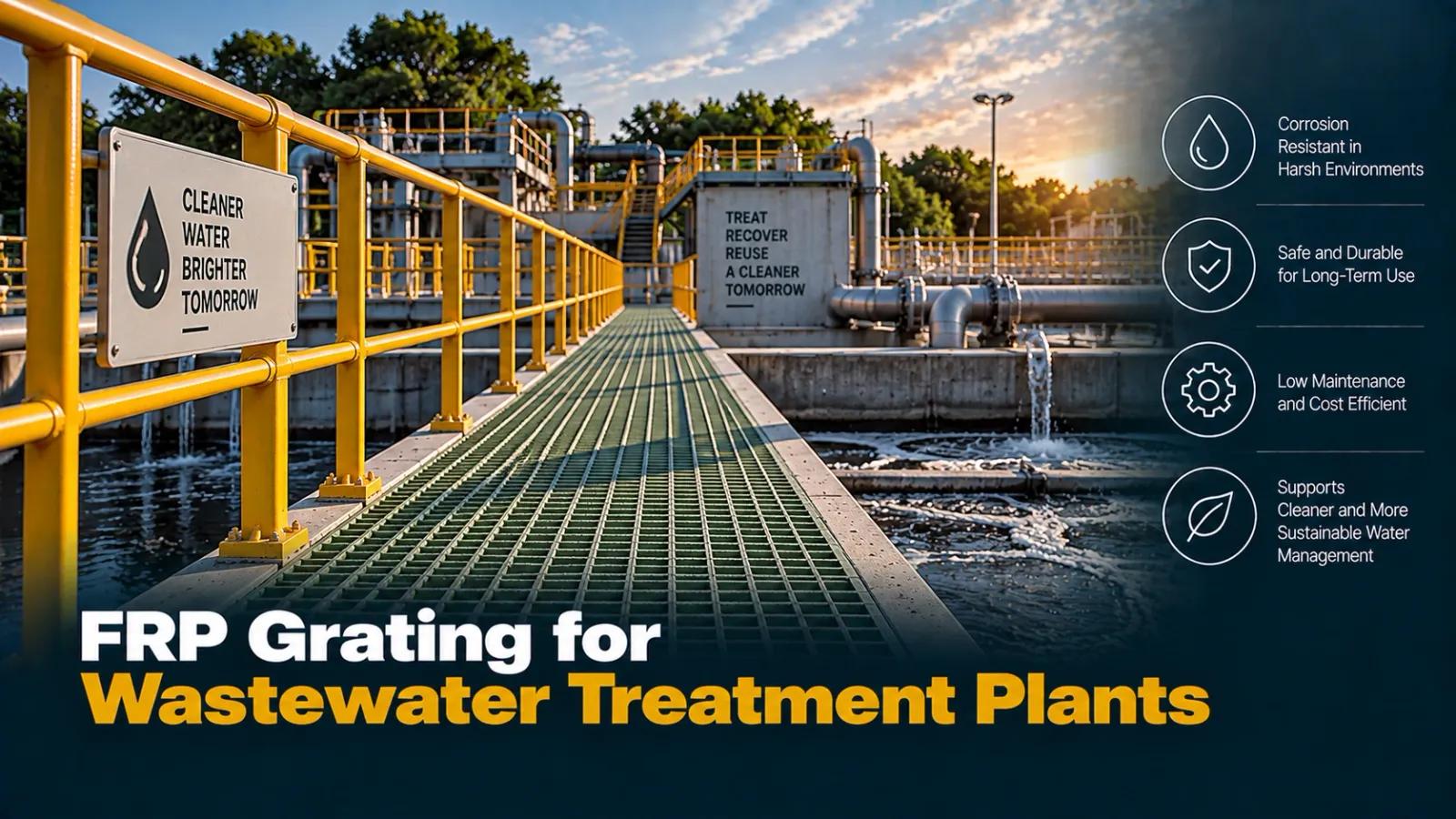
30 Sept 2026
Learn how FRP grating is used in wastewater treatment plants, including walkways, platforms, corrosion resistance, load capacity, resin selection, and key specification factors.
Read More →