FRP tanks for mining and smelting applications offer an alternative for storing and processing corrosive liquids where conventional materials may require additional corrosion protection. Fiber Reinforced Plastic combines fiberglass reinforcement with a resin system that can be selected according to the chemical and operating conditions of the application.
However, FRP tanks should not be chosen simply because they are corrosion resistant. Chemical compatibility, temperature, tank capacity, resin selection, mechanical requirements, and the actual process environment all need to be considered during the engineering stage.
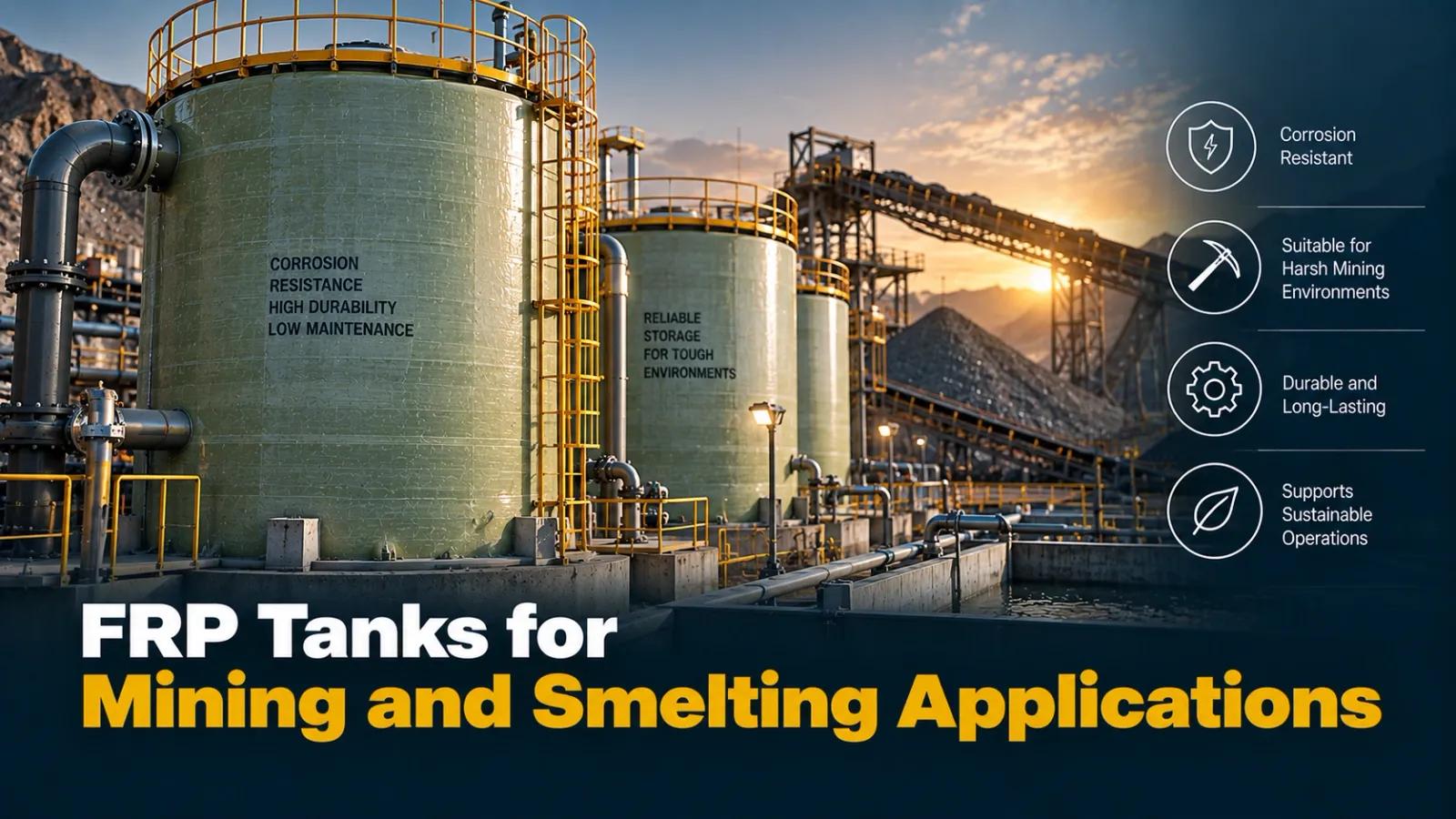
Mining operations involve more than extracting minerals from the ground. Ore processing, mineral separation, refining, smelting, and wastewater treatment can involve various liquids and chemicals. Depending on the process, FRP tanks may be considered for applications such as:
The requirements for each tank can be very different. A tank used for process water, for example, will not necessarily require the same resin system or corrosion barrier as a vessel exposed to a concentrated acidic solution. This makes FRP tank selection an engineering decision rather than simply choosing a standard tank size.
Corrosion is a major consideration in mining and metallurgical processing because equipment may come into contact with aggressive chemicals or operate in continuously wet and chemically exposed areas. FRP can be manufactured with a corrosion resistant layer designed around the expected service environment. This gives engineers more flexibility when specifying tanks for chemical applications.
The Fiber force® FRP Tank from GAJA is designed for chemical storage and processing applications and can be customized according to project requirements. In addition to corrosion resistance, FRP tanks offer several characteristics that can be useful in industrial facilities, including relatively low weight, high tensile strength, and flexibility in tank configuration.
These advantages do not mean FRP is automatically suitable for every process. The operating conditions still need to be evaluated before the material and laminate system are specified.
A reliable tank starts with accurate process information. Several factors should be reviewed before moving into design and manufacturing.
The first question is what liquid the tank will contain. Mining and smelting processes can involve different acids, alkalis, treatment chemicals, and process solutions. Chemical concentration can significantly affect material compatibility. Even when two tanks store the same chemical, differences in concentration may result in different material requirements.
Resin selection plays an important role in determining how an FRP tank performs in a corrosive environment. Different resin systems provide different levels of resistance to chemicals and temperature. For demanding applications, the choice should therefore be based on actual service conditions rather than selecting a resin based only on cost.
A more detailed explanation can be found in How to Select Resin for an FRP Chemical Storage Tank?
Chemical resistance and temperature should be evaluated together. A resin system that performs adequately at room temperature may behave differently when continuously exposed to elevated process temperatures. Project teams should provide expected normal and maximum operating temperatures during the design stage.
Mining facilities may require tanks ranging from smaller chemical preparation vessels to large volume storage tanks. GAJA's Fiber force® FRP Tank can be engineered for capacities of up to 2,000 m³. Tank height, diameter, nozzle locations, manholes, supports, connections, and access requirements can also be customized according to the process layout.
The tank must also account for operating loads and installation conditions. Factors such as location, support arrangement, liquid density, external loads, and project specifications should be considered as part of the engineering process.
Depending on project requirements, relevant standards may also become part of the specification. For a more focused discussion, see ASME RTP-1 for FRP Tanks: What Project Teams Should Know?
Real project experience is particularly important when evaluating FRP equipment for demanding industrial applications.
GAJA's project portfolio includes the design, engineering, and fabrication of FRP tanks for a Copper Smelter Plant requested by PT Merdeka Copper. This provides a practical example of FRP tanks being applied within a metallurgical processing environment rather than only for general water storage.
GAJA also has broader experience supporting mining and smelting projects with other FRP products. In 2023, the company supplied FRP pipe for acid line piping for the Merdeka Tsingshan Nickel Smelter project in Morowali.
Experience across tanks and piping is relevant because chemical processing systems often involve interconnected equipment where storage vessels, piping, fittings, and corrosion resistant components need to operate under the same demanding process environment.
FRP, steel, and HDPE each have advantages depending on the application. Steel offers high mechanical strength but may require additional consideration when exposed to corrosive chemicals. HDPE provides good chemical resistance for many applications, while its structural and temperature characteristics may differ from those of FRP.
FRP provides the ability to engineer the laminate and resin system around particular chemical environments, making it an option worth considering for specialized industrial service. For a broader comparison, project teams can review FRP Tank vs Steel and HDPE Tank: Which Is Better for Your Application?
The most appropriate tank is ultimately determined by the chemical, temperature, mechanical load, capacity, installation environment, and expected service conditions.
Mining and smelting projects often require more than a standard fabricated tank. Engineering support becomes especially important when chemicals, elevated temperatures, large capacities, or customized process connections are involved.
When evaluating an FRP tank manufacturer, project teams should consider:
GAJA provides design planning, manufacturing, customization, installation, and technical support for industrial FRP products, including FRP tanks for demanding applications.
Providing complete process information at an early stage including chemical type, concentration, temperature, capacity, and installation conditions, allows the engineering team to develop a tank specification that better matches the actual operating environment.
For mining, smelting, and mineral processing projects requiring customized corrosion resistant tanks, project teams can contact GAJA to discuss the required specifications and operating conditions.
FRP tanks can be suitable for many acidic solutions, but compatibility depends on the specific chemical, concentration, operating temperature, and resin system. These conditions should be evaluated before the tank is specified.
Yes. FRP tanks can be manufactured with customized dimensions, nozzles, manholes, supports, connections, and other features according to process and site requirements.
The resin system forms an important part of the tank's chemical resistant structure. Selecting the appropriate resin helps ensure compatibility with the stored chemical and expected operating temperature.
Yes. Large FRP tanks can be engineered for industrial storage and process applications. GAJA states that its Fiber force® FRP Tank can be manufactured for capacities of up to 2,000 m³, subject to project design requirements.
Project teams should ideally provide the stored chemical, concentration, operating and maximum temperature, liquid density, required capacity, installation location, nozzle requirements, and applicable project standards before detailed engineering begins.
30 Sept 2026
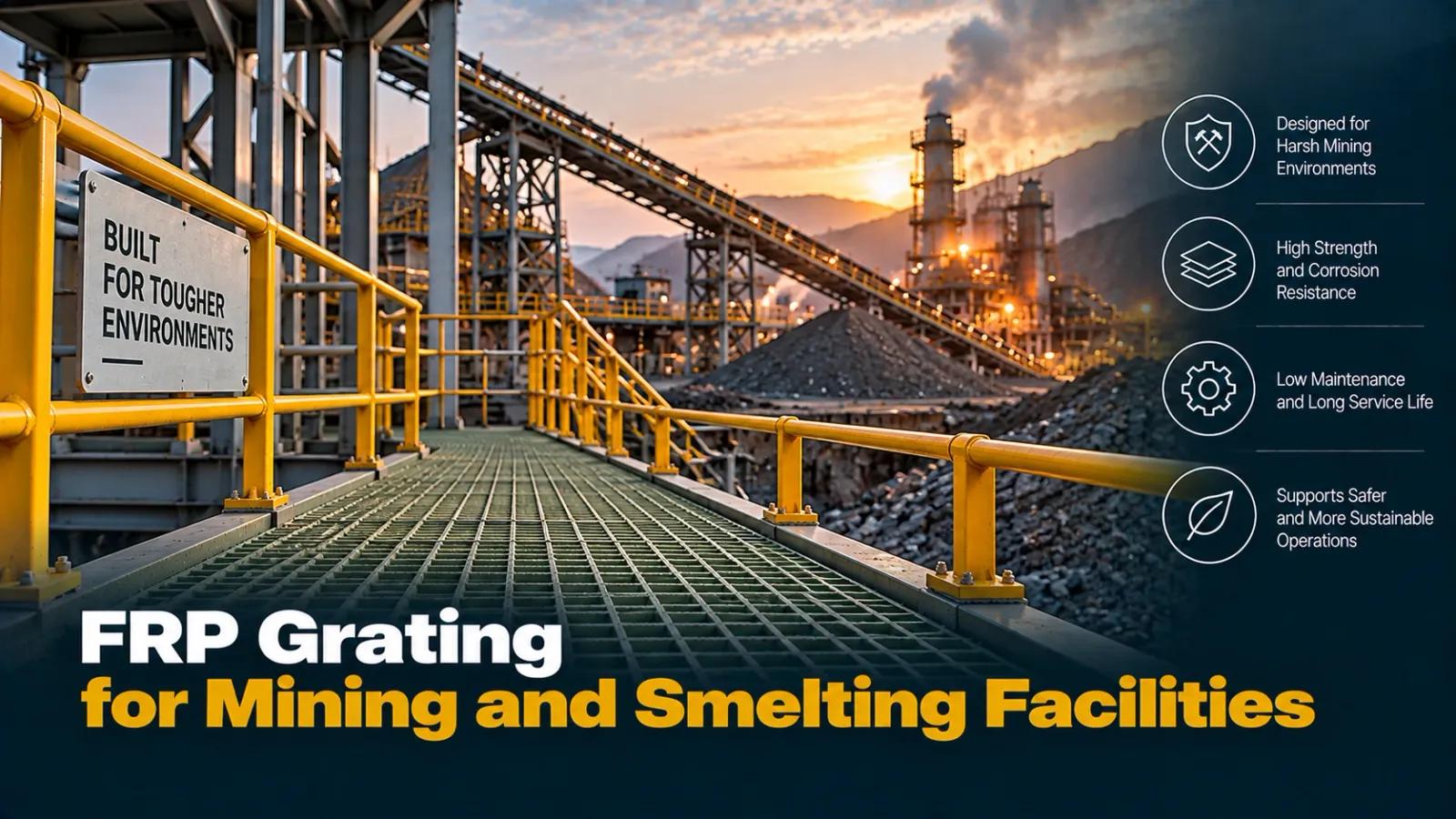
Discover FRP grating for mining and smelting facilities, including walkway applications, corrosion resistance, load capacity, resin selection, and key specification factors.
Read More →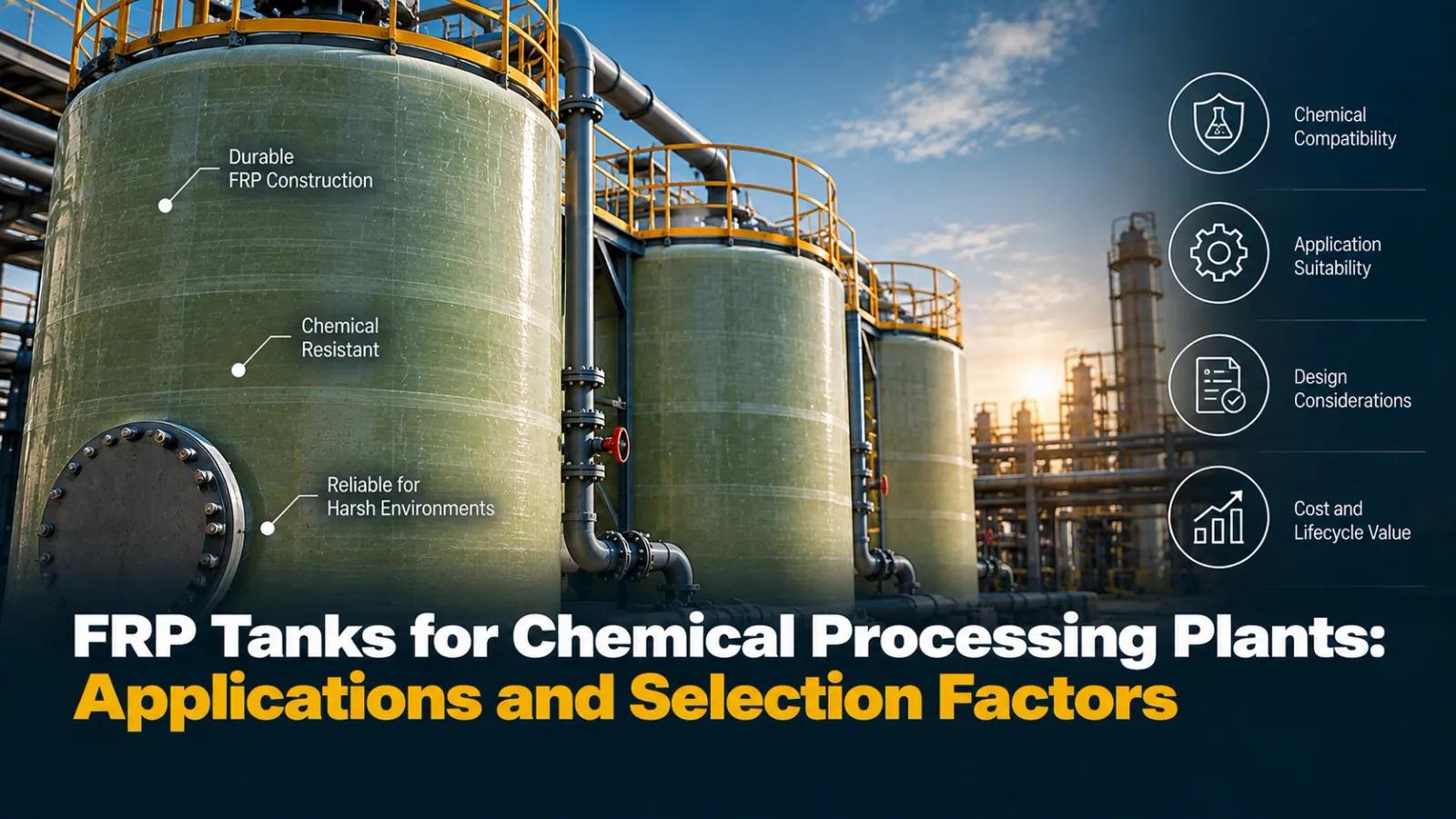
30 Sept 2026
FRP tanks for chemical processing plants offer corrosion resistance, durability, and customizable design for handling acids, alkalis, and industrial chemicals
Read More →
3 Oct 2026
Learn about FRP ducting applications, properties, material selection, and key design considerations for corrosive industrial environments.
Read More →