FRP grating for industrial walkways and platforms offers a lightweight and corrosion resistant alternative to conventional metallic grating for many industrial applications. Fiber Reinforced Plastic combines fiberglass reinforcement with a thermosetting resin system to create grating panels that can be engineered according to load, support span, chemical exposure, and installation requirements.
However, FRP grating should not be selected based only on its dimensions or corrosion resistance. Engineers should also consider traffic type, design loads, allowable deflection, surface requirements, resin system, and operating environment.
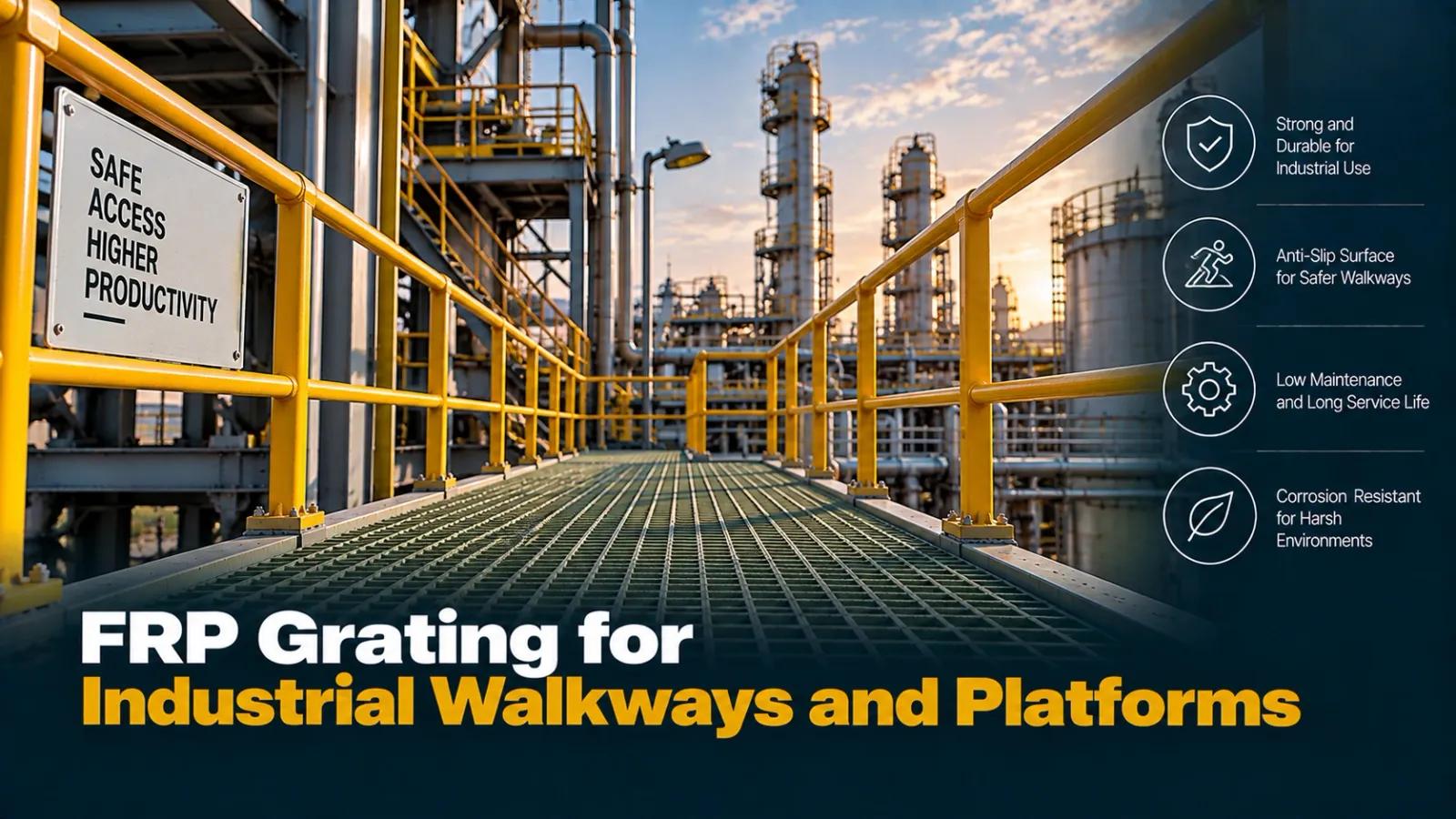
Walkways and platforms are required throughout many industrial facilities to provide access to equipment and processing areas. FRP grating can be considered for applications such as:
These applications can be found in chemical plants, mining facilities, water treatment plants, oil and gas facilities, power plants, manufacturing facilities, and other industrial environments. The required specification will depend on where the grating is installed. A maintenance walkway used occasionally by personnel, for example, may have different requirements from an operating platform that experiences frequent traffic and supports maintenance equipment.
One of the main reasons industrial facilities consider FRP grating is its ability to perform in environments where corrosion may become a concern.
FRP does not rust in the same way as carbon steel. When an appropriate resin system is selected, FRP grating can provide resistance to many environments involving moisture, chemicals, wastewater, and corrosive atmospheres. This can be particularly useful around tanks, chemical processing equipment, wastewater systems, and outdoor industrial areas.
FRP grating is relatively lightweight compared with steel grating. Lower weight can make panels easier to transport, lift, position, remove, and replace. This can be especially useful for elevated platforms or areas with limited installation access. Its lower weight may also reduce additional dead load on the supporting structure.
Despite being lightweight, fiberglass reinforcement provides FRP grating with useful structural strength for many walkway and platform applications. However, strength should never be evaluated based on material type alone. Panel thickness, construction, support span, load direction, and required deflection limits all influence the final specification.
A common mistake when selecting industrial grating is assuming that a thicker panel automatically provides the correct solution. In reality, several factors affect grating performance:
Support span is particularly important. As the distance between supports increases, the grating may experience greater deflection under the same load. Two installations using the same FRP grating panel can therefore perform differently if their support arrangements are different. Project engineers should review the manufacturer's load data before finalizing a specification. For a more technical explanation, see How to Read FRP Grating Load Tables.
Industrial floors and walkways can become wet due to rain, washdown operations, process water, chemical splash, or other liquids. Surface condition should therefore be considered when selecting FRP grating.
Depending on the product configuration, grating surfaces can be designed to improve footing for personnel moving through wet or frequently accessed areas. However, slip resistance should not be treated as a universal property of every FRP grating product. Surface type, contamination, maintenance, footwear, and operating conditions can all affect walking safety. Project teams should specify the expected environment when selecting a suitable surface configuration.
Resin selection becomes especially important when industrial walkways are located near chemicals or corrosive processes. An FRP platform around a chemical storage area, for example, may experience:
The chemical type, concentration, temperature, and frequency of exposure should be considered when selecting the resin system. A walkway that experiences occasional chemical splash may have different requirements from grating installed directly above an aggressive chemical process. This is why engineers should provide actual environmental information rather than simply specifying "corrosion resistant FRP grating."
Industrial projects may encounter both molded and pultruded FRP grating. Molded FRP grating is manufactured as an integrated grid panel and is commonly considered for walkways, platforms, trenches, and corrosive industrial environments.
Pultruded grating uses pultruded load bearing bars assembled into panels and can provide different structural characteristics depending on its design. The appropriate type should be determined by factors including:
Rather than assuming one construction is universally better, engineers should match the grating type to the application. See Molded vs Pultruded FRP Grating: Key Differences for a more detailed comparison.
Steel grating remains widely used for industrial walkways because of its structural capability and familiarity within engineering projects. FRP provides a different set of advantages.
In corrosive environments, engineers may need to consider not only initial material cost but also corrosion protection, installation, inspection, maintenance, and possible replacement over the service life of the platform.
FRP can offer advantages in areas where corrosion resistance and lower weight are priorities, while steel may remain more appropriate for applications with different structural requirements.
The decision should therefore be based on the complete operating conditions rather than assuming one material is always superior. A more detailed comparison is available in FRP Grating vs Steel Grating: Performance and Lifecycle Cost.
Before requesting FRP grating, project teams should prepare several pieces of information:
Providing this information helps the manufacturer evaluate the application more accurately instead of recommending grating based only on panel dimensions. GAJA offers FRP Grating for flooring and walkway applications as part of its range of industrial FRP solutions. For facilities requiring customized grating for walkways, platforms, access areas, or other industrial flooring applications, the specification should be discussed according to the actual load, span, environmental exposure, and installation requirements.
Project teams can contact GAJA to discuss FRP grating dimensions, loading conditions, chemical exposure, and other technical requirements before determining the final product specification.
Yes. FRP grating can be used for many industrial walkway applications when the load capacity, support span, resin system, surface, and environmental conditions are properly specified.
Yes, depending on the structural requirements. Engineers should evaluate design loads, support spacing, allowable deflection, panel configuration, and supporting structures before installation.
Thickness should not be selected independently. Required load, support span, grating construction, traffic type, and allowable deflection should all be evaluated using manufacturer load data.
FRP grating can be suitable for wet industrial areas, but the surface configuration should be selected according to the expected operating conditions and required slip resistance.
FRP can replace steel in some applications, particularly where corrosion resistance and lower weight provide advantages. However, structural loads, span, temperature, fire requirements, and project specifications should be evaluated before changing materials.
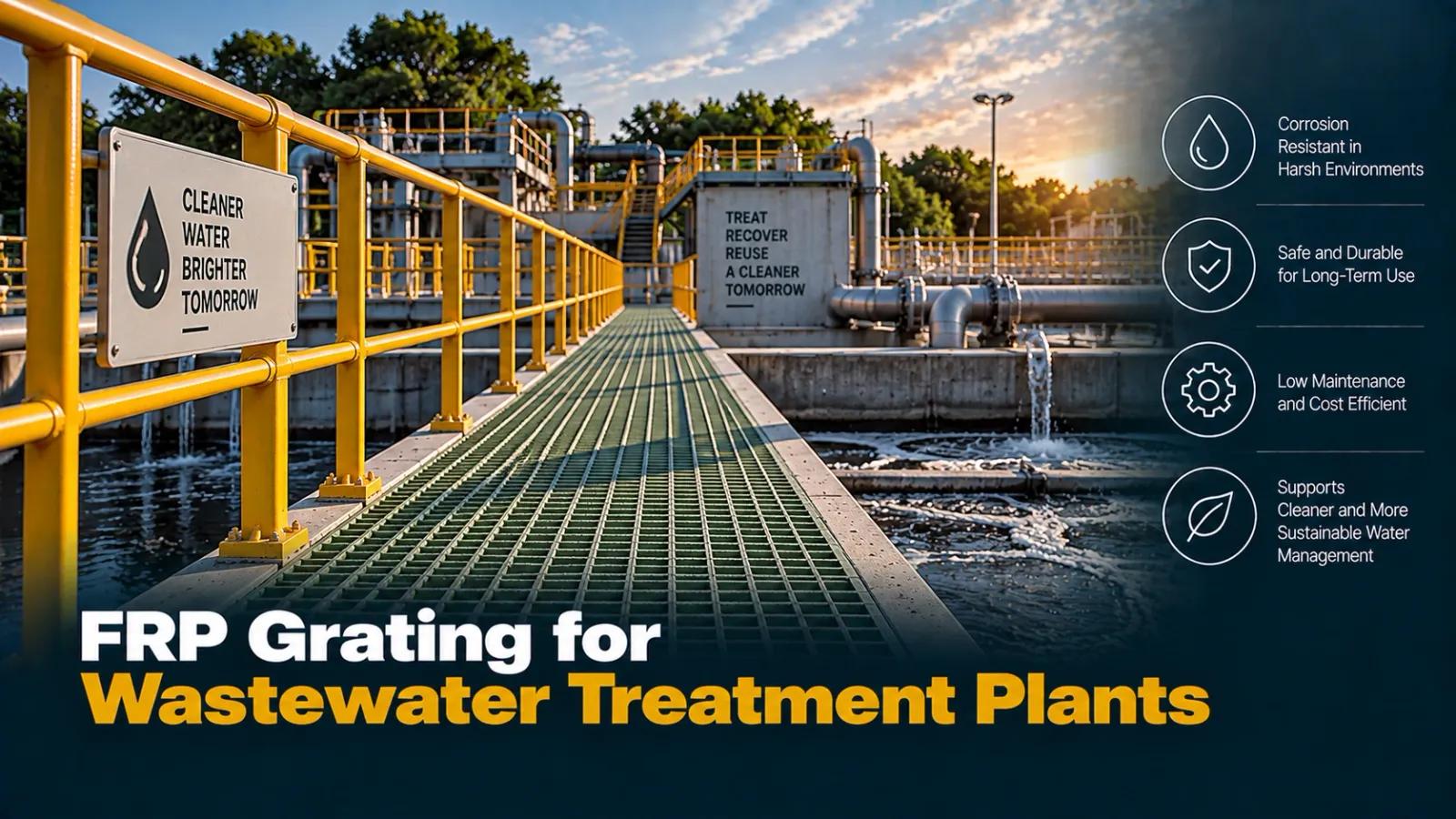
30 Sept 2026
Learn how FRP grating is used in wastewater treatment plants, including walkways, platforms, corrosion resistance, load capacity, resin selection, and key specification factors.
Read More →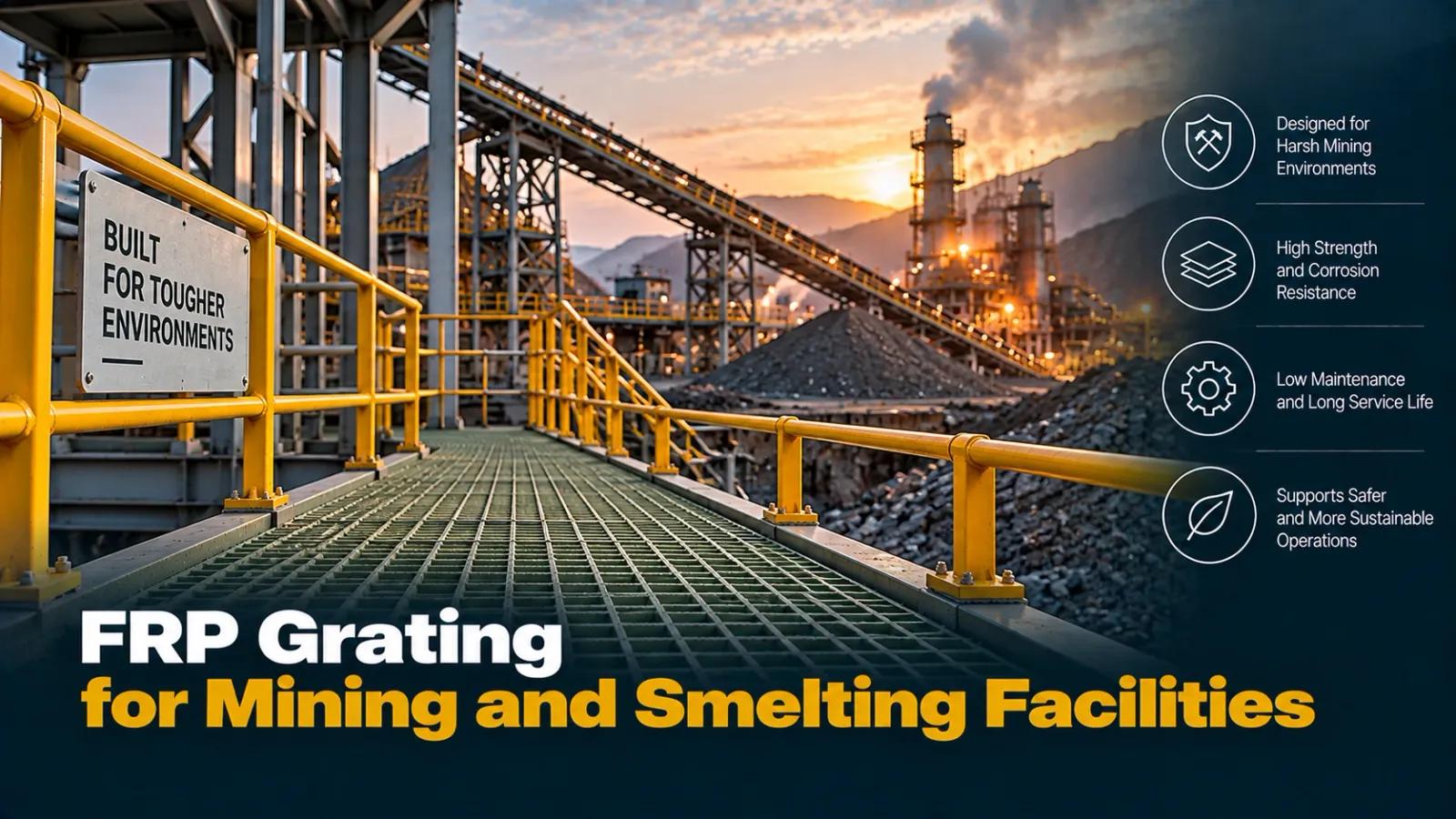
30 Sept 2026
Discover FRP grating for mining and smelting facilities, including walkway applications, corrosion resistance, load capacity, resin selection, and key specification factors.
Read More →
30 Sept 2026
Learn how FRP grating is used in chemical plants, including applications, corrosion resistance, load capacity, resin selection, molded vs pultruded grating, and key selection factors.
Read More →