FRP tanks are storage or processing tanks made from fiber reinforced plastic, a composite material that combines strong reinforcing fibers with protective resin. These tanks are widely used in industrial environments to store water, chemicals, and process liquids, especially where corrosion resistance is essential.
So, what exactly are FRP tanks, how are they made, and why are they used in so many industries?
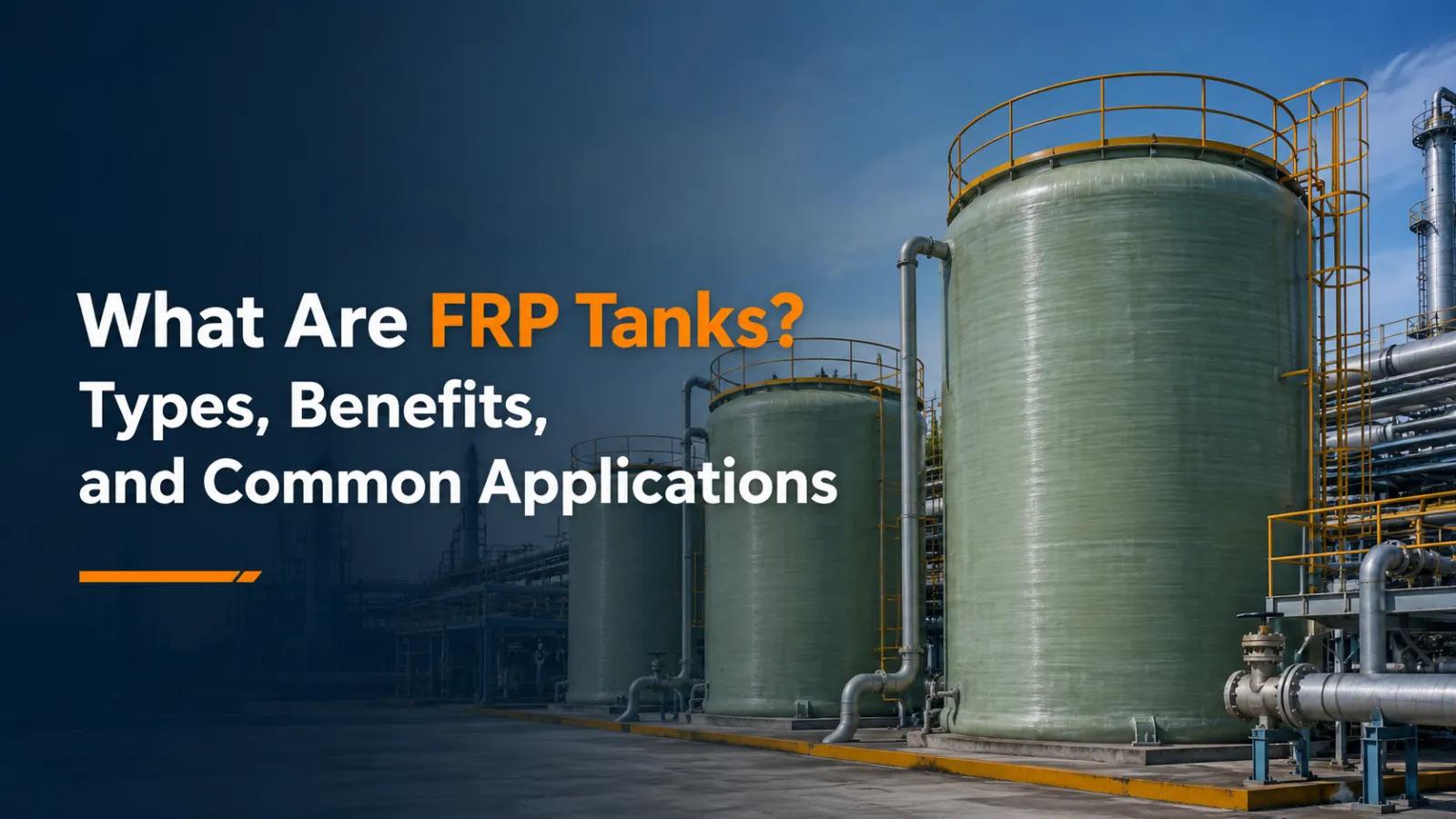
FRP stands for fiber reinforced plastic. An FRP tank is made from a composite material that combines reinforcing fibers with polymer resin.
The fibers provide structural strength, while the resin binds the material together and protects it from moisture, corrosion, and chemical exposure. This combination results in a tank that is lightweight yet strong enough for demanding industrial applications.
Unlike steel tanks, FRP tanks do not rust. This makes them ideal for storing water, acids, alkaline solutions, and other corrosive substances. Because of this advantage, FRP tanks are often used in environments where long term exposure to moisture or chemicals would quickly damage traditional materials.
The performance of an FRP tank depends heavily on how it is manufactured.
The process begins with selecting the appropriate resin and reinforcement materials. Different chemicals require different resin systems, so material selection is critical to ensure compatibility and durability.
One common manufacturing method is filament winding. In this process, fibers coated with resin are wound around a rotating mould in controlled patterns. This allows manufacturers to adjust strength, thickness, and durability based on the tank’s intended use.
An FRP tank typically consists of several layers:
After layering, the tank is cured until it becomes solid and ready for inspection. Proper curing ensures that the tank achieves its designed strength and chemical resistance.
FRP tanks come in various shapes and configurations depending on application needs.
Vertical tanks are installed upright and are ideal for storing large volumes while saving floor space. They are commonly used for water storage, chemical storage, and wastewater treatment. Their design allows efficient use of limited land area.
Horizontal tanks are installed lengthwise and supported by saddles. They are suitable for areas with limited height and can simplify piping and maintenance access. This type is often used when vertical installation is not practical.
These tanks are designed specifically for corrosive substances. The resin system must be carefully selected based on the chemical type, concentration, and temperature to ensure long term performance and safety.
FRP tanks can also be used for mixing or processing. These tanks may include agitators, baffles, and reinforced structures to support equipment. They are commonly used in industries that require blending or chemical reactions.
Reactor tanks are used for controlled chemical reactions. They require more advanced engineering due to additional loads, temperature variations, and process conditions.
FRP tanks offer several advantages that make them suitable for industrial use.
| Benefit | Description |
|---|---|
Corrosion Resistance | FRP tanks do not rust like steel tanks. With the right resin, they can resist acids, alkalis, and other chemicals, making them ideal for harsh environments where corrosion is a major concern. |
Lightweight but Strong | FRP tanks are lighter than metal tanks, making them easier to transport and install. Despite their lower weight, they provide strong structural performance due to fiber reinforcement. |
Customizable Design | FRP tanks can be tailored to meet specific requirements, including size, shape, connections, and internal components. This flexibility allows industries to design tanks that match their exact operational needs. |
Lower Maintenance | Because they do not corrode, FRP tanks require less maintenance compared to steel tanks. This can reduce long term operational costs, although regular inspections are still necessary. |
Versatile Applications | FRP tanks can be used for various purposes such as water storage, chemical storage, mixing, processing, wastewater treatment, and reactor systems. |
FRP tanks are widely used across multiple industries due to their durability and corrosion resistance.
FRP tanks are used across many industries, particularly where corrosion resistance and customization are important.
Chemical manufacturing facilities regularly handle raw materials, process liquids, and finished products that may be corrosive.
FRP tanks can be used for chemical storage, blending, intermediate processing, dosing, and waste collection. The material specification must always be matched with the chemical being handled.
Water treatment facilities use tanks for various purposes, including chemical dosing, treated water storage, sedimentation support, and wastewater collection.
Because water treatment environments often involve moisture and treatment chemicals, FRP provides an effective alternative to materials that are vulnerable to corrosion.
Food and beverage facilities may use FRP tanks for water treatment, utilities, process support, and certain storage applications.
For these projects, the manufacturer must consider hygiene requirements, cleaning procedures, internal surface quality, and applicable industry standards.
In pharmaceutical facilities, FRP tanks may be used for water treatment, utility systems, chemical storage, and wastewater management.
The tank design should be adjusted to the facility's process requirements, quality procedures, and operational standards.
Pulp and paper manufacturing involves large volumes of water and various processing chemicals.
FRP tanks may be used for chemical preparation, storage, mixing, wastewater treatment, and supporting processes. Their resistance to moisture and corrosion makes them suitable for these operating environments.
Mining operations may involve corrosive chemicals, abrasive environments, and demanding outdoor conditions.
FRP tanks can support chemical storage, process water management, wastewater treatment, and environmental control systems. The design must consider the stored liquid as well as the conditions at the mining site.
An FRP tank is an engineered product. Its performance does not depend only on the FRP material, but also on the quality of the design, manufacturing process, installation, and technical support.
GAJA Fiberglass is an Indonesian FRP engineering and manufacturing company with more than 19 years of experience. The company provides customized FRP solutions for various industrial sectors.
GAJA Fiberglass also holds ISO 9001, ISO 14001, and ISO 45001 accreditations, supporting its commitment to quality, environmental management, and occupational health and safety.
Through its Fiber force® FRP Tank solution, GAJA Fiberglass provides:
Each tank can be developed according to the required capacity, stored material, operating conditions, and installation environment.
Contact GAJA Fiberglass for consultation:
Indonesia Head Office
Email: marketing@gajafiberglass.com
Phone: +62 21 4585 3491
WhatsApp: +62 811 186 7919
Address: Jl. Gading Batavia Blok LC11 No. 21–22, Kelapa Gading Permai, Jakarta 14240, Indonesia
Australia Representative
Contact Person: Mr. Victor Bhave
Email: victor.bhave@gajafiberglass.com
Phone: +61 41 424 0017
Address: PO Box 774, Warners Bay, NSW 2282, Australia
Discuss your FRP tank requirements with GAJA Fiberglass and receive a solution designed according to your capacity, chemical compatibility, operating conditions, and installation needs.
FRP stands for fiber reinforced plastic. It is a composite material made by combining reinforcing fibers with polymer resin.
No. FRP tanks do not rust like ordinary steel tanks because they are not made from metal. However, they still need regular inspection and proper maintenance.
Yes, FRP tanks can store various chemicals when the correct resin system and corrosion barrier are used. Chemical compatibility must be checked before manufacturing.
Yes. The dimensions, capacity, resin, nozzle positions, manholes, supports, and internal components can be customized according to the project requirements.
The service life of an FRP tank depends on its material selection, manufacturing quality, operating conditions, chemical exposure, installation, and maintenance.
3 Oct 2026
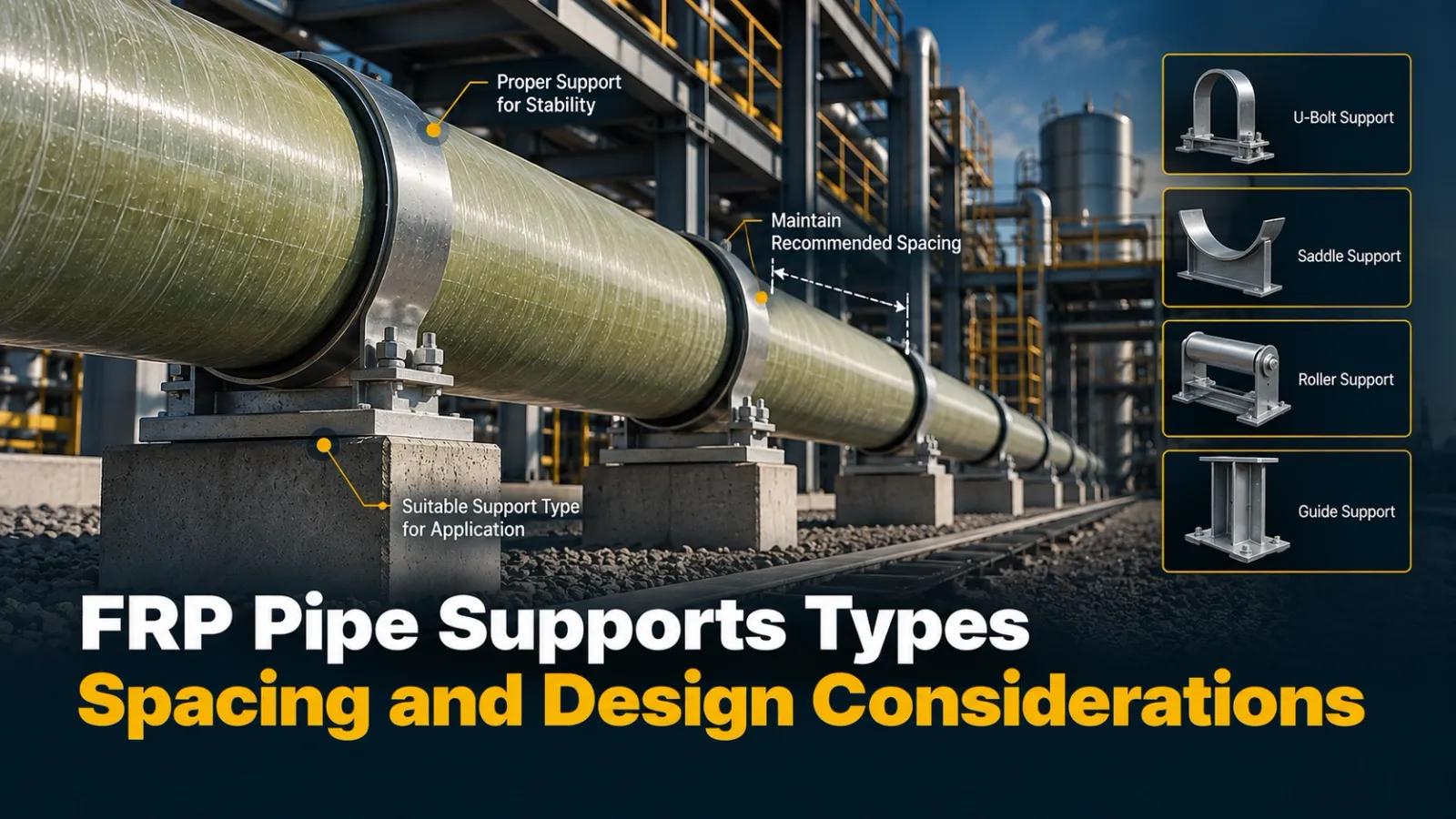
Learn about FRP pipe supports, types, spacing, load considerations, and design factors for safe and reliable FRP piping systems.
Read More →
3 Oct 2026
Learn FRP pipe joining methods, including flanged, adhesive, lamination, and mechanical joints, plus key installation considerations.
Read More →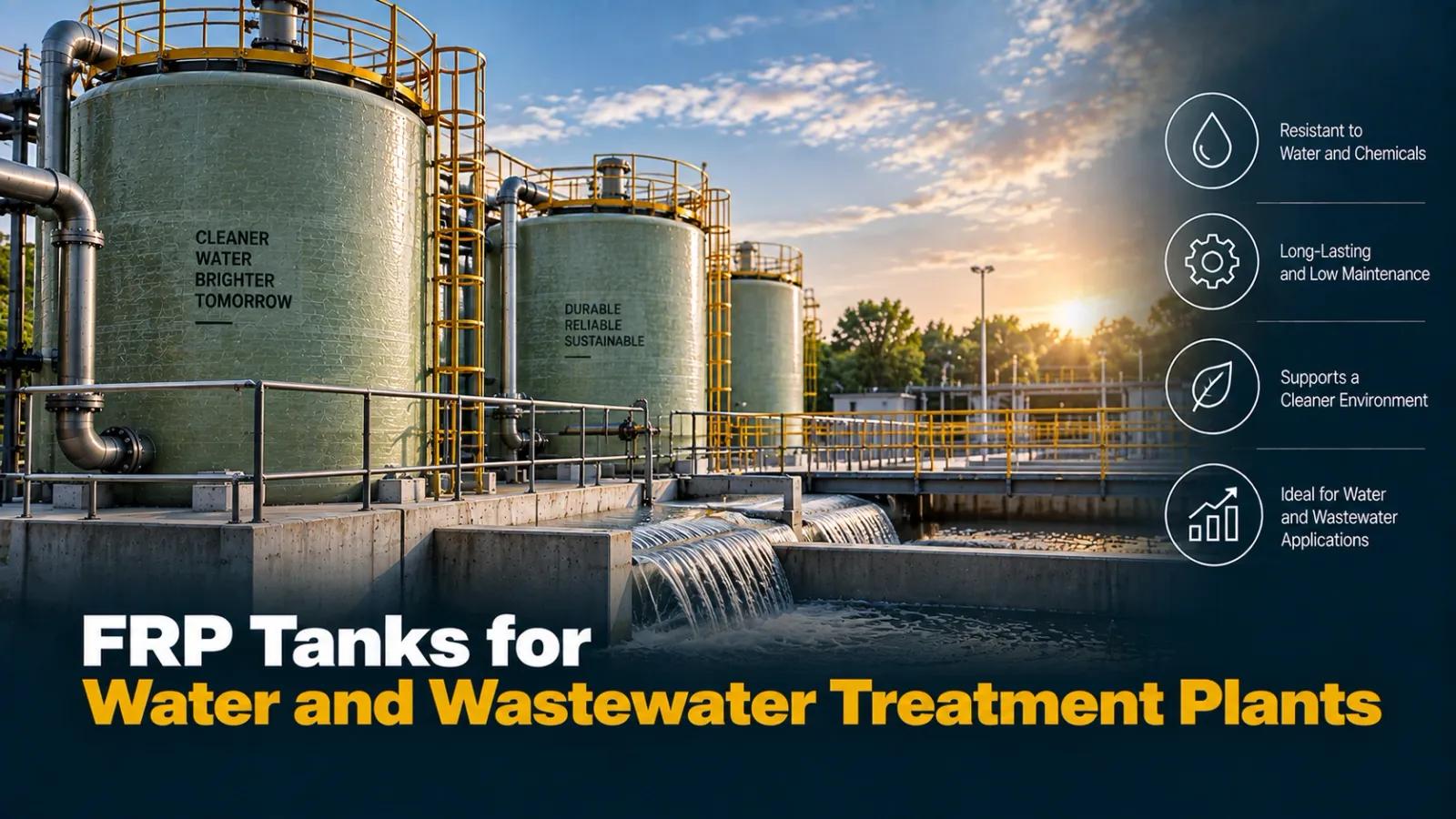
30 Sept 2026
FRP tanks for water and wastewater treatment plants offer corrosion resistance, durability, and customizable design for chemical storage, dosing, and industrial effluent applications.
Read More →