How long does FRP roofing last? High quality fiberglass reinforced plastic roofing can often provide approximately 10–25 years of service, depending on material quality, UV protection, environmental conditions, and maintenance. However, actual lifespan varies between products, and roofing exposed to harsh chemicals or extreme weather may deteriorate sooner. Understanding what affects FRP roofing durability helps factory owners, contractors, and facility managers choose appropriate roofing materials and plan long term maintenance.
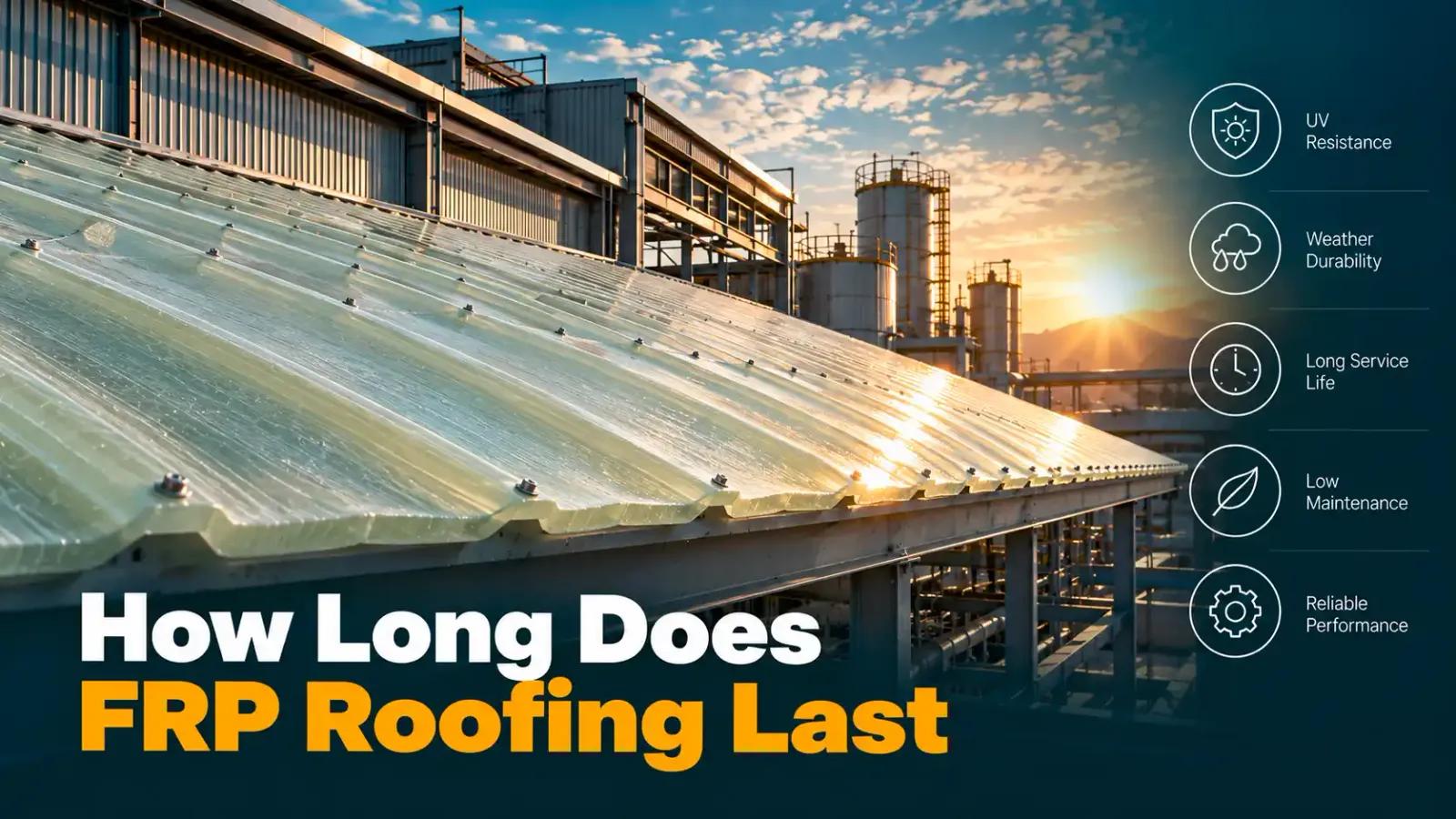
FRP (Fiberglass Reinforced Plastic) roofing is a composite roofing material manufactured using fiberglass reinforcement and polymer resin. This combination creates lightweight panels that offer mechanical strength, corrosion resistance, and weather protection.
Unlike conventional steel roofing, fiberglass roofing sheets do not develop metallic rust when exposed to moisture or humid environments. FRP roofing is commonly used for factories, warehouses, chemical processing plants, agricultural buildings, and industrial facilities.
GAJA manufactures Composite Alum® GFRP Roof, featuring chemical resistant resin and UV protective PE film designed to improve roofing durability in industrial environments.
The expected lifespan of FRP roofing depends on the product's specifications and operating environment. Standard fiberglass roofing panels may remain serviceable for around 10–15 years under suitable conditions, while certain premium UV protected products can achieve 20–25 years or longer.
These figures are general industry estimates rather than guaranteed performance for every product. For example, GAJA states an up to 10 year durability guarantee for its Composite Alum® GFRP roofing products. The actual service life of an industrial roofing system also depends on installation quality, environmental exposure, and maintenance practices.
Several factors determine how long fiberglass roofing panels maintain their structural integrity and protective properties.
The resin formulation and fiberglass reinforcement directly influence roofing durability. High quality resins provide resistance against moisture, chemicals, and environmental exposure, while fiberglass reinforcement contributes mechanical strength. Different resin systems offer different performance characteristics. Selecting materials compatible with the building environment is essential for long term reliability.
Continuous sunlight exposure can gradually affect fiberglass roofing materials. Without sufficient ultraviolet protection, polymer resin may experience discoloration, chalking, or surface degradation.
UV resistant resin formulations, protective films, and appropriate coatings help reduce these effects. Products designed for outdoor applications should include suitable UV protection, particularly in tropical climates with strong year round sunlight.
Industrial buildings may expose roofing materials to chemical fumes, acidic vapors, or other corrosive substances. FRP roofing is often selected because suitable resin systems can resist chemicals that may damage conventional metal roofing. However, chemical compatibility remains important because not all fiberglass composites withstand every industrial substance.
Incorrect installation can reduce the service life of even high quality FRP roofing sheets. Improper fastening, inadequate support spacing, insufficient panel overlap, and poor sealing may cause leaks or mechanical damage. Roofing contractors should follow manufacturer specifications for fastener placement, expansion allowances, and structural support.
Heavy rainfall, strong winds, temperature fluctuations, and airborne debris can affect roofing performance. FRP roofing sheets must be designed for expected wind loads and local environmental conditions. Suitable panel thickness, structural supports, and fastening systems help maintain stability during challenging weather.
Routine maintenance helps identify developing problems before they become serious. Facility managers should inspect roofing surfaces, fasteners, joints, and drainage areas for signs of deterioration. Proper drainage is also important. GAJA offers Dura LITE® FRP Gutter for industrial buildings requiring corrosion resistant rainwater management.
Even durable fiberglass roofing can gradually deteriorate over time. Common warning signs include:
Minor damage may sometimes be repaired, depending on the panel condition and manufacturer recommendations. However, extensive cracking, weakened panels, or recurring leaks may indicate that replacement is necessary. Roof inspections should be conducted by qualified personnel using appropriate fall protection measures.
Proper maintenance and installation practices can help maximize fiberglass roofing service life.
Select roofing materials based on chemical exposure, temperature, structural requirements, and local weather conditions.
Remove accumulated leaves, debris, and contaminants using cleaning methods approved by the manufacturer.
Ensure gutters and drainage outlets remain clear to prevent standing water and excessive moisture accumulation.
Inspect the roofing system after severe weather and during scheduled facility maintenance. GAJA's Ammonia Urea II Plant project in Gresik demonstrates the application of GFRP roofing and skylight materials in an industrial fertilizer facility.
Choosing the right roofing material is essential for protecting industrial buildings and managing long term maintenance requirements. GAJA provides customizable Composite Alum® GFRP Roofing with UV and chemical resistant properties, supported by design planning, manufacturing, and installation services. For factories, warehouses, or industrial facilities considering fiberglass roofing, contact GAJA to discuss suitable roofing specifications for your project.
It depends on the environment and material specifications. FRP can offer advantages in corrosive environments, while properly coated metal roofing can also provide a long service life.
FRP roofing may become more brittle if prolonged UV exposure, unsuitable chemicals, or aging degrade the resin. Proper material selection and protective coatings can help reduce deterioration.
Some FRP roofing products can be recoated using compatible protective systems. However, surface preparation and coating compatibility must be verified with the manufacturer.
Translucent fiberglass roofing panels can provide many years of service, but their lifespan depends on UV protection, resin quality, and environmental conditions. GAJA offers Dura LITE® GFRP Roof and Cladding for industrial skylight applications.
13 Oct 2026
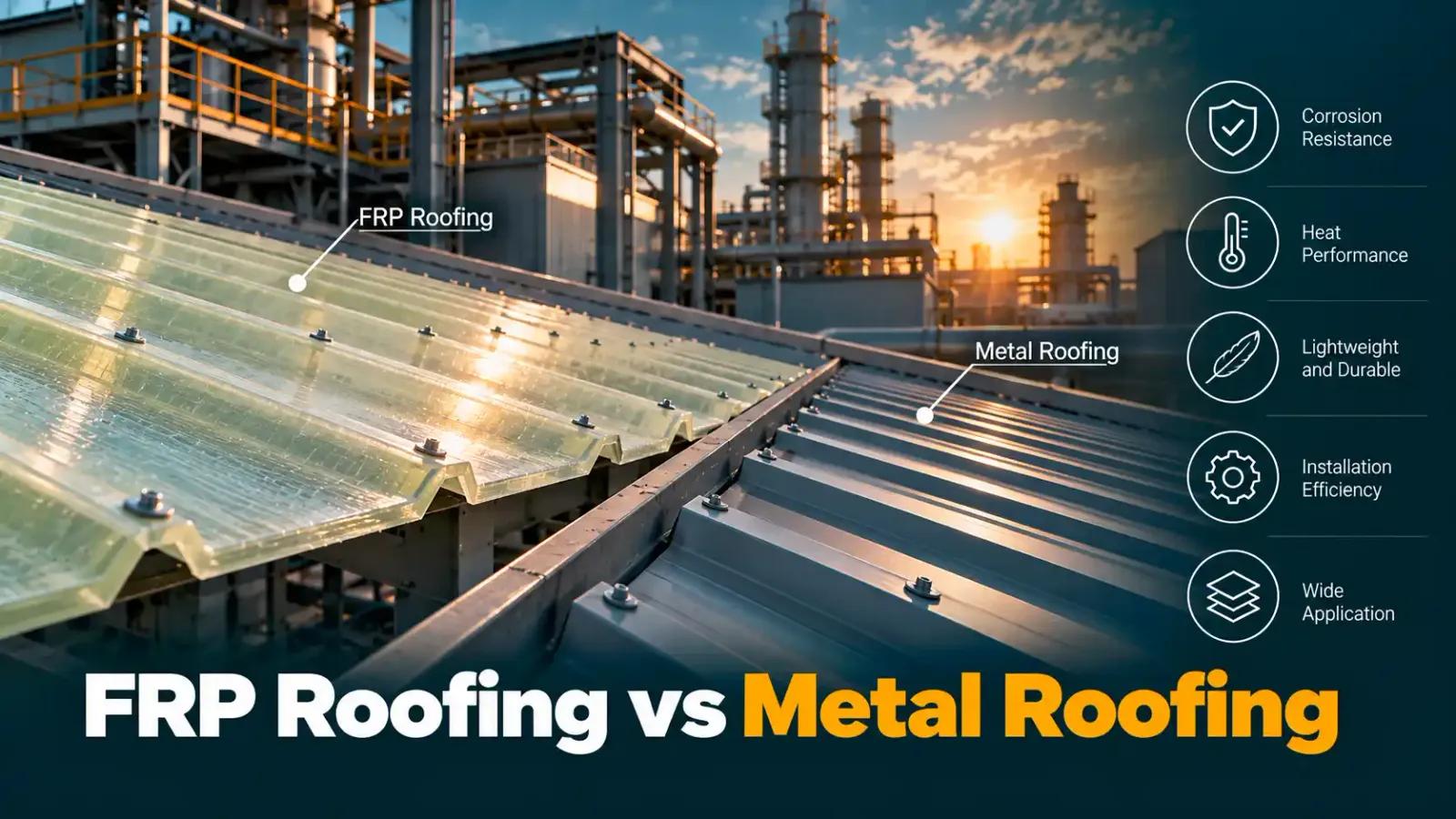
Compare FRP roofing vs metal roofing in corrosion resistance, durability, heat performance, installation, and cost for industrial buildings.
Read More →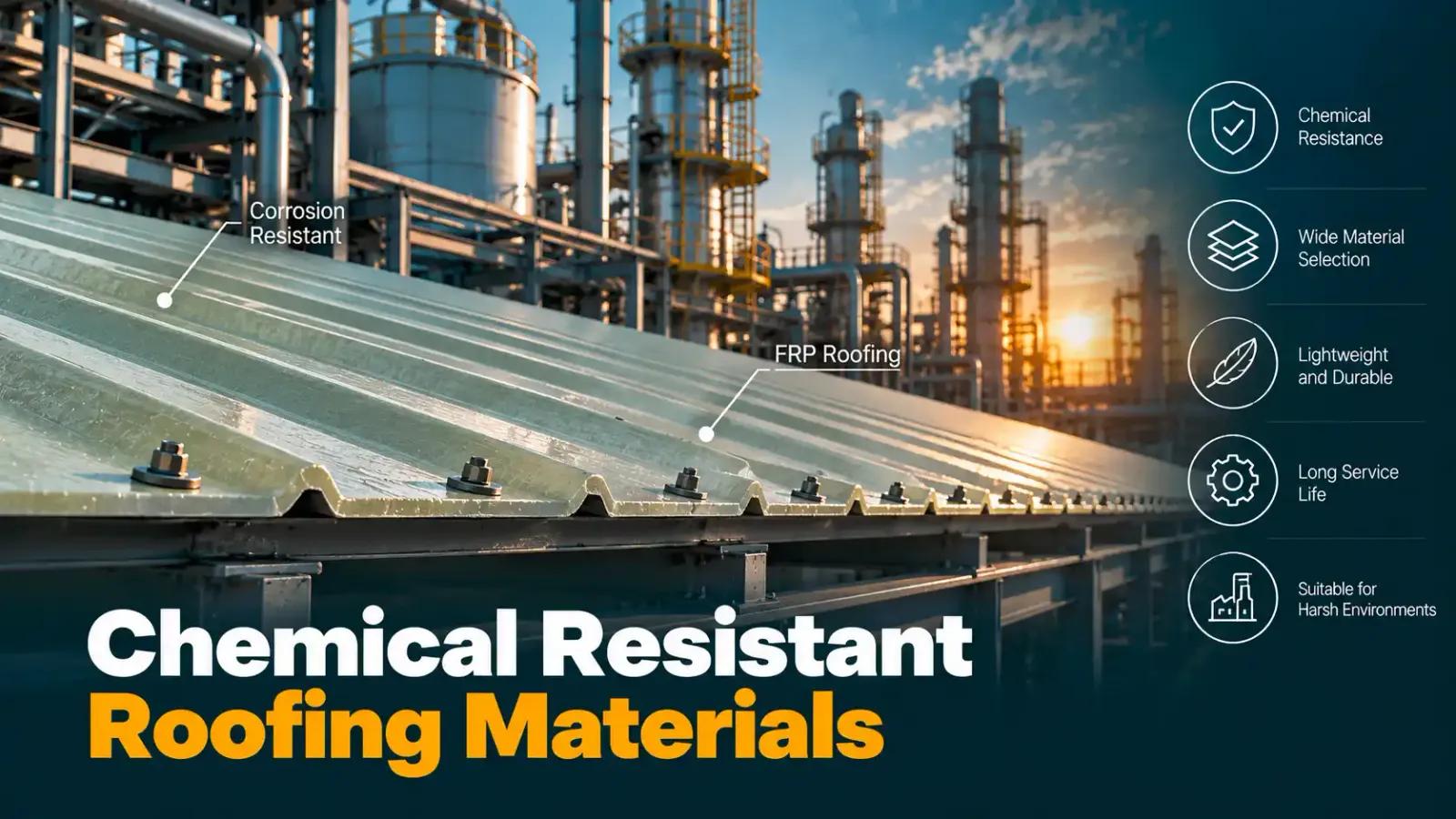
13 Oct 2026
Explore 5 chemical resistant roofing materials for factories and industrial buildings, including FRP, PVC, stainless steel, coated metal, and aluminum.
Read More →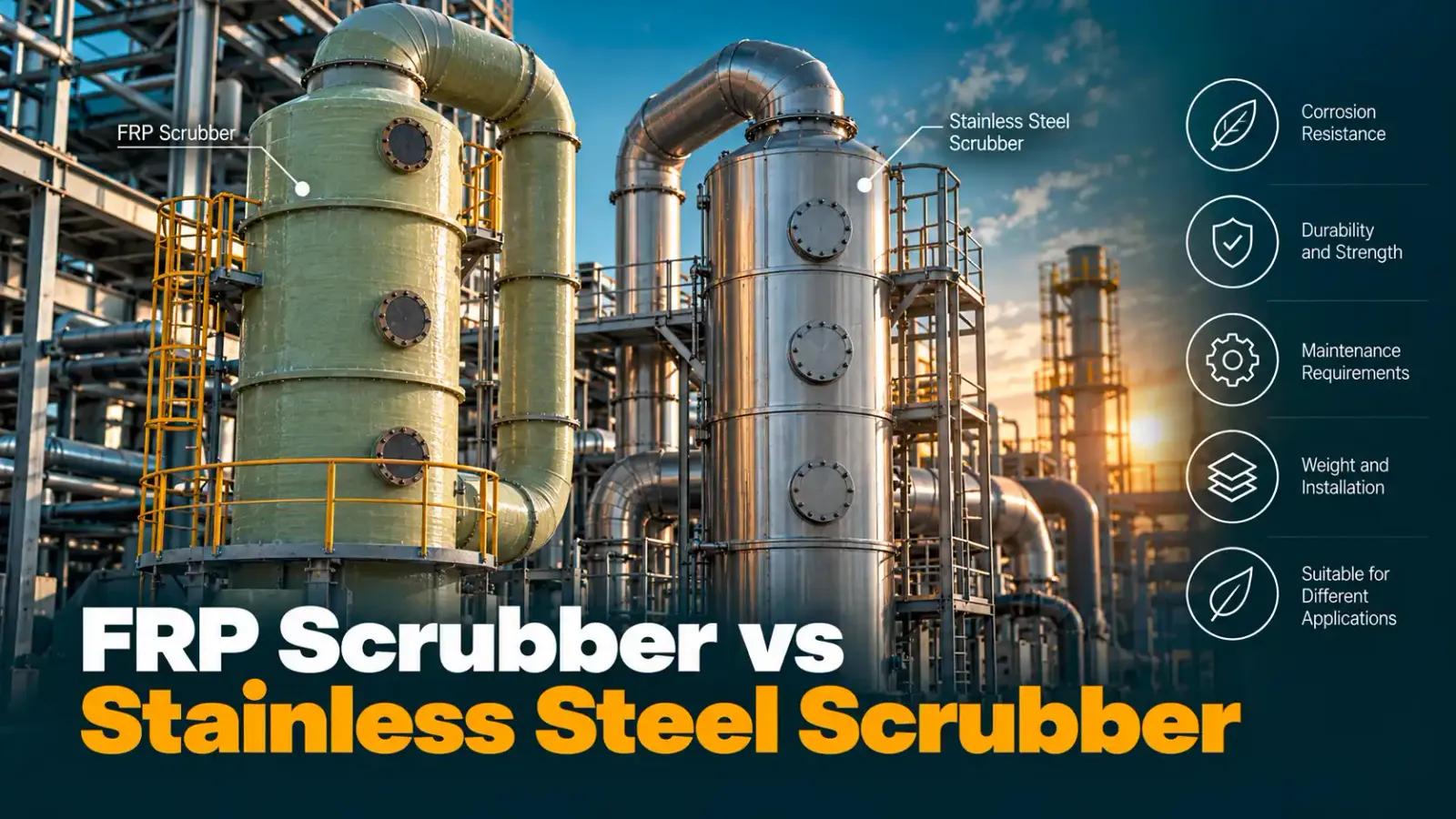
13 Oct 2026
Compare FRP scrubber vs stainless steel scrubber in corrosion resistance, temperature, durability, installation, and cost for industrial applications.
Read More →