How does a wet scrubber work? A wet scrubber removes harmful pollutants from industrial exhaust gases by bringing contaminated air into contact with water or a chemical scrubbing solution. During this process, pollutants are captured or absorbed into the liquid before the treated gas is released through an exhaust system.
Wet scrubbers are widely used in chemical manufacturing, wastewater treatment, metal processing, and other industries that produce corrosive gases, fumes, or airborne contaminants.
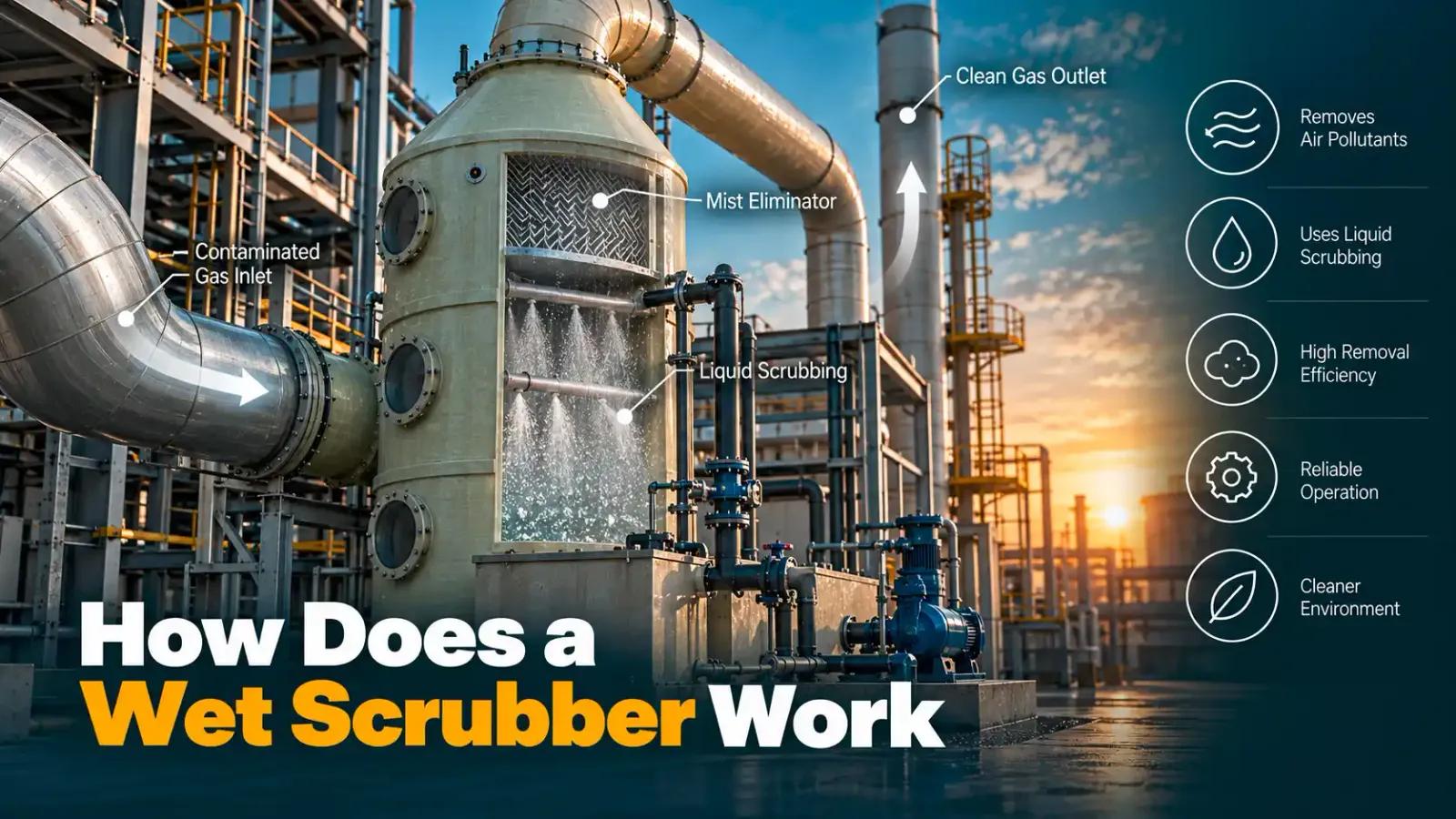
A wet scrubber is an industrial air pollution control system designed to remove certain gaseous pollutants, chemical fumes, and particulate matter from exhaust streams. Unlike dry filtration systems, wet scrubbers use liquid to capture contaminants. Depending on the pollutant, the scrubbing liquid may contain water, alkaline chemicals, or other specially formulated solutions.
These systems are commonly installed in facilities that generate acidic gases, chemical vapors, or industrial emissions. Manufacturers such as GAJA provide Scrubber Air Pollutant Systems designed for industrial applications using corrosion resistant materials such as FRP, PP, PVC, and PVDF.
Although wet scrubber designs vary, most systems follow a similar process to capture and separate pollutants from industrial exhaust gases.
The process begins when contaminated air is collected from industrial equipment or production areas. An exhaust fan moves the polluted gas through ductwork and into the scrubber chamber.
Depending on the application, the exhaust stream may contain acidic gases, chemical fumes, or suspended particles. The airflow rate, temperature, and pollutant concentration influence the scrubber's design and operating requirements.
Inside the scrubber, water or a chemical solution is distributed through spray nozzles or over specially designed packing materials. In a typical packed bed scrubber, contaminated gas flows upward while the scrubbing liquid moves downward.
This counter current arrangement increases contact between the gas and liquid, allowing pollutants to transfer into the scrubbing solution. The effectiveness of this process depends on contact area, liquid distribution, and pollutant characteristics.
As contaminated gas contacts the liquid, soluble pollutants are absorbed into the scrubbing solution. Some chemicals can also react with substances added to the liquid.
For example, alkaline scrubbing solutions may be used to neutralize certain acidic gases, such as hydrogen chloride or sulfur dioxide. Particulate pollutants can be captured when airborne particles collide with liquid droplets. However, not every pollutant can be removed efficiently using the same scrubbing liquid or equipment design.
After the gas passes through the scrubbing section, it may contain small liquid droplets. A mist eliminator removes these droplets before the treated gas leaves the system.
This component helps reduce liquid carryover and prevents captured contaminants from being released with the exhaust. Common mist eliminator designs include mesh pads and chevron type separators.
After pollutant removal and mist separation, the treated gas exits through the outlet duct or exhaust stack. Meanwhile, the used scrubbing liquid collects in a reservoir or sump.
In recirculating systems, a pump returns the liquid to the scrubber. Operators monitor its condition and replace or treat part of the liquid when necessary. The treated exhaust must still meet applicable emission requirements before discharge.
Several components work together to maintain reliable scrubber performance.
Because these components operate in potentially corrosive environments, material selection is important. Fiberglass reinforced plastic is commonly considered for scrubber vessels because suitable resin systems provide chemical corrosion resistance.
Different wet scrubber designs are available depending on pollutant characteristics and removal requirements.
A packed bed scrubber uses packing materials to create a large surface area for gas liquid contact. This design is commonly used for absorbing soluble gases and controlling certain chemical fumes.
A venturi scrubber accelerates contaminated gas through a narrow section while introducing scrubbing liquid. The resulting high speed interaction helps capture particulate matter, including finer particles, although this typically requires more energy.
A spray tower distributes liquid droplets throughout an open chamber to contact contaminated gas. Its relatively simple design makes it suitable for certain gas absorption and coarse particle removal applications.
Properly designed wet scrubbers provide several operational advantages. They can reduce selected harmful gas emissions, handle certain corrosive exhaust streams, and support industrial air pollution control requirements.
Wet scrubbers may also operate alongside other pollution control equipment when multiple contaminants require treatment. However, they need regular maintenance, water management, and monitoring to maintain performance.
Understanding how a wet scrubber works helps industrial facilities choose suitable air pollution control equipment for their operating conditions. GAJA provides customizable Scrubber Air Pollutant Systems designed for various industrial applications, including chemical manufacturing, electroplating, and wastewater treatment facilities.
For projects requiring corrosion resistant scrubber equipment, contact GAJA to discuss suitable designs and technical specifications for your facility.
Yes, wet scrubbers can reduce certain odors caused by water soluble or chemically reactive gases. However, removal effectiveness depends on the odor compounds and the scrubbing solution used.
Wet scrubbers require a suitable liquid supply during operation. Recirculating systems reuse scrubbing liquid but typically need makeup water to replace losses and maintain liquid quality.
Maintenance frequency depends on operating conditions and pollutant concentration. Operators should regularly inspect spray nozzles, pumps, packing media, mist eliminators, and liquid chemistry.
Important factors include airflow rate, pollutant concentration, gas liquid contact time, scrubbing liquid composition, pH, and pressure drop. Proper system design and maintenance are essential for consistent performance.
3 Oct 2026
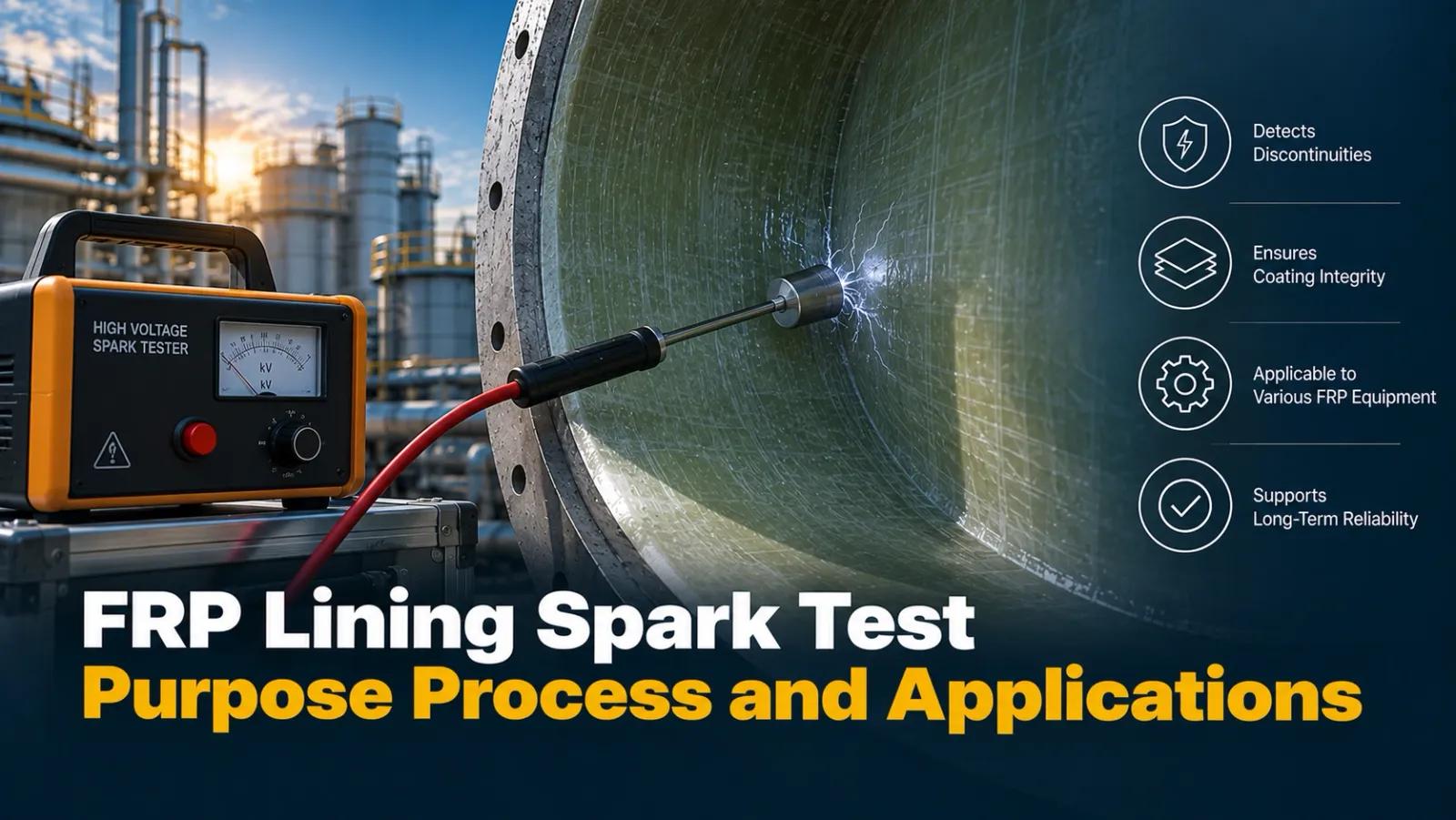
Learn how FRP lining spark tests detect pinholes and defects, including the testing process, applications, safety factors, and inspection considerations.
Read More →
13 Oct 2026
How long does FRP roofing last? Learn its average lifespan, durability factors, warning signs, and maintenance tips for industrial roofing.
Read More →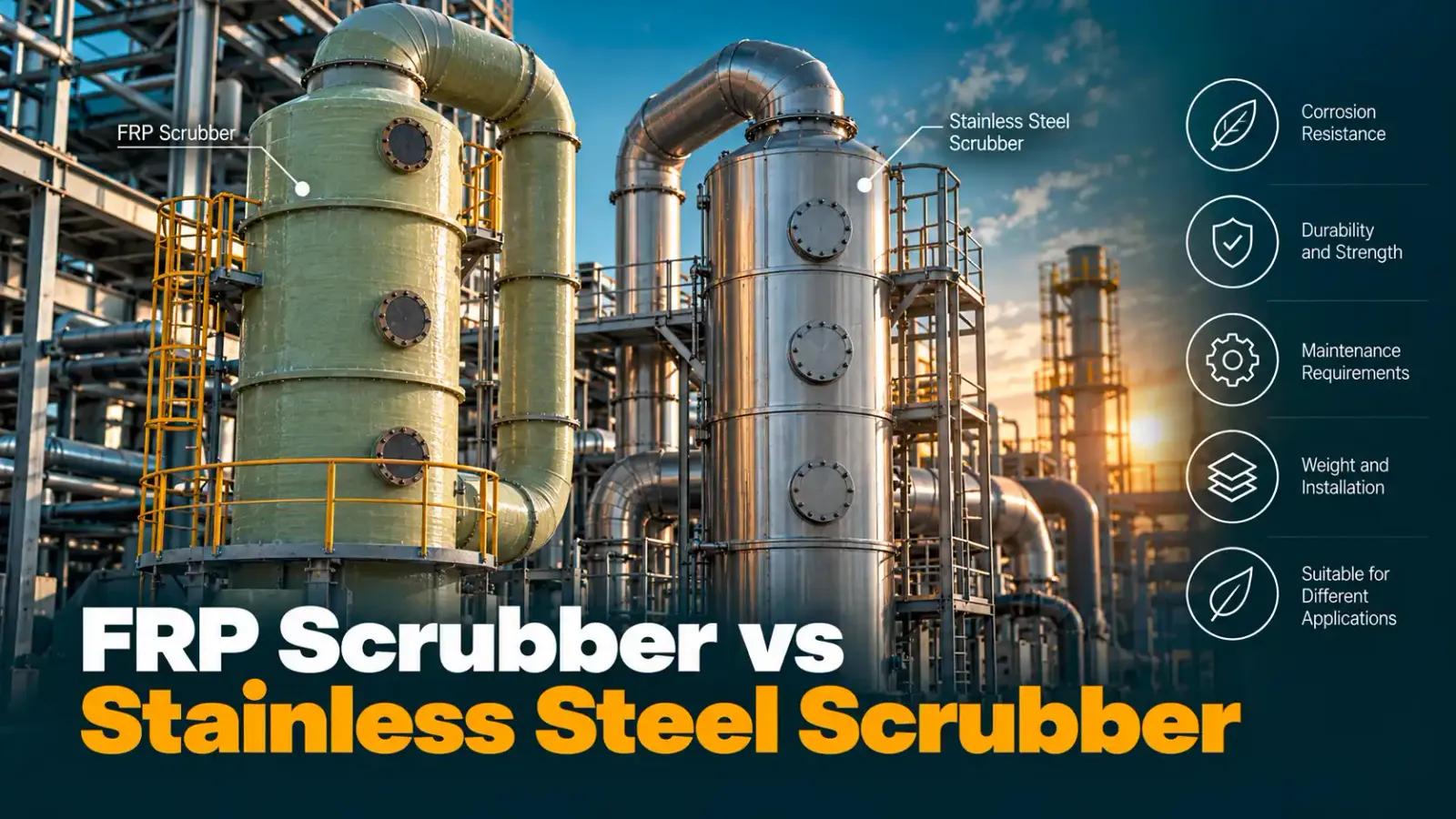
13 Oct 2026
Compare FRP scrubber vs stainless steel scrubber in corrosion resistance, temperature, durability, installation, and cost for industrial applications.
Read More →