Fiber Reinforced Plastic (FRP) pipe stiffness class indicates the pipe's resistance to deformation under external loading. It is an important consideration when designing and specifying FRP piping, particularly for buried or underground installations where soil and traffic loads can act on the pipe.
Unlike pressure class, which primarily relates to internal operating pressure, stiffness class addresses the structural behavior of the pipe under external loads. Common stiffness classifications for GRP/FRP pipes include SN 2500, SN 5000, and SN 10000, although the available range can vary by manufacturer and project requirements.
Selecting the appropriate FRP pipe stiffness class therefore requires more than looking at pipe diameter. Installation depth, soil conditions, external loads, pipe geometry, support conditions, and allowable deflection should also be evaluated.
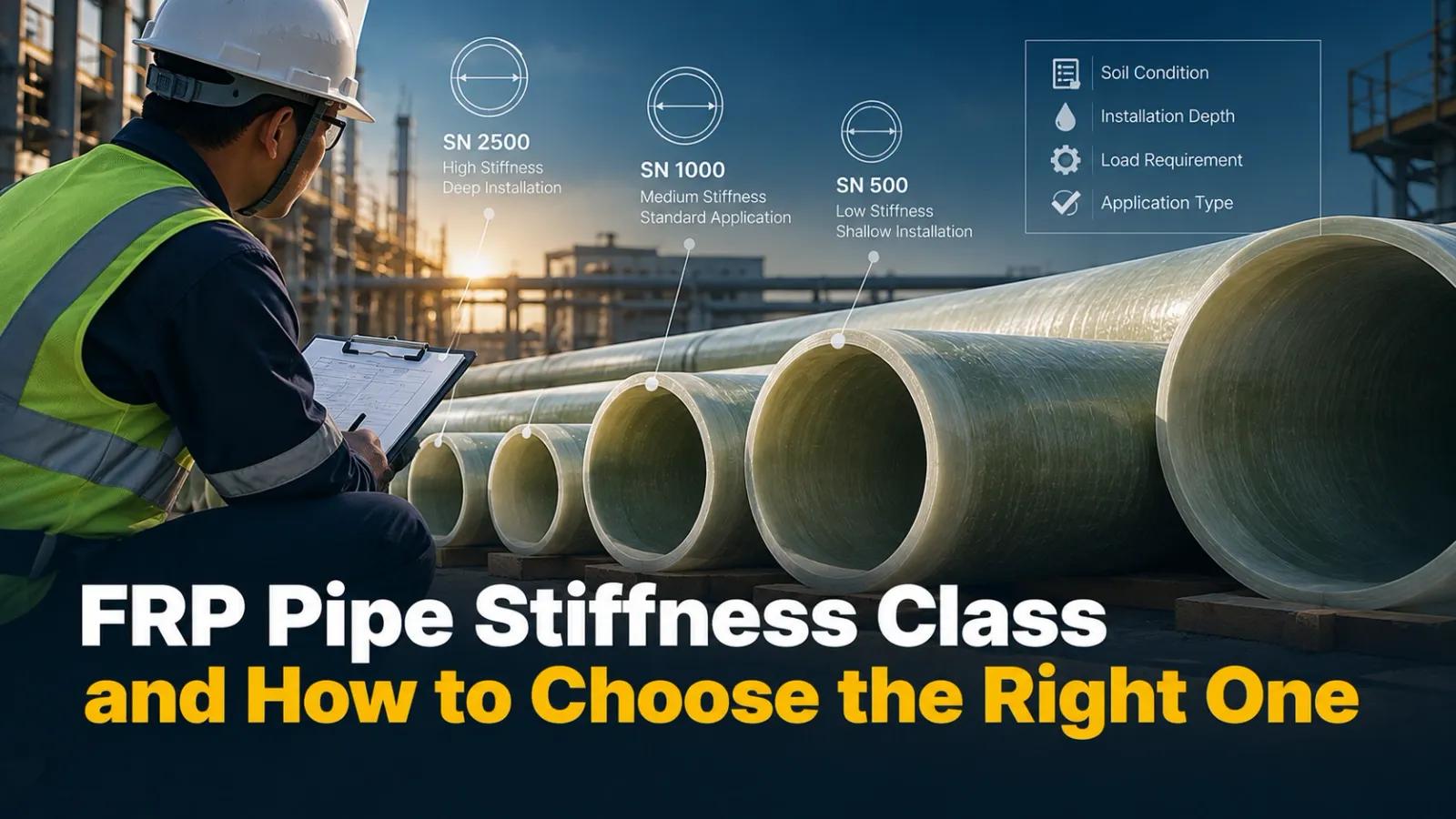
FRP pipe stiffness class describes the pipe's circumferential or ring stiffness. It is commonly expressed using an SN designation, such as SN 2500, SN 5000, or SN 10000.
In technical terms, stiffness is related to the pipe's resistance to ring deformation when an external load is applied. Manufacturer data may define the stiffness using specific ring stiffness or specific tangential initial stiffness values.
For example, a manufacturer product specification from Future Pipe lists SN 2500, SN 5000, and SN 10000 with minimum specific tangential initial stiffness values of 2,500, 5,000, and 10,000 N/m² respectively.
The actual stiffness required for a project should be determined through structural design rather than assuming that the highest SN rating is automatically necessary.
One common misunderstanding is treating stiffness class and pressure class as the same specification. They address different loading conditions.
Pressure class relates primarily to the internal pressure that the pipe is designed to handle. Stiffness class, meanwhile, relates to resistance against external loading and deformation.
An FRP pipe can therefore have both a pressure classification and a stiffness classification. ISO documentation for GRP piping recognizes that pipes in the same system can have different nominal pressure and stiffness ratings.
For this reason, a piping specification may need to consider both:
Considering only pressure class may be insufficient when the pipe is installed underground.
Stiffness becomes particularly important when an FRP pipe is subjected to external loads. Buried pipes interact with the surrounding soil, meaning the performance of the overall system depends not only on the pipe itself but also on installation conditions.
ISO/TS 20656-1 provides general rules for the structural design of buried GRP pipes and addresses the development of partial factors used for their structural design.
A suitable FRP pipe stiffness rating can help the pipe accommodate expected external loading while maintaining the required structural performance and allowable deflection.
This is why stiffness selection should be considered together with the installation method rather than treated as an isolated pipe property.
Several project conditions can influence the required stiffness class.
The deeper a pipe is installed, the surrounding soil conditions and overburden loads can affect the structural loading on the pipe. The design should therefore account for the proposed burial depth rather than selecting an SN rating independently.
Soil type, compaction, bedding, and backfill quality influence how loads are transferred between the soil and pipe. Proper installation can therefore be just as important as selecting the appropriate FRP pipe stiffness.
A buried pipe beneath a landscaped area may experience different external loading from a pipeline installed beneath a road or industrial traffic area.
Vehicle loads, construction equipment, and other surface loads may need to be included in the structural evaluation.
Pipe diameter and geometry also influence structural behavior. The required stiffness should therefore be evaluated together with the pipe dimensions and project-specific loading conditions.
FRP pipes are designed to accommodate a certain degree of deformation. However, the allowable deflection must remain within the applicable design requirements.
Pipe stiffness, soil support, installation quality, and external loading all contribute to the resulting FRP pipe deflection.
Depending on the manufacturer and applicable specification, commonly available GRP pipe stiffness classes include:
These values should not be interpreted as universal recommendations for specific burial depths or loading conditions. Manufacturer data and project-specific structural calculations should be used to determine the required class. Future Pipe, for example, lists SN 2500, SN 5000, and SN 10000 in its product information, while other GRP pipe systems may offer additional or customized stiffness levels.
Choosing the appropriate FRP pipe stiffness class starts with understanding the complete installation environment.
Project teams should evaluate:
For buried applications, structural design should consider the interaction between the pipe and surrounding soil. ISO/TS 20656-1 specifically addresses structural design considerations for buried GRP pipes.
For aboveground installations, support spacing and the arrangement of supports also become important. ISO/TS 10986:2021 addresses the system design of aboveground GRP pipe and joint installations without end thrust and is currently confirmed as the applicable edition.
This means the same stiffness class should not automatically be applied to every installation. The appropriate specification depends on the actual project conditions.
Stiffness is only one part of an FRP piping specification. Depending on the application, engineers may also need to evaluate resin selection, chemical exposure, operating temperature, pressure requirements, joint configuration, diameter, and installation conditions.
GAJA provides FRP Pipe & Fittings for industrial applications where material performance needs to be considered alongside the operating environment and project requirements.
For projects involving buried or aboveground FRP piping, providing complete design information can help manufacturers evaluate the appropriate pipe configuration and specifications.
Choosing an FRP pipe stiffness class should be based on engineering requirements rather than selecting a higher or lower SN rating without considering the installation environment.
Before requesting an FRP pipe quotation, project teams should ideally provide:
For assistance with FRP Pipe & Fittings, contact GAJA to discuss your pipe dimensions, pressure requirements, stiffness requirements, installation conditions, and project specifications before finalizing the product selection.
FRP pipe stiffness class indicates the pipe's resistance to circumferential deformation under external loading. It is commonly expressed using SN values such as SN 2500, SN 5000, and SN 10000.
Stiffness class relates primarily to resistance against external loads and deformation, while pressure class relates to the pipe's internal pressure capacity. Both may need to be considered during pipe selection.
Not necessarily. The required stiffness should be determined according to burial depth, soil conditions, external loading, allowable deflection, installation method, and other project parameters.
There is no single stiffness class suitable for every underground application. The appropriate SN rating should be determined through project-specific structural evaluation and applicable design requirements.
Important information includes pipe diameter, burial depth, soil conditions, backfill, traffic loads, groundwater, installation method, operating pressure, and allowable deflection.
3 Oct 2026
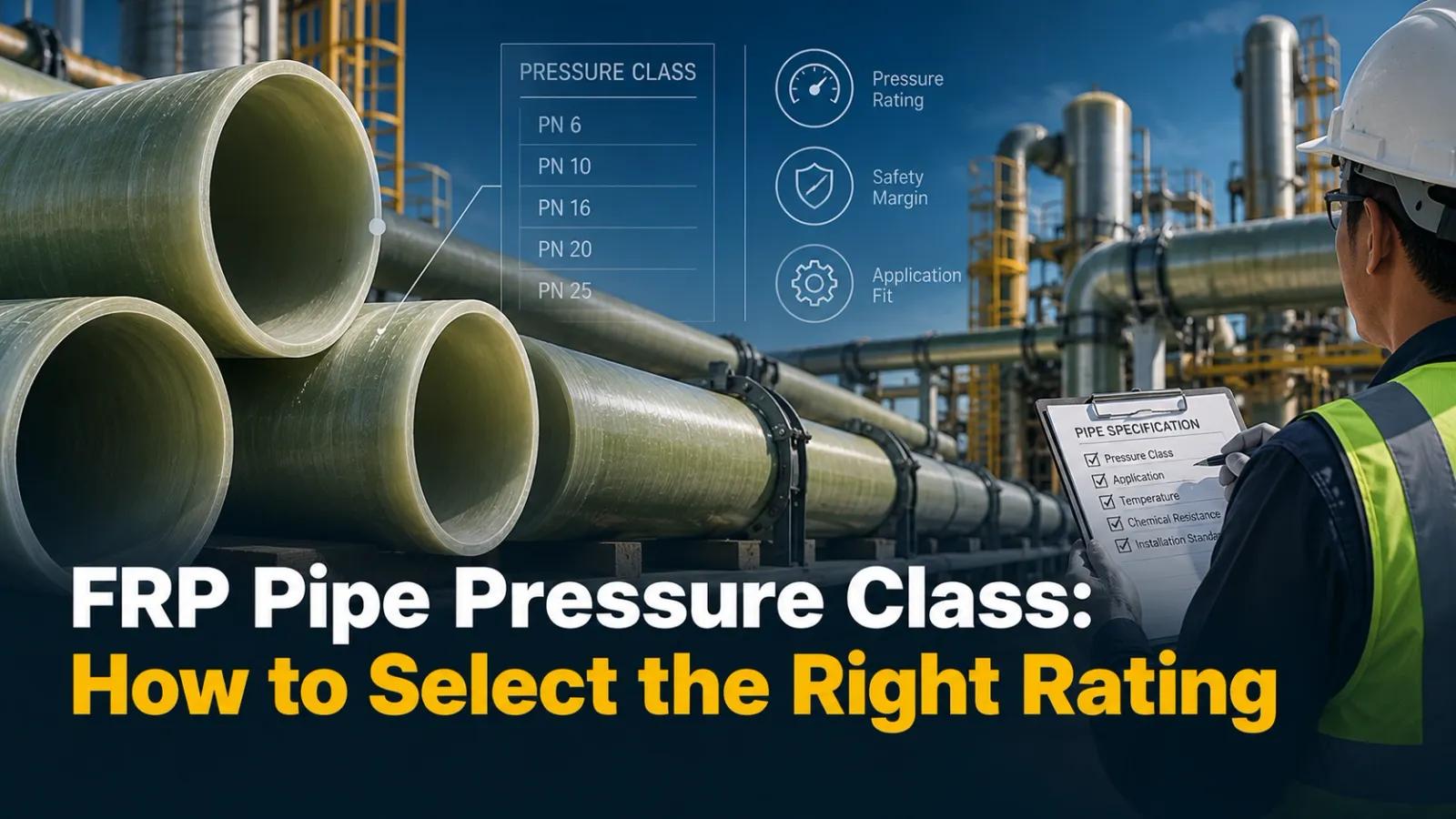
Learn how FRP pipe pressure class works and how to select the right rating based on pressure, temperature, fluid, surge, and design conditions.
Read More →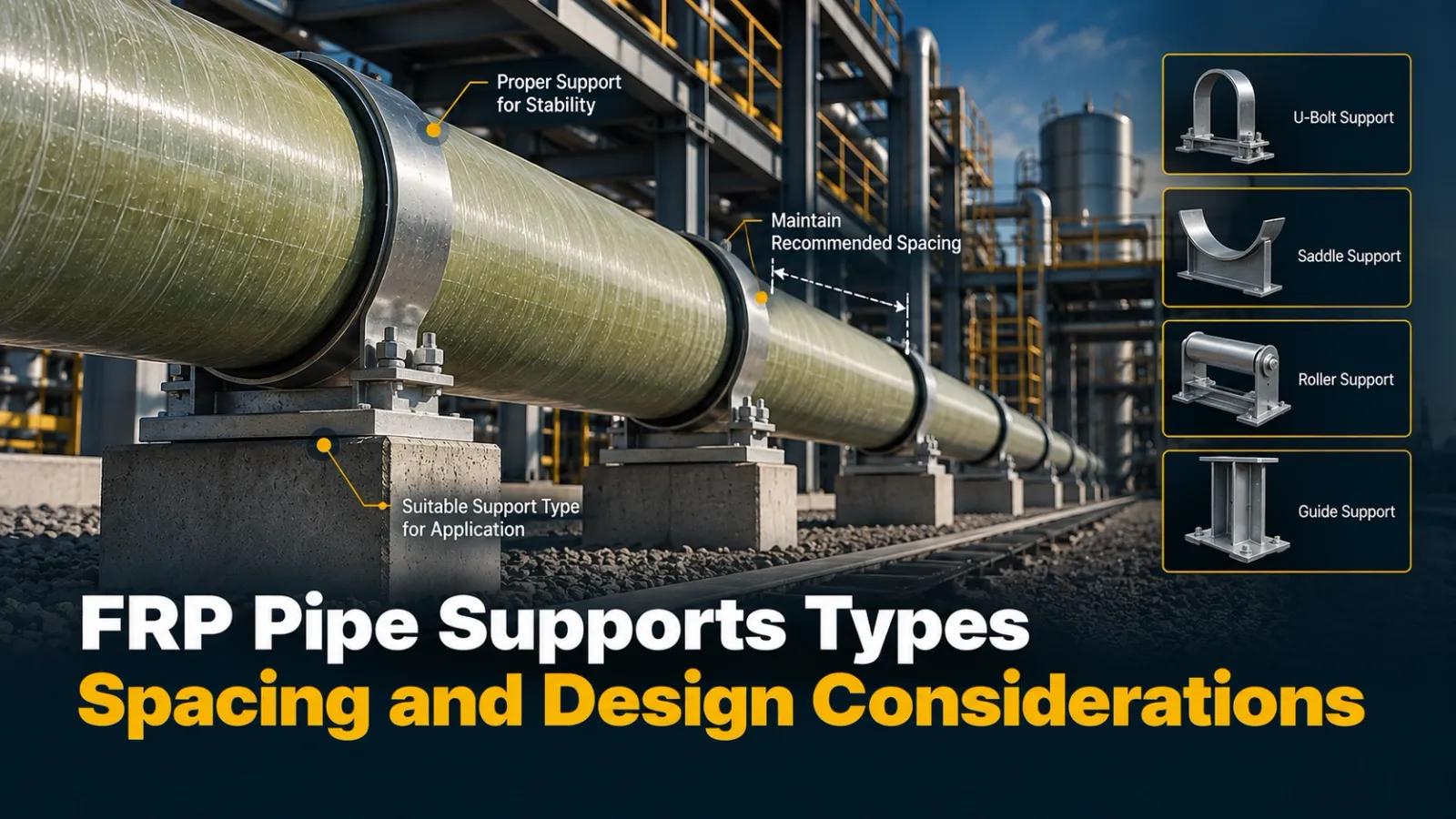
3 Oct 2026
Learn about FRP pipe supports, types, spacing, load considerations, and design factors for safe and reliable FRP piping systems.
Read More →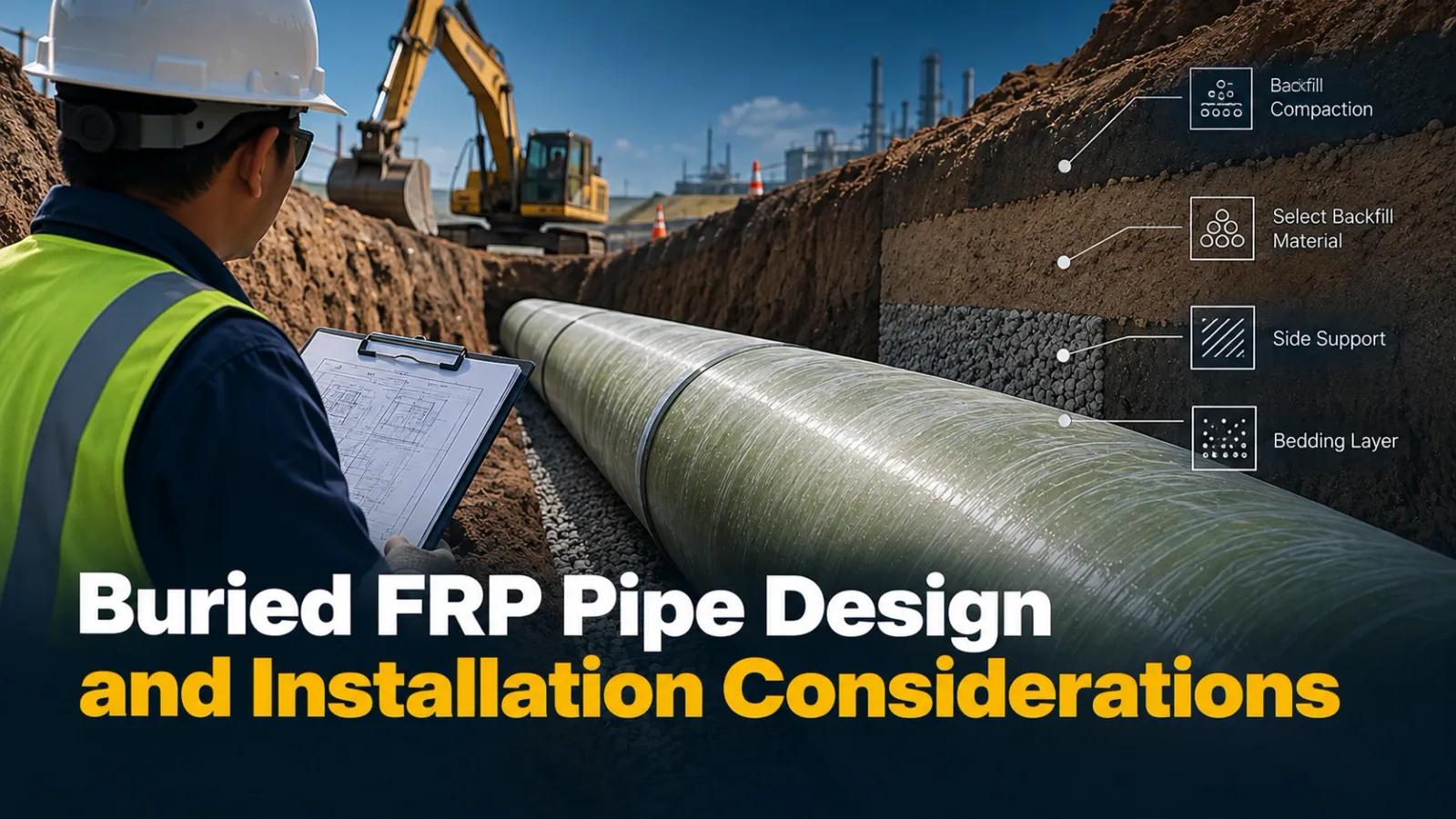
3 Oct 2026
Learn key buried FRP pipe design and installation considerations, including soil loads, burial depth, bedding, backfilling, and external pressure.
Read More →