FRP pipe pressure class refers to the pressure rating assigned to a fiberglass reinforced plastic pipe for a defined set of operating and design conditions. It indicates the internal pressure that the pipe is designed to handle when manufactured with a specific resin system, reinforcement structure, dimensions, and manufacturing process.
Unlike selecting a conventional metal pipe based only on material and wall thickness, FRP pipe pressure rating depends on the complete composite construction. The resin, fiberglass reinforcement, pipe diameter, laminate structure, temperature, joint configuration, and expected service conditions can all influence the final pressure capability.
For example, ASTM D3517 covers fiberglass pressure pipe for water conveyance and includes requirements related to structural composition, long-term hydrostatic design pressure, stiffness, strength, and joint tightness. Therefore, selecting an FRP pipe pressure class should begin with the actual requirements of the piping system rather than simply choosing the highest available rating.
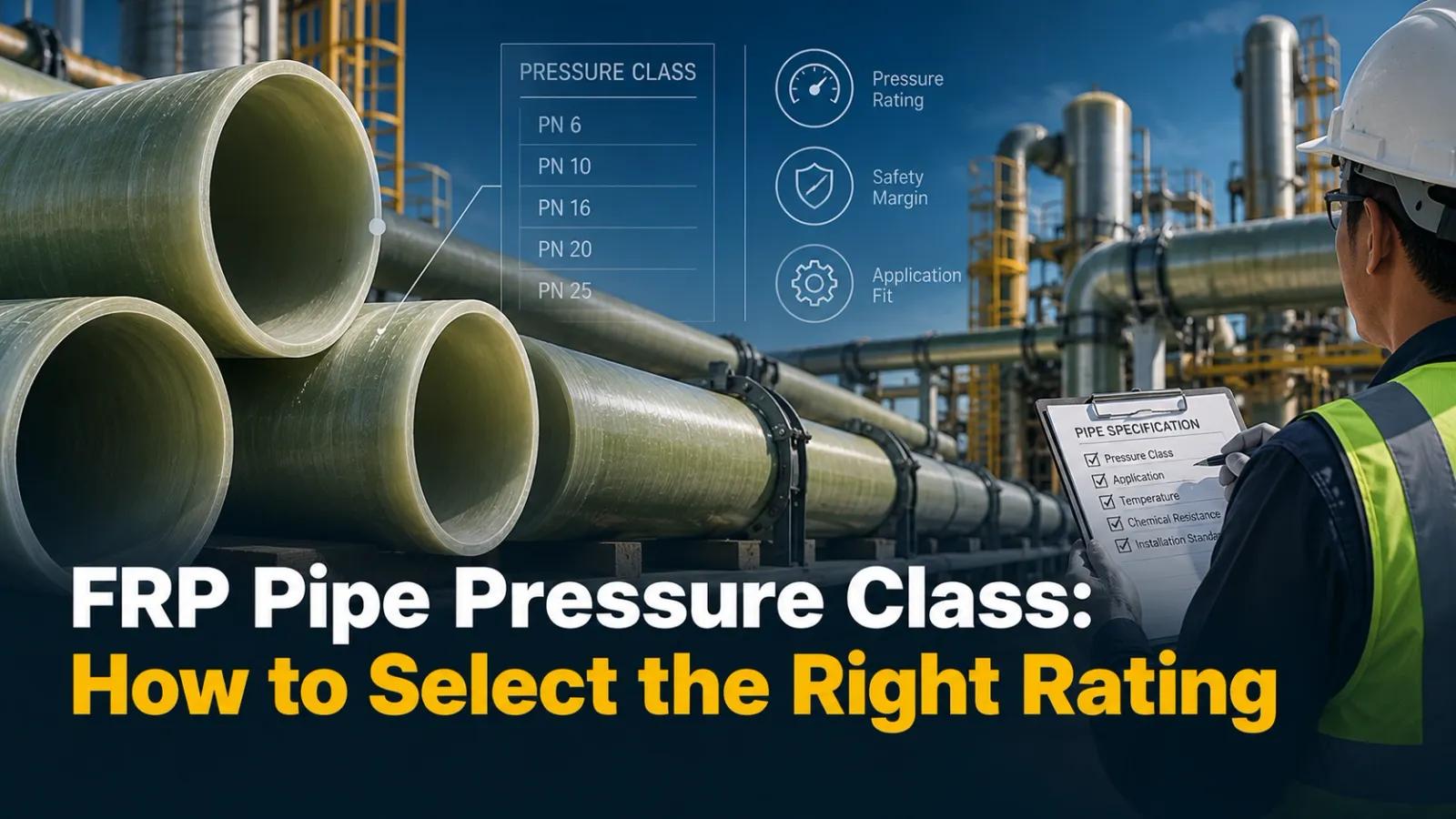
The pressure class determines whether an FRP pipe is appropriate for the internal pressure generated by a particular process. Choosing an unsuitable rating can affect the reliability and service life of the piping system.
Several pressure conditions should be distinguished during specification:
These values should not automatically be treated as interchangeable. The applicable project specification and engineering standard should determine how each value is established. ASTM D2992, for example, provides procedures for establishing a hydrostatic design basis or pressure design basis for fiberglass pipe and fittings using long-term strength data.
Factors That Affect FRP Pipe Pressure Rating
Selecting the appropriate FRP pipe pressure rating requires consideration of more than normal operating pressure.
Start by identifying the minimum, normal, maximum, and design pressure of the system. If the pipeline experiences pressure fluctuations, these should also be considered. A pipe that appears suitable based on normal operating pressure may require a different pressure class if the system regularly experiences transient conditions.
Pressure surge can occur when pumps start or stop, valves close quickly, or flow conditions change suddenly. These transient loads can temporarily increase internal pressure beyond normal operating conditions. For this reason, the FRP pipe pressure class selection should consider the maximum expected system pressure, not only the steady-state operating pressure.
Temperature can affect the pressure capability of FRP because the performance of the resin matrix changes with service temperature. The pressure rating therefore needs to be evaluated together with the expected operating and design temperature. The selected resin system should also be compatible with the transported fluid at the actual temperature and concentration.
FRP piping is often used for water, wastewater, chemicals, seawater, and other industrial fluids. However, chemical resistance is dependent on the resin system, concentration, temperature, and exposure conditions. A pressure class alone does not determine whether a pipe is suitable for a particular chemical service. The corrosion barrier and resin selection should also be verified.
The dimensions and laminate construction of an FRP pipe influence its structural performance. Wall structure, fiberglass reinforcement, manufacturing process, and pipe diameter should therefore be considered when reviewing pressure capacity. ASTM D2992 notes that pressure design information is associated with specific materials and manufacturing processes, meaning test data should represent the actual pipe construction being evaluated.
How to Select the Right FRP Pipe Pressure Class
Selecting the appropriate FRP pipe pressure class requires more than comparing the pipe’s nominal pressure rating with the system’s normal operating pressure. FRP piping performance can be influenced by pressure fluctuations, temperature, fluid characteristics, pipe construction, and the way the complete piping system is installed. Because of this, the selection should be based on the actual service conditions and supported by manufacturer technical data.
Before specifying an FRP pressure pipe, consider the following factors:
By evaluating these factors together, the selected FRP pipe pressure class can be matched more accurately to the application instead of relying only on a nominal pressure value.
Pressure class should not be confused with pipe stiffness. Pressure class primarily addresses the pipe's ability to withstand internal pressure, while stiffness is particularly important when the pipe must resist external loads, such as soil pressure in buried installations.
ASTM D3754, for example, defines fiberglass sewer and industrial pressure pipe using characteristics including operating pressure class and pipe stiffness, alongside material, liner, dimensions, and mechanical properties. Therefore, a buried FRP piping system may require evaluation of both internal pressure and external structural loads.
Selecting FRP Pipe and Fittings for Industrial Applications
Pressure performance should be evaluated across the entire piping system rather than the straight pipe alone. Elbows, tees, reducers, flanges, and other FRP pipe fittings can experience different stress conditions from straight pipe sections.
GAJA manufactures FRP Pipe & Fittings for applications involving the transportation of chemicals and other liquids. GAJA's manufacturing experience includes FRP Pipe production facilities and projects involving GRP/FRP piping, including MRT Jakarta Phase 2 and an acid-line piping project for a nickel smelter.
For project-specific applications, the required pressure, temperature, fluid characteristics, dimensions, connection method, and installation conditions should be communicated to the manufacturer before final specification.
To determine an appropriate FRP pipe pressure class, project teams should ideally provide:
Providing complete information allows the manufacturer and engineering team to evaluate the pipe as part of the complete FRP piping system.
Choosing an FRP pipe pressure class should be based on actual operating conditions, pressure requirements, temperature, fluid compatibility, pipe construction, and applicable standards.
If you are planning an industrial piping project and need assistance determining the appropriate FRP pipe and fittings specification, contact GAJA to discuss your project requirements, including pressure, temperature, fluid, dimensions, and installation conditions.
FAQ
FRP pipe pressure class is a rating that indicates the internal pressure capability of an FRP pipe under defined design and service conditions.
Not necessarily. Pressure rating, working pressure, design pressure, and test pressure can have different meanings depending on the applicable standard and project specification.
Yes. Temperature can affect resin performance and therefore may influence the allowable pressure capacity of an FRP pipe.
Yes. Chemical composition, concentration, temperature, and exposure conditions should be evaluated when selecting the resin system and corrosion barrier.
Consider operating and design pressure, pressure surge, temperature, fluid compatibility, pipe dimensions, fittings, joints, installation conditions, and the applicable engineering standard before confirming the pressure class.
3 Oct 2026
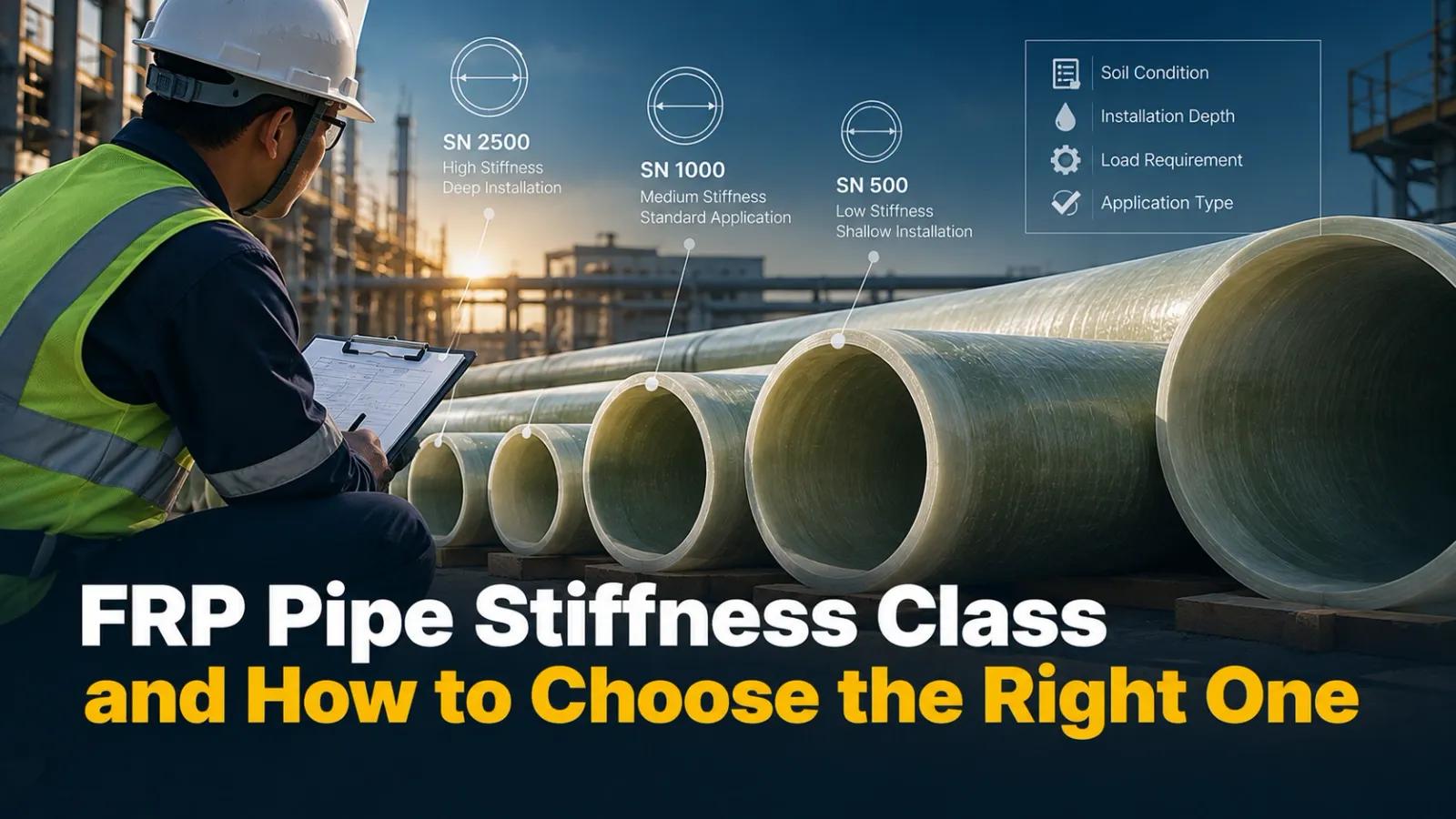
Learn about FRP pipe stiffness class, key factors in pipe selection, and how to choose the right stiffness for underground and aboveground applications.
Read More →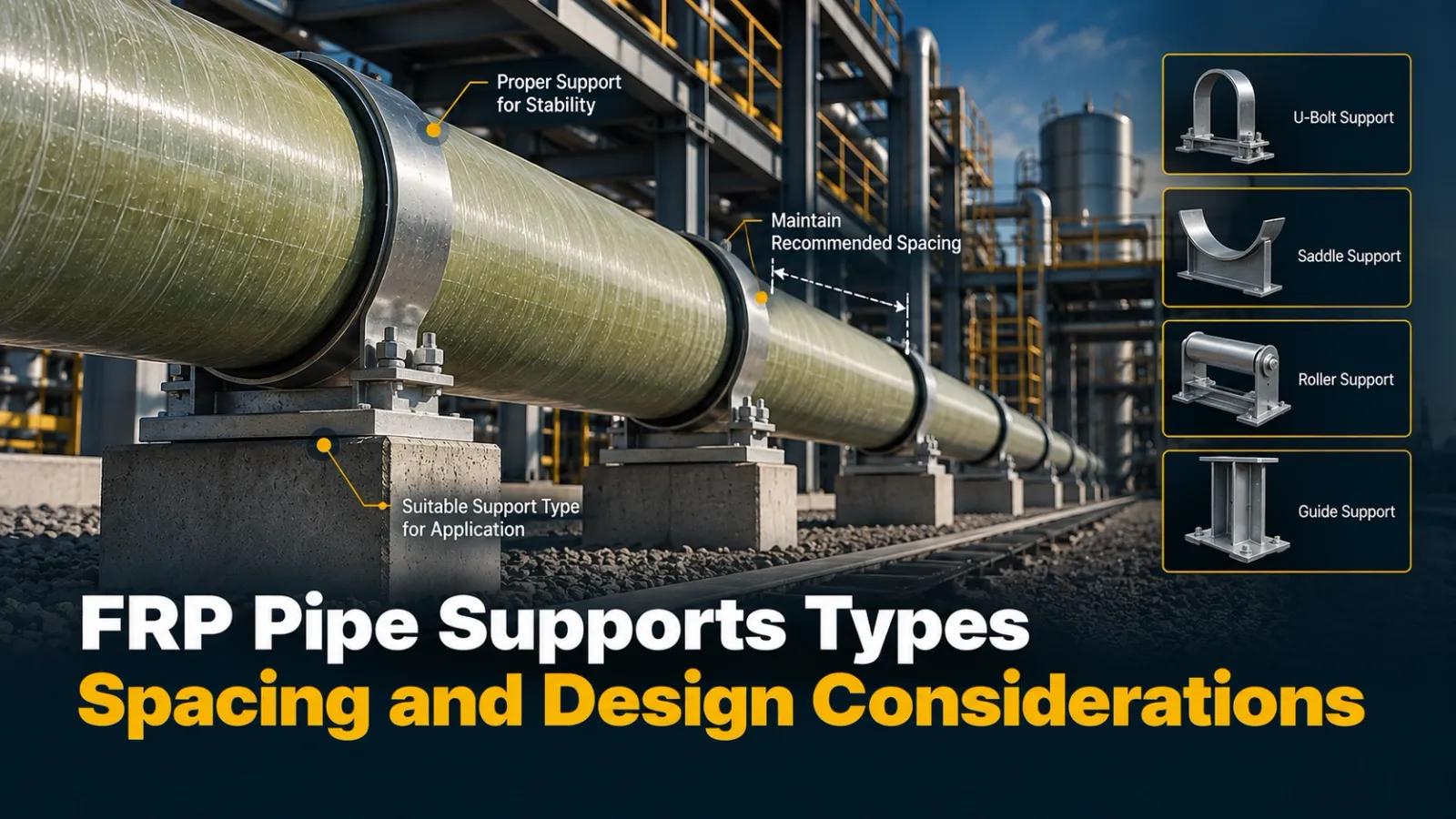
3 Oct 2026
Learn about FRP pipe supports, types, spacing, load considerations, and design factors for safe and reliable FRP piping systems.
Read More →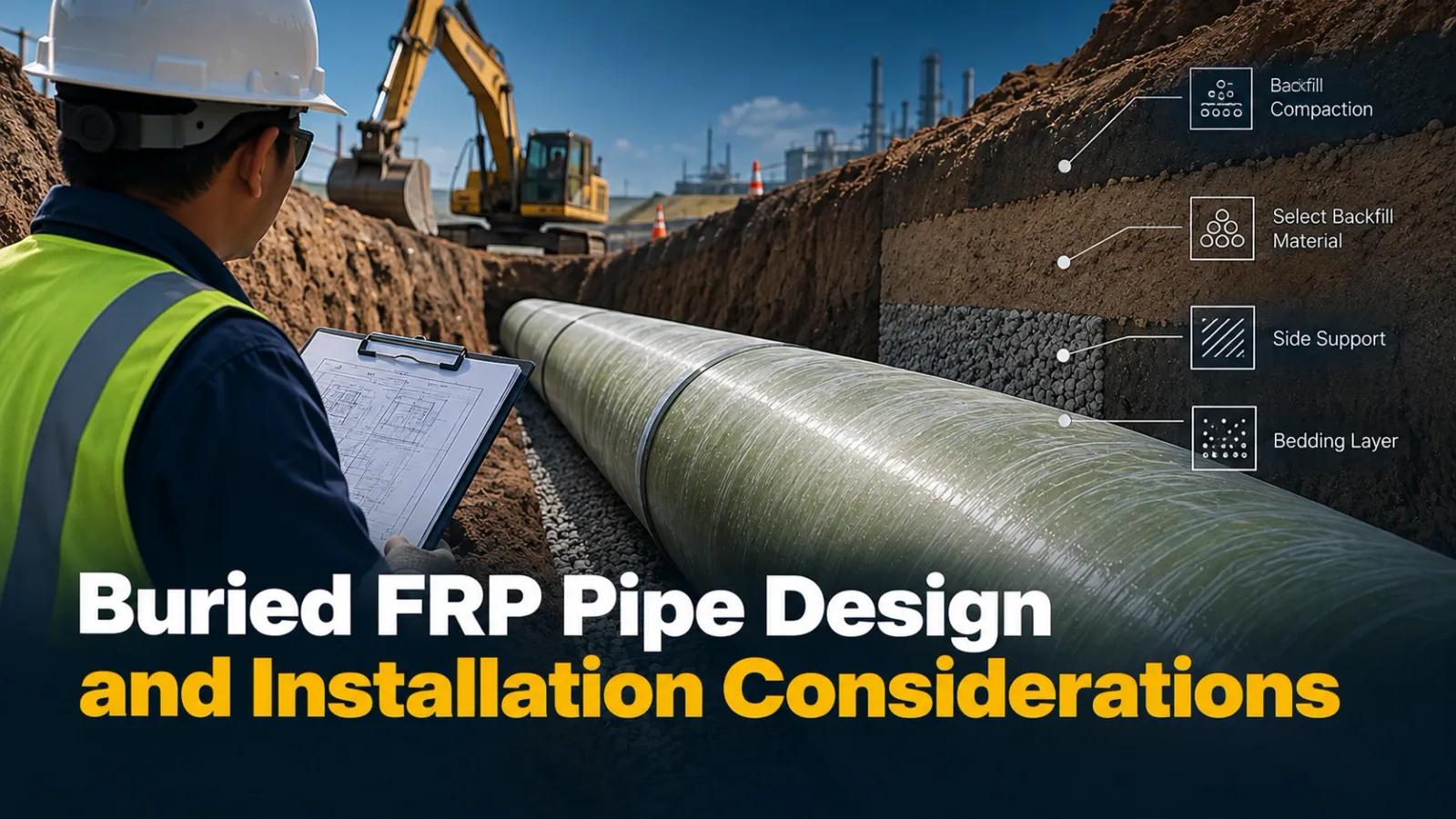
3 Oct 2026
Learn key buried FRP pipe design and installation considerations, including soil loads, burial depth, bedding, backfilling, and external pressure.
Read More →