FRP lining is a protective system that combines fiberglass reinforcement with a thermosetting resin to create a durable barrier over a substrate. It can be used to protect steel, concrete, and other compatible surfaces from corrosion, chemical exposure, moisture, and demanding service conditions.
The performance of an FRP lining system depends not only on the selected resin and fiberglass reinforcement, but also on how the material is installed. Surface preparation, resin application, fiberglass placement, laminate buildup, curing, and final inspection are important stages of the overall FRP lining process.
For this reason, FRP lining installation should be planned according to the substrate, chemical exposure, operating temperature, required thickness, and project specifications rather than treated as a simple coating application.
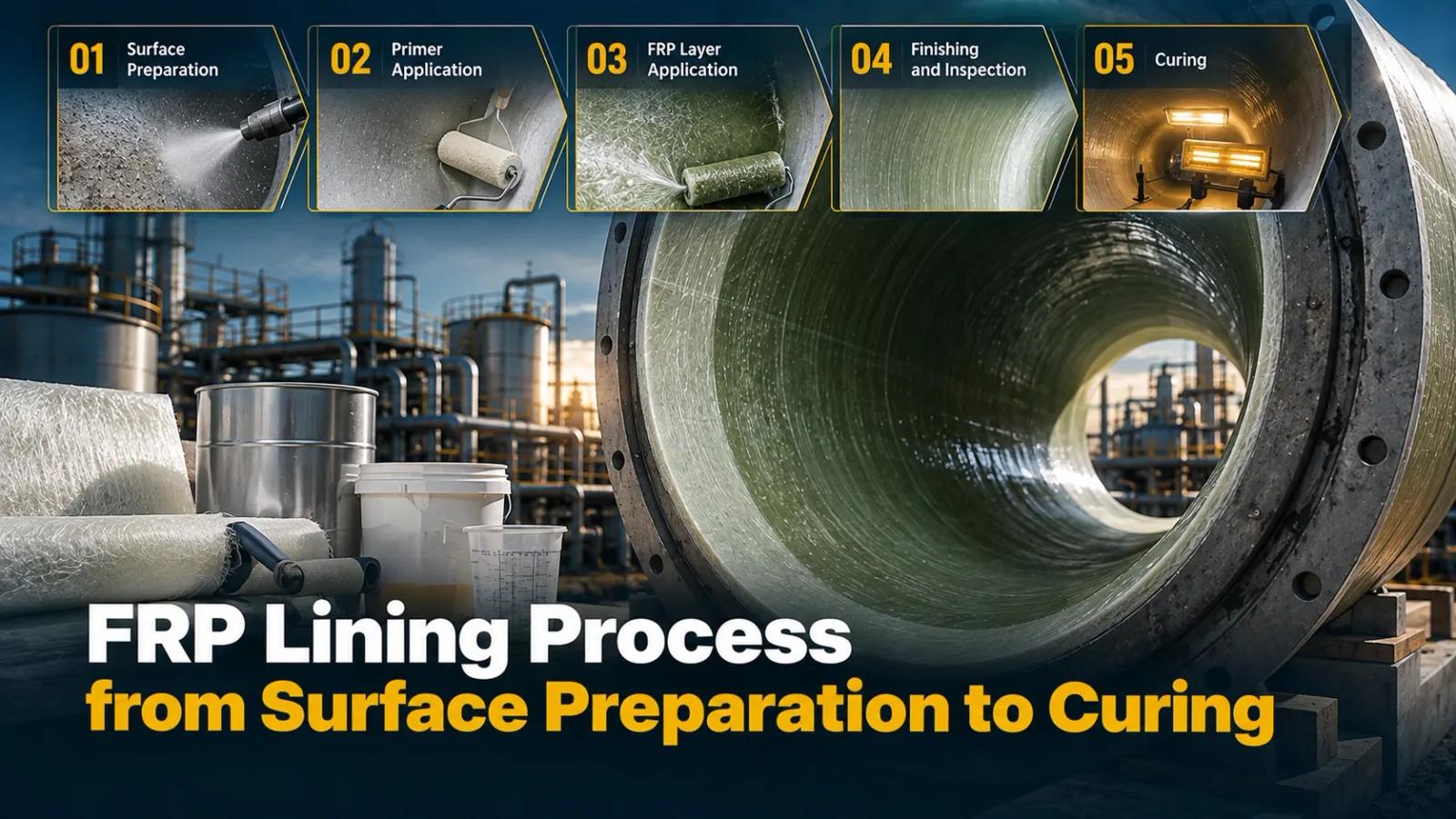
The FRP lining process is a series of preparation and application steps used to install a fiberglass-reinforced resin layer over a compatible substrate.
Depending on the project, the substrate may include steel, concrete, or other surfaces suitable for the selected lining system. The final laminate can consist of multiple resin and fiberglass layers designed according to chemical exposure, mechanical requirements, and operating conditions.
A typical FRP lining procedure includes:
The exact procedure can vary depending on the resin system, substrate, environmental conditions, and project specifications.
Surface preparation is one of the most important stages of FRP lining installation. The substrate should first be inspected for contamination, moisture, loose material, existing coatings, oil, grease, cracks, or other conditions that could affect adhesion.
The preparation method depends on the substrate and its existing condition. Concrete, for example, may require removal of weak or contaminated surface material before the lining is installed.
The prepared surface should meet the cleanliness, profile, dryness, and other requirements specified for the selected FRP lining system. Proper substrate preparation helps establish a suitable bonding surface for subsequent layers.
After surface preparation, a compatible primer may be applied according to the lining system specification.
Primer application can help establish the required interface between the substrate and subsequent resin layers. Application conditions such as temperature, humidity, substrate condition, and recoat timing should follow the requirements of the selected resin system.
Not every FRP lining system uses the same primer or application sequence. The procedure should therefore be determined according to the technical specification rather than applying one standard method to every project.
The next stage involves applying the specified resin and incorporating fiberglass reinforcement into the laminate.
Fiberglass reinforcement provides reinforcement within the cured resin matrix, while the resin forms the protective matrix around the fibers. During installation, the fiberglass should be properly positioned and saturated with resin.
Careful application is important to minimize defects such as:
The type and number of fiberglass layers depend on the required FRP lining thickness and intended service conditions.
Additional resin and fiberglass layers may be applied when the project requires a thicker or more robust laminate.
Lining thickness should be determined according to the application rather than selected arbitrarily. Chemical exposure, mechanical conditions, substrate characteristics, and expected service requirements can all influence the required laminate configuration.
Resin selection is also important because different resin systems provide different resistance characteristics. The selected material should be compatible with the chemicals, concentration, temperature, and exposure conditions expected during operation.
GAJA's FRP Lining solution can be configured according to project requirements, including the selection of suitable resin and fiberglass reinforcement for the intended application.
After the laminate has been applied, the FRP lining must be allowed to cure under appropriate conditions.
Curing allows the thermosetting resin system to develop its intended properties. The required curing conditions can be influenced by resin formulation, temperature, humidity, catalyst or hardener system, laminate thickness, and ventilation.
For this reason, curing time should not be determined using a generic value. The manufacturer's technical requirements and project specifications should be followed for the selected FRP lining system.
Several factors should be evaluated before starting an FRP lining installation, including:
Chemical exposure is particularly important because different resin systems have different chemical resistance characteristics. The lining specification should therefore be evaluated against the actual chemicals, concentrations, temperatures, and exposure conditions.
FRP lining inspection is an important part of quality control because defects or discontinuities can affect the performance of the protective system.
Depending on the project specification, inspection may include:
The appropriate inspection method depends on the lining material, substrate, service environment, and project requirements. Inspection criteria should ideally be established before installation begins so that the finished lining can be evaluated against defined acceptance requirements.
FRP lining can be considered for structures and equipment requiring a corrosion-resistant or chemical-resistant protective barrier. Common applications may include:
For projects involving different FRP equipment and components, GAJA also provides solutions such as FRP Lining, FRP Tank, and FRP Pipe & Fittings.
The appropriate lining system should still be determined according to the actual substrate, chemical environment, operating conditions, and project requirements.
Before specifying an FRP lining system, project teams should ideally provide:
These details can help determine the appropriate resin, fiberglass reinforcement, laminate configuration, and installation procedure.
For industrial applications requiring an FRP lining solution, contact GAJA to discuss substrate conditions, chemical exposure, dimensions, operating requirements, and other project specifications before determining the appropriate lining system.
The FRP lining process generally involves surface preparation, primer application when required, resin and fiberglass application, laminate buildup, curing, and final inspection.
Proper surface preparation helps establish suitable conditions for bonding between the substrate and lining system. Contamination, moisture, loose material, or an unsuitable surface condition can affect installation performance.
The number of layers depends on the required lining thickness, resin system, fiberglass reinforcement, chemical exposure, and project specifications. There is no universal number of layers for every application.
Curing time depends on the resin system and environmental conditions, including temperature and humidity. The specified curing schedule for the selected system should be followed.
FRP lining can be used in selected tanks, vessels, piping, ducts, water and wastewater facilities, concrete structures, and industrial equipment where protection against corrosion or chemical exposure is required.
3 Oct 2026
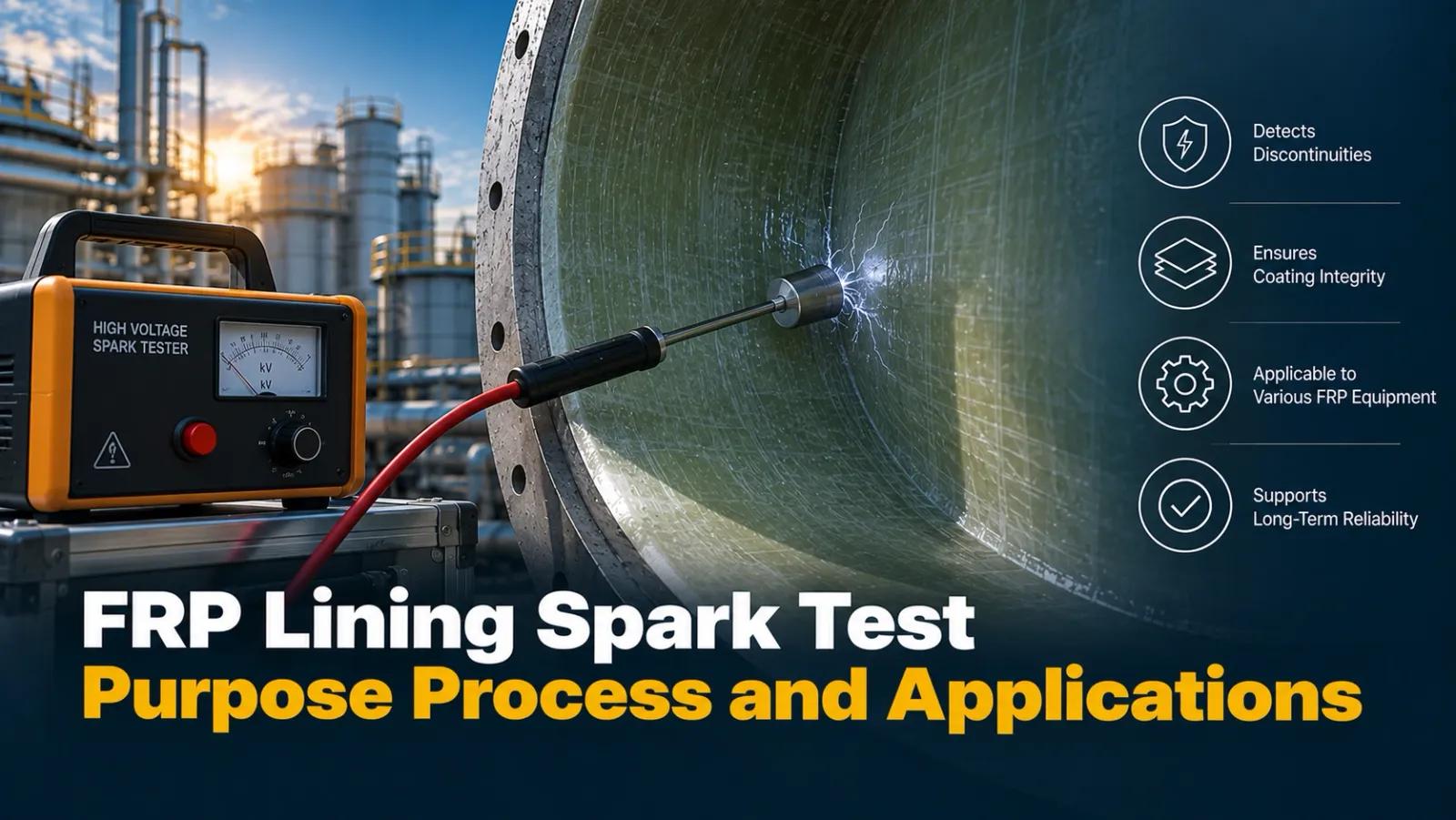
Learn how FRP lining spark tests detect pinholes and defects, including the testing process, applications, safety factors, and inspection considerations.
Read More →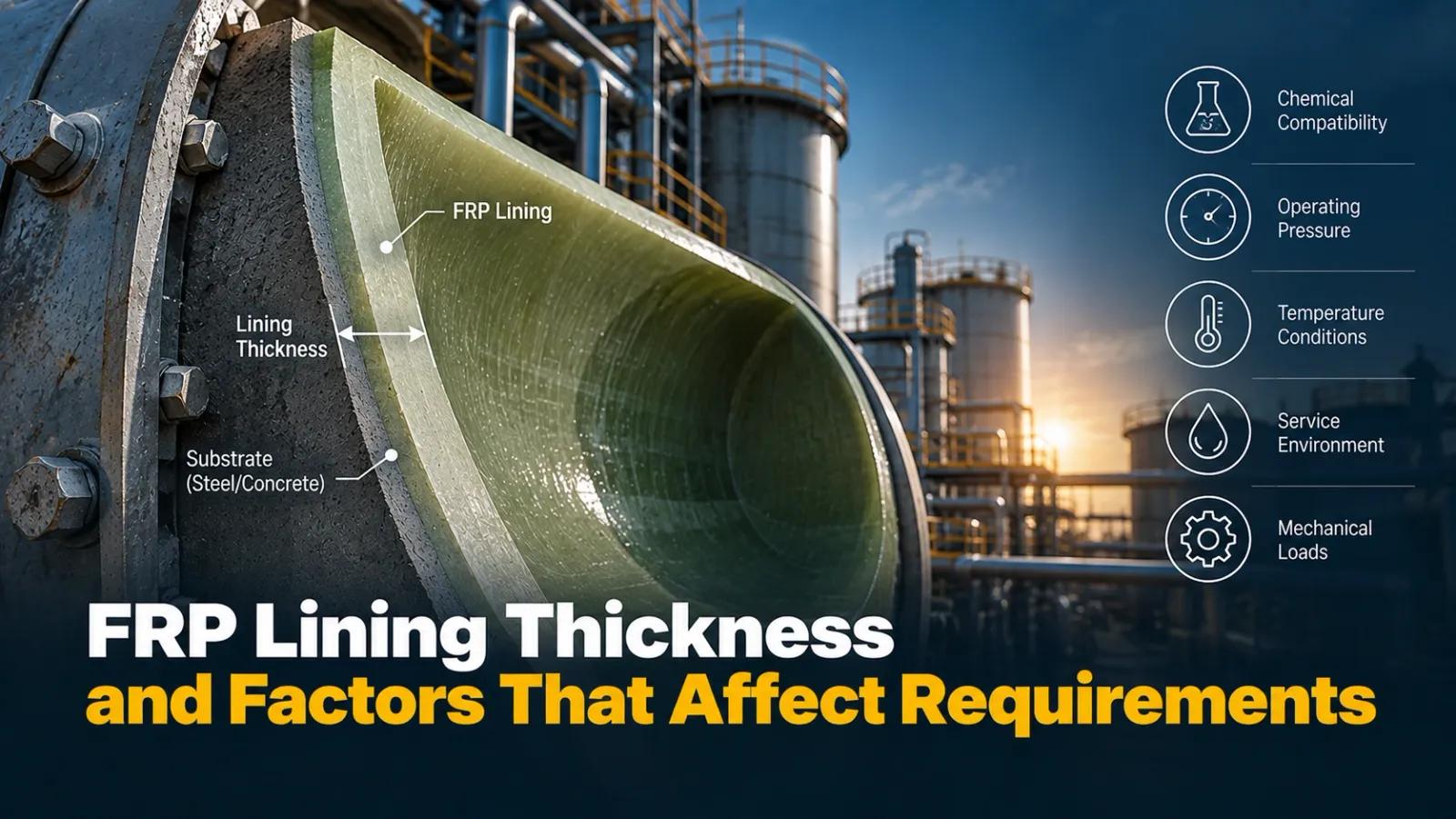
3 Oct 2026
Learn how to determine FRP lining thickness based on chemical exposure, temperature, substrate condition, service life, and application requirements.
Read More →
3 Oct 2026
Learn about FRP ducting applications, properties, material selection, and key design considerations for corrosive industrial environments.
Read More →