FRP lining failure can affect the safety and performance of industrial tanks, chemical storage facilities, and concrete structures. Although fiberglass reinforced plastic lining is designed to resist corrosion and chemical exposure, it can deteriorate over time due to operating conditions, improper installation, or material incompatibility. Recognizing early warning signs helps facility operators prevent chemical leaks, equipment damage, and expensive repairs.
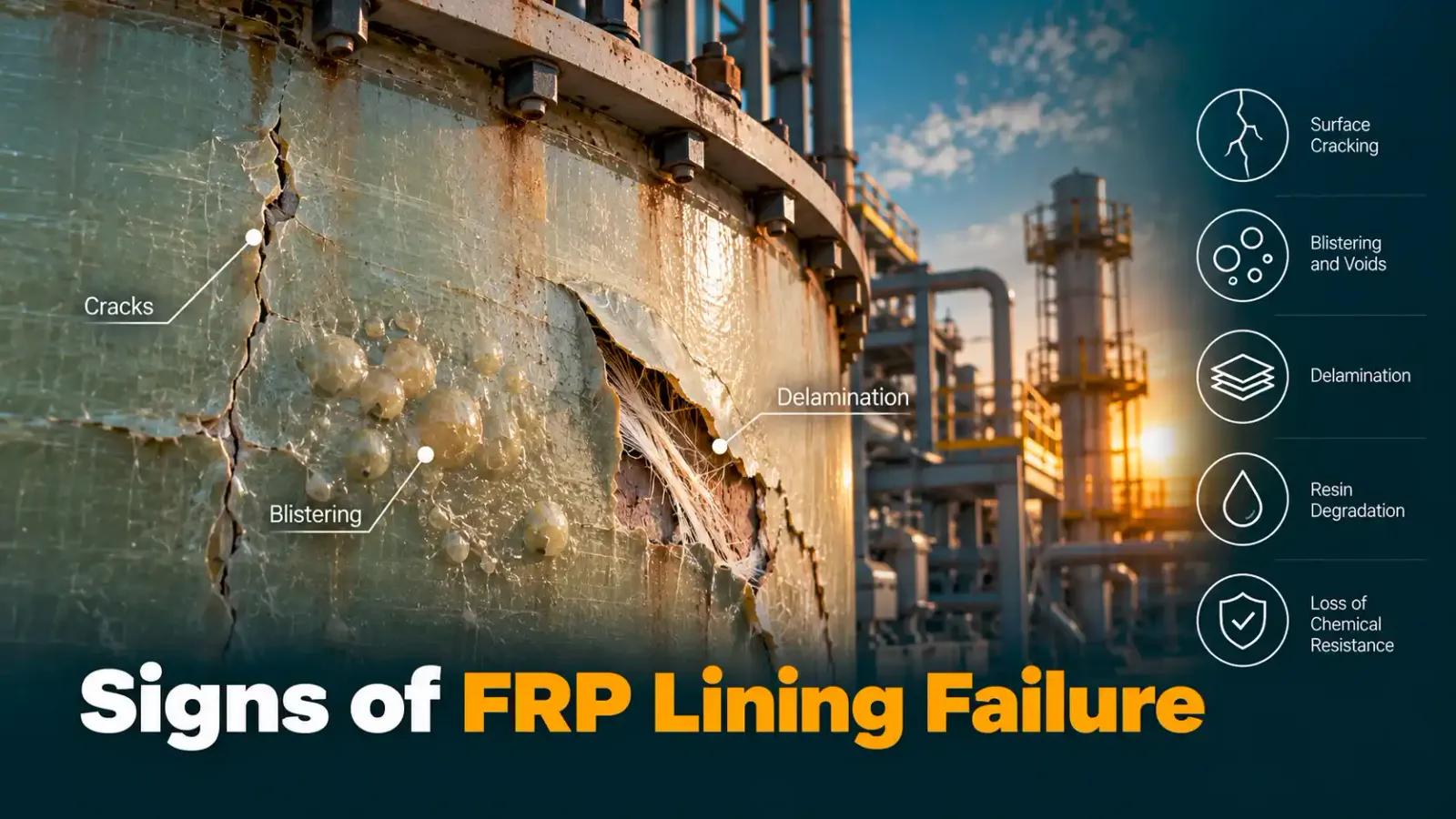
FRP lining failure occurs when the protective fiberglass and resin layers lose their ability to protect the underlying surface against chemicals, moisture, or mechanical damage. FRP lining is commonly applied to steel tanks, concrete structures, wastewater treatment facilities, and chemical containment areas. Its reinforced construction provides a durable corrosion resistant barrier.
However, even a properly installed lining system requires periodic inspection and maintenance. Products such as GAJA's Dura Coat® FRP Lining use polyester or vinyl ester resin combined with fiberglass reinforcement to protect industrial surfaces against corrosion.
Several visible and structural changes can indicate deterioration in an FRP lining system. Understanding these warning signs helps maintenance teams identify potential problems before they become more serious.
Cracks are among the most noticeable signs of FRP lining damage. Small hairline cracks, also known as crazing, may appear on the resin rich surface. Larger cracks can develop when the lining experiences excessive mechanical stress, thermal movement, or chemical exposure.
If cracks penetrate the protective barrier, chemicals or moisture may reach the underlying steel or concrete. Cracking should be evaluated promptly to determine whether the damage is superficial or affects the fiberglass laminate.
Blistering occurs when raised bubbles or swollen areas develop on the lining surface. These defects may result from trapped moisture, poor adhesion, chemical permeation, or gases beneath the protective layer.
Blisters can vary in size and may appear individually or across larger sections of the lining. Although not every blister indicates immediate failure, damaged areas should be inspected to determine whether the corrosion barrier remains intact.
Delamination occurs when bonded fiberglass layers begin separating from one another or from the substrate. This condition can develop because of improper surface preparation, inadequate resin application, mechanical stress, or prolonged exposure to unsuitable chemicals.
Affected areas may appear raised, uneven, or detached. Delamination can reduce the integrity of the protective system and should be assessed by qualified inspection personnel.
Changes in surface color may indicate chemical exposure, resin degradation, or contamination. For example, unusual stains, darkened areas, or localized fading can appear after prolonged contact with aggressive chemicals.
However, discoloration alone does not always mean the FRP lining has failed. Inspectors should compare affected areas with the original material condition and evaluate whether additional defects, such as softening or cracking, are present.
Peeling occurs when the FRP lining separates from the surface it was designed to protect. This problem is particularly concerning for steel and concrete structures exposed to corrosive liquids.
Poor substrate preparation, moisture contamination, or incompatible application materials can contribute to adhesion failure. When the lining loses adhesion, chemicals may penetrate behind the protective barrier and cause further deterioration.
FRP lining contains fiberglass reinforcement embedded in protective resin. Over time, abrasion, impact, or chemical attack may gradually wear away the resin rich surface.
When fiberglass strands become visible, it may indicate that the protective barrier has been damaged. This condition can occur in industrial environments involving abrasive particles, frequent cleaning, or mechanical contact.
Leaks, rust stains, and damp areas around lined structures may indicate that the corrosion protection system is no longer functioning properly. In steel tanks, corrosion marks can suggest that moisture or chemicals have reached the metallic substrate.
For concrete structures, unusual damp patches or visible chemical seepage may indicate barrier damage. Any suspected leak involving hazardous chemicals requires immediate attention and appropriate safety procedures.
FRP lining deterioration usually results from several contributing factors rather than a single cause. Common causes include:
Selecting the correct materials and following approved installation procedures can help reduce these risks. For industrial facilities requiring corrosion resistant storage systems, GAJA also provides FRP Tanks designed for chemical processing and liquid storage applications.
Regular inspections help identify early signs of deterioration and determine whether maintenance is necessary. A basic inspection generally includes examining the lining surface for cracks, bubbles, exposed fibers, discoloration, and visible separation.
Maintenance teams should document the location and extent of defects, review operating conditions, and compare inspection findings with previous records. Depending on the application, qualified inspectors may recommend additional testing to evaluate adhesion, laminate condition, or protective barrier integrity.
Specialized testing methods must be selected carefully, particularly for lining systems that have already been exposed to chemicals or continuous immersion. Inspection and repair work inside chemical tanks should only proceed after appropriate isolation, cleaning, atmospheric testing, and confined space safety measures.
Identifying early signs of FRP lining failure helps industrial facilities maintain safer equipment and reduce unexpected maintenance costs. Choosing a suitable corrosion resistant lining system is equally important for long term protection.
GAJA offers Dura Coat® FRP Lining for steel and concrete protection, with customizable solutions for various industrial applications. Contact GAJA to discuss FRP lining specifications suitable for your project.
Yes. Certain types of FRP lining damage can be repaired using compatible resin and fiberglass reinforcement. However, the repair method depends on the extent of deterioration, substrate condition, and operating requirements.
Inspection frequency depends on chemical exposure, operating temperature, equipment condition, and facility maintenance requirements. Higher risk applications may require more frequent inspections.
Yes. Hidden delamination, reduced adhesion, and small discontinuities may develop without obvious surface damage. Additional testing may be necessary when deterioration is suspected.
Not necessarily. Properly selected FRP lining is designed to withstand specified chemicals. Replacement may be necessary when inspections confirm significant damage or incompatibility with operating conditions.
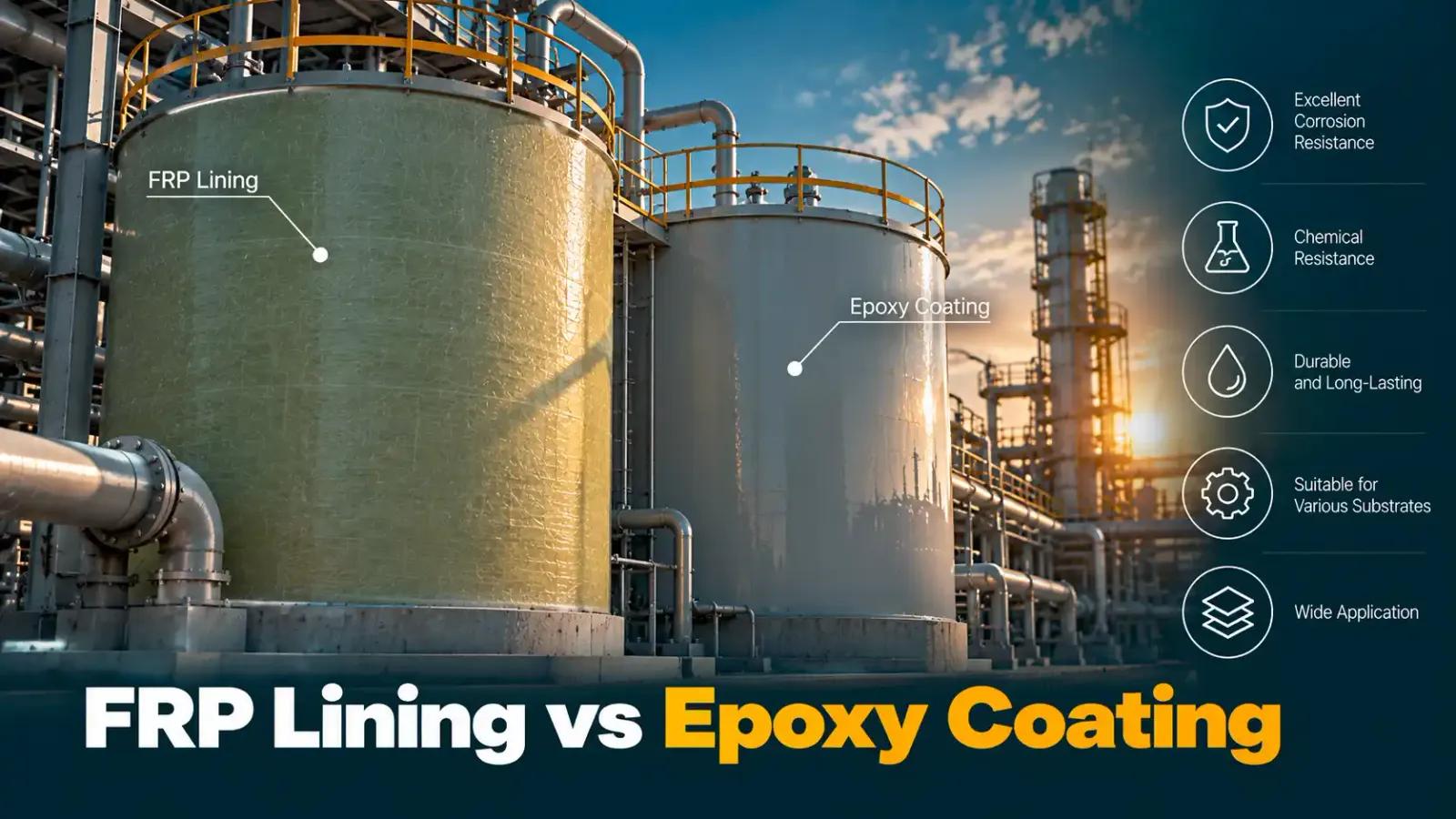
13 Oct 2026
Compare FRP lining vs epoxy coating in chemical resistance, durability, thickness, installation, and cost for industrial applications.
Read More →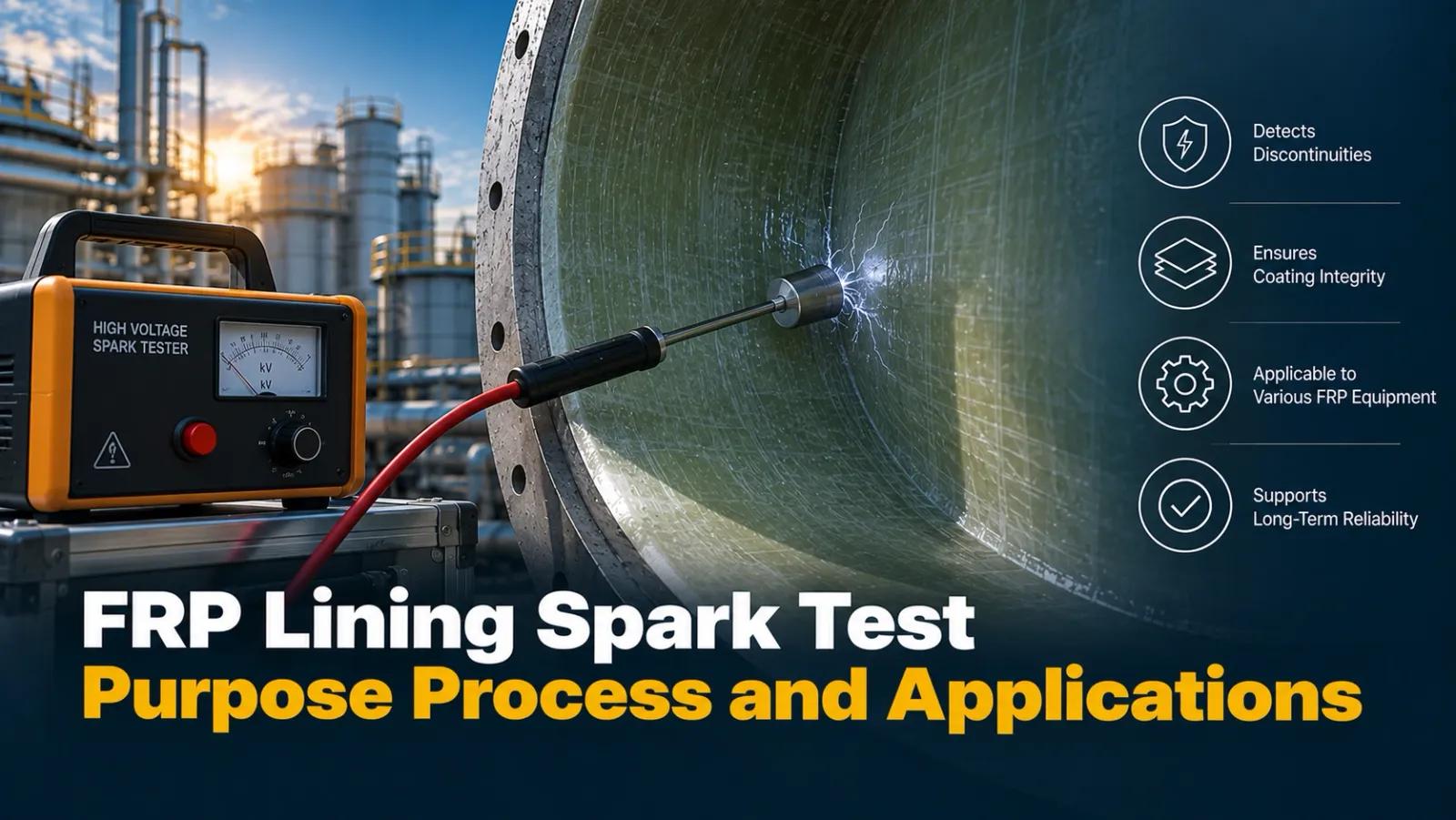
3 Oct 2026
Learn how FRP lining spark tests detect pinholes and defects, including the testing process, applications, safety factors, and inspection considerations.
Read More →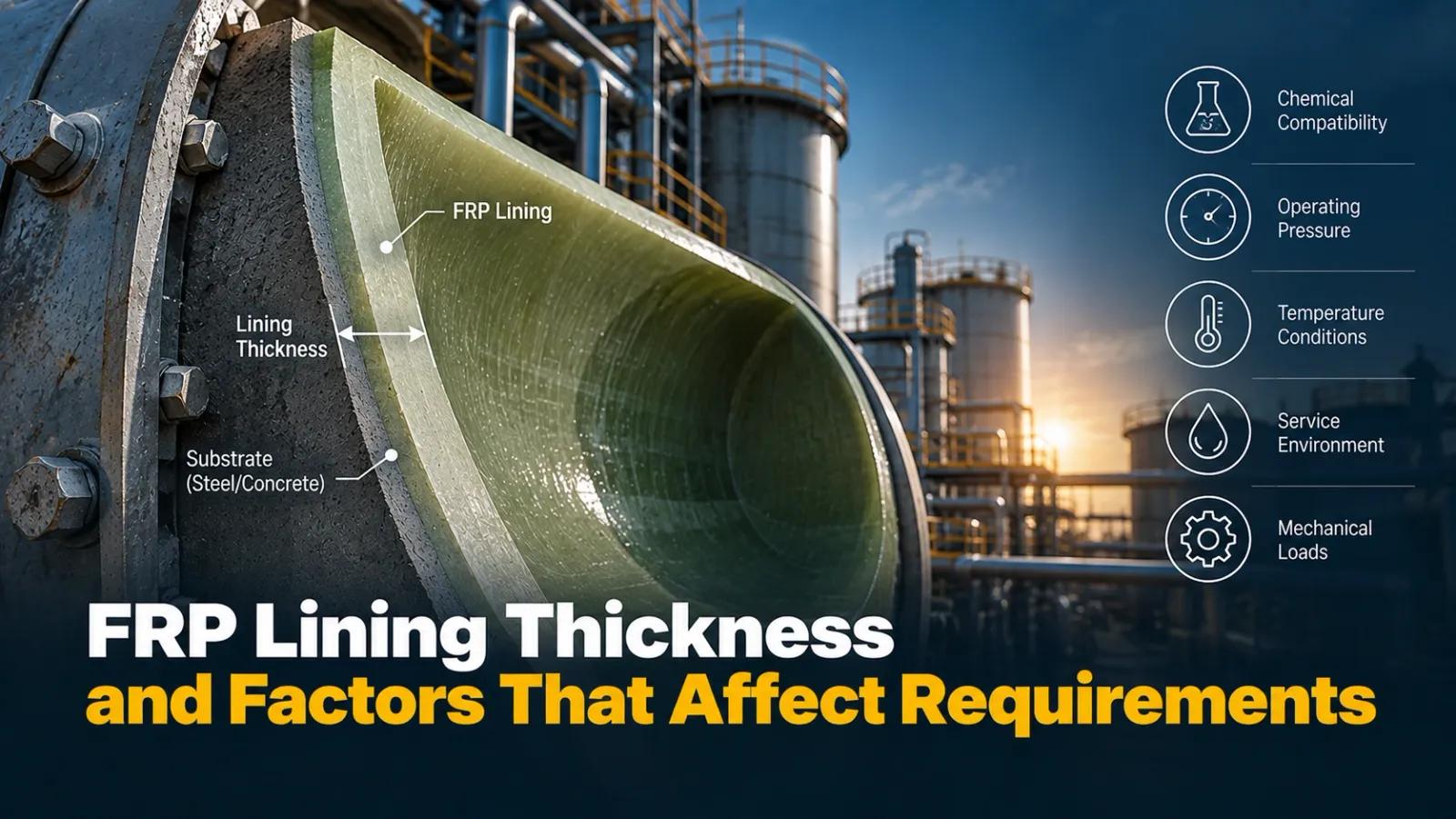
3 Oct 2026
Learn how to determine FRP lining thickness based on chemical exposure, temperature, substrate condition, service life, and application requirements.
Read More →