Roof condensation in industrial buildings is a common issue that can affect roofing systems, structural components, stored materials, and daily facility operations. It occurs when warm, moisture-laden air comes into contact with a roof surface that is colder than the surrounding air, causing water vapor to turn into liquid droplets.
Industrial facilities can be particularly vulnerable because manufacturing processes, machinery, washing activities, and inadequate ventilation may increase indoor humidity. Without proper moisture management, condensation can accumulate beneath the roof and eventually cause dripping, corrosion, mold growth, and damage to equipment.
Preventing industrial roof condensation requires more than selecting a roofing material. Building ventilation, insulation, indoor humidity, roof design, and maintenance should all be considered to maintain suitable conditions inside the facility.
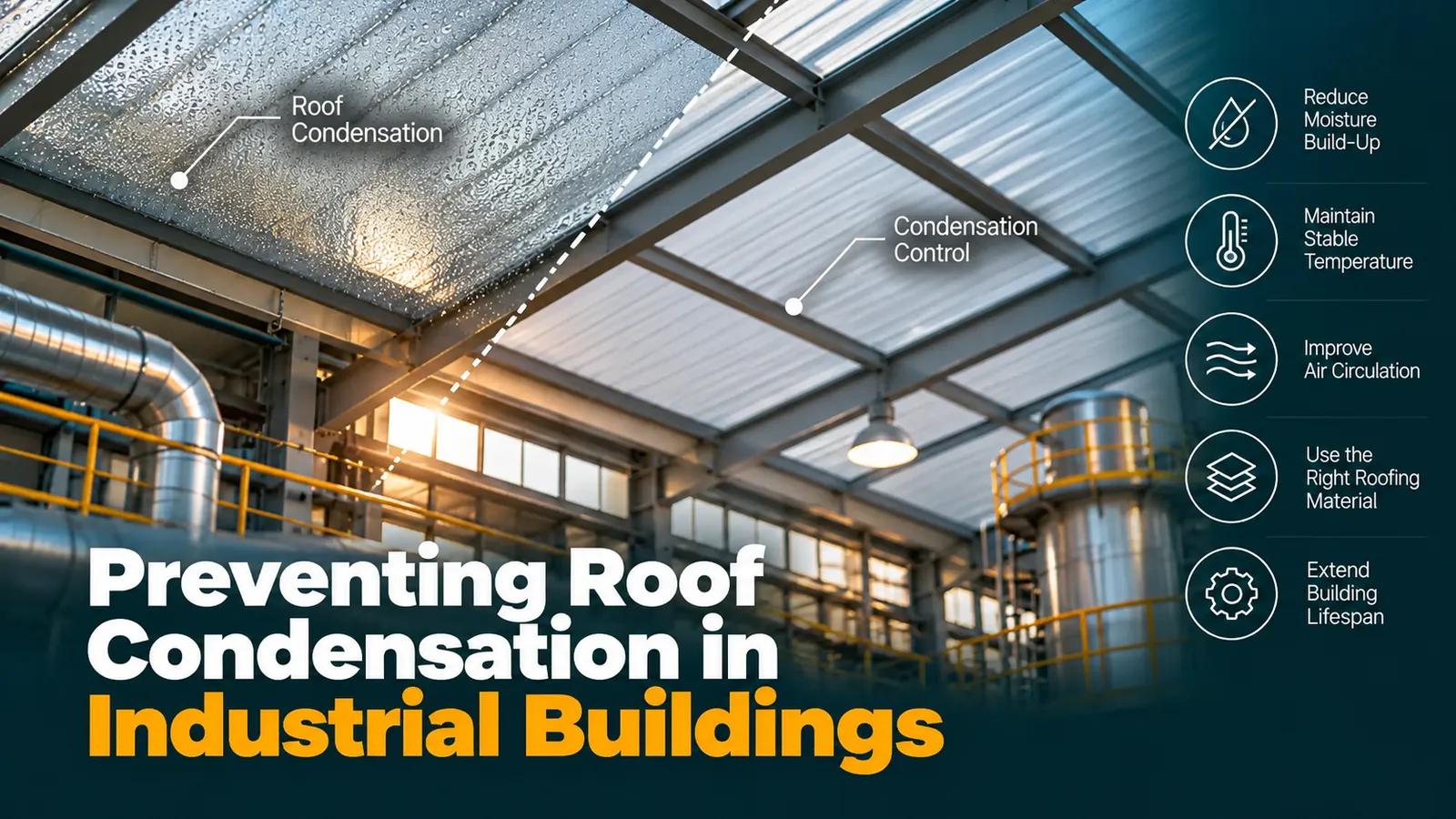
Roof condensation develops when warm, humid air reaches a surface below its dew point. The dew point is the temperature at which water vapor begins to condense into liquid water.
Several factors can contribute to this condition in industrial facilities:
Understanding these contributing factors is important because condensation problems often result from a combination of environmental and building design conditions.
Roof condensation is not always immediately visible. However, facility managers can identify several warning signs during routine inspections:
These symptoms should be investigated to determine whether the moisture comes from condensation, roof leakage, or another source. Identifying the actual cause helps prevent unnecessary repairs and ensures the appropriate corrective measures are implemented.
Uncontrolled condensation can create several operational and maintenance challenges.
For these reasons, controlling condensation should be considered as part of industrial building design and long-term facility management.
Several building design and operational measures can help reduce the risk of roof condensation.
Proper roof ventilation helps remove warm, humid air from the space beneath the roof. Depending on the building design, ventilation can use ridge vents, roof ventilators, exhaust fans, or other mechanical and natural ventilation systems.
Airflow should be designed to support effective air movement throughout the building rather than allowing moisture to accumulate in enclosed roof spaces.
Roof insulation helps reduce heat transfer between indoor and outdoor environments. By maintaining more stable roof surface temperatures, an appropriately designed insulation system can reduce the likelihood of surfaces falling below the indoor dew point.
The insulation specification should consider the building's operating temperature, outdoor climate, humidity levels, and roofing configuration. Vapor control layers may also be necessary to limit moisture migration into the roof assembly.
Reducing excessive indoor moisture is another important step in roof condensation prevention. Industrial facilities can consider:
These measures help reduce the amount of moisture available to condense on colder roof surfaces.
Roofing materials should be evaluated according to the building's operating environment, thermal performance requirements, durability, and maintenance needs. For industrial facilities, GFRP Roof and Skylight GFRP Roof & Cladding can be considered as part of the roofing system selection process.
However, roofing material alone does not eliminate condensation. The complete roof assembly, including insulation, ventilation, joints, and moisture control measures, should be evaluated together.
Proper roof drainage helps prevent rainwater accumulation and reduces the risk of external water infiltration being mistaken for condensation.
Regularly inspect roof joints, fasteners, drainage outlets, flashing, and penetrations. Building design should also account for potential thermal bridges, where heat transfer through structural components can create localized cold surfaces.
Selecting roofing materials requires consideration of the facility's operating conditions rather than focusing only on initial material costs.
Project teams should evaluate:
GFRP roofing products may be considered for industrial applications where fiberglass-reinforced composite materials are suitable for the project requirements. Nevertheless, the complete roofing design must address ventilation, insulation, and moisture control to manage condensation effectively.
Preventing roof condensation starts with understanding the building environment and selecting a roofing system that supports long-term performance. Ventilation, insulation, humidity management, and appropriate roofing materials should work together to reduce moisture-related problems.
GAJA manufactures FRP products for industrial applications, including GFRP roofing solutions. For facilities planning a new roofing installation or evaluating existing roofing requirements, project teams can contact GAJA to discuss roofing materials, project specifications, and application requirements.
It occurs when warm, humid indoor air contacts a roof surface below its dew point. Poor ventilation, inadequate insulation, high indoor humidity, and temperature differences can contribute to the problem.
Improve ventilation, install suitable roof insulation, control indoor humidity, manage moisture-generating processes, and inspect the roofing system regularly.
No. Condensation occurs when water vapor turns into liquid on cold surfaces, while roof leaks happen when external water enters through damaged roofing materials, joints, or penetrations.
Proper insulation can reduce the risk by limiting temperature differences across roof surfaces. However, insulation should be combined with suitable ventilation and moisture control measures.
GFRP roofing can be considered as part of an industrial roofing system. However, condensation control depends on the complete roof design, including insulation, ventilation, and indoor humidity management.
18 Nov 2026
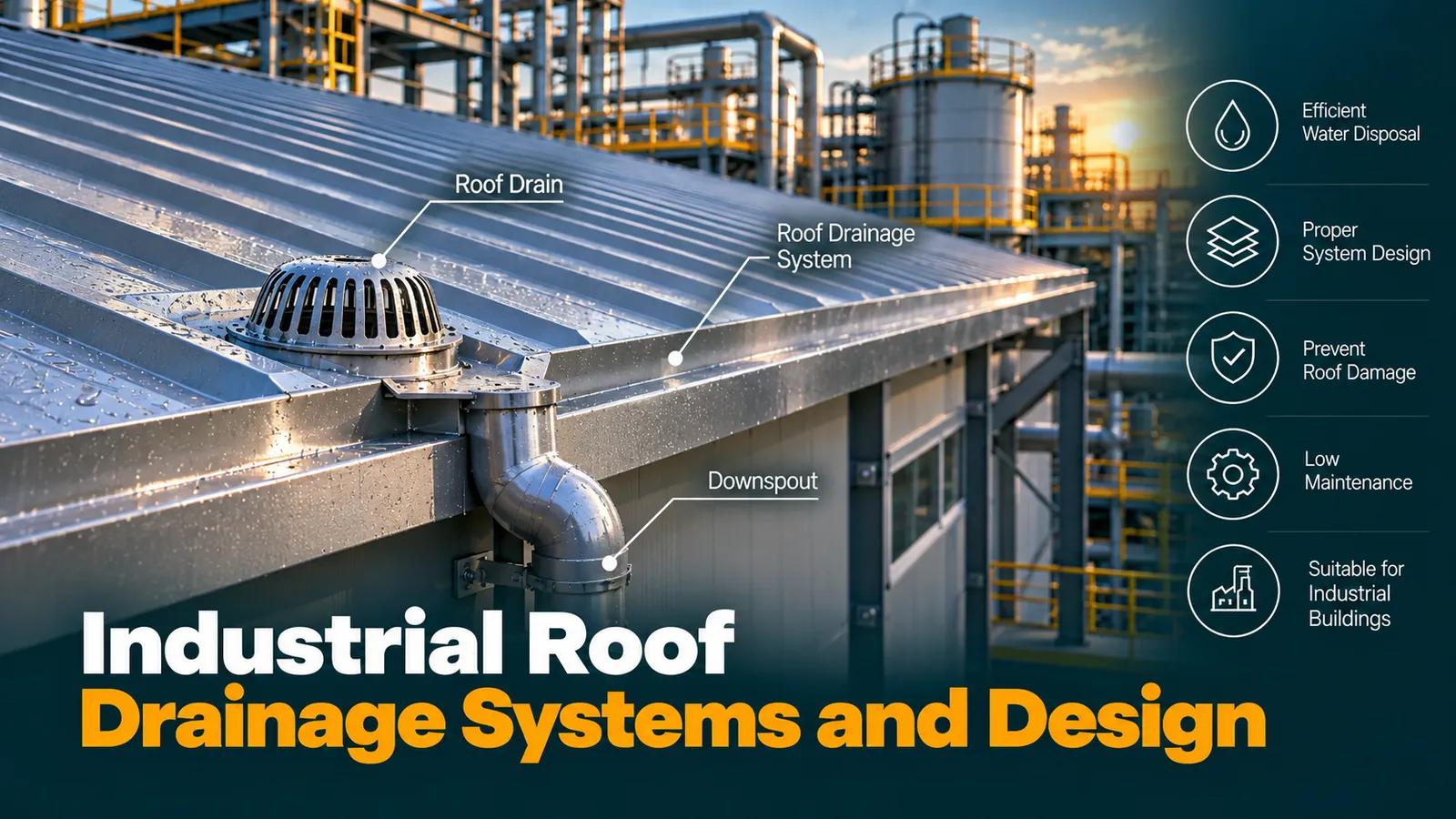
Learn how industrial roof drainage systems are designed, including gutters, outlets, downpipes, drainage capacity, materials, and maintenance.
Read More →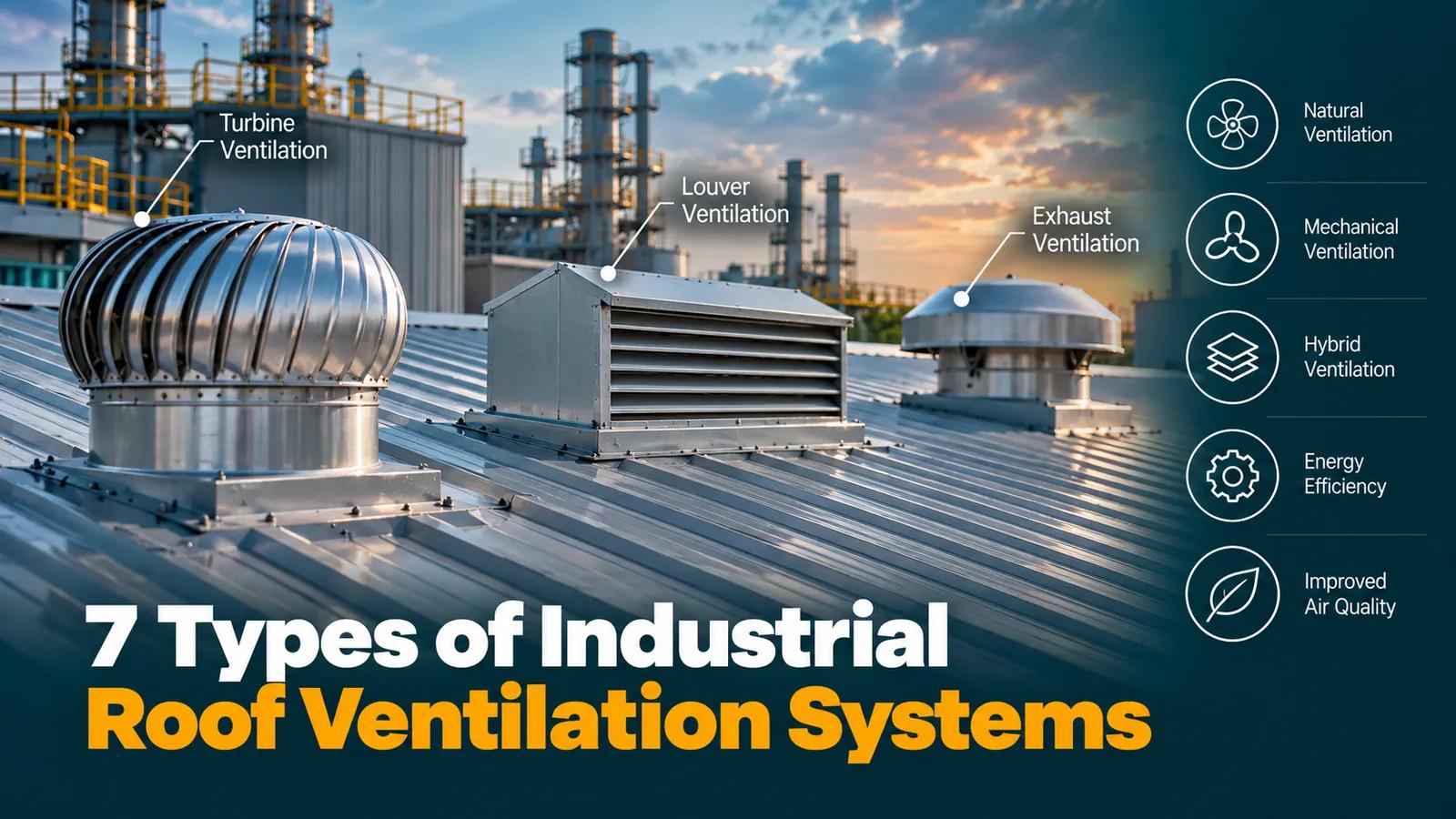
18 Nov 2026
Explore 7 industrial roof ventilation systems, how they work, and what to consider when improving airflow, heat control, and indoor air quality.
Read More →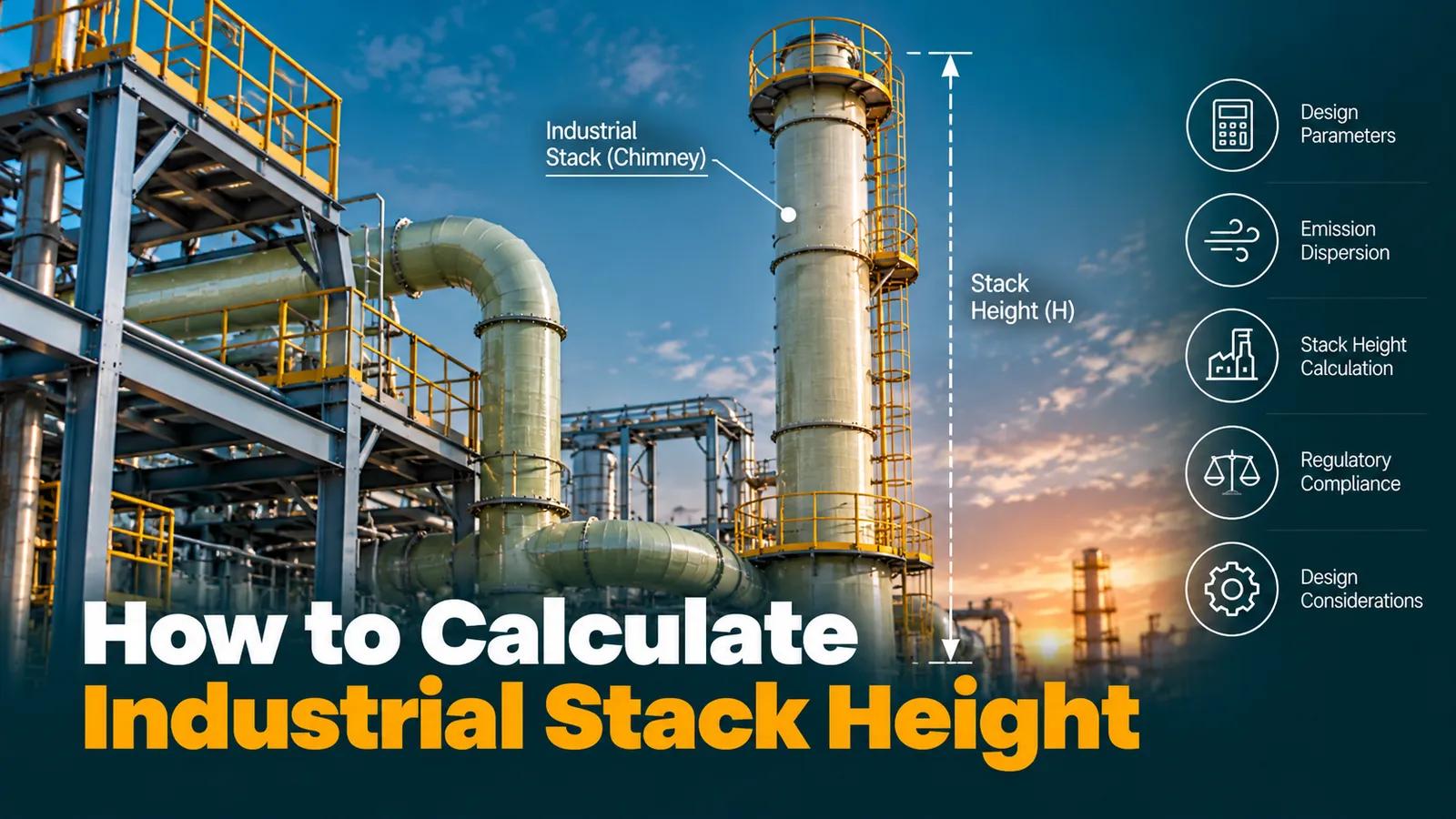
18 Nov 2026
Learn how to calculate industrial stack height, including key factors, emission requirements, dispersion considerations, and design parameters.
Read More →