7 Types of Industrial Roof Ventilation Systems
Industrial roof ventilation plays an important role in maintaining airflow, controlling indoor temperatures, and improving air quality inside factories, warehouses, and manufacturing facilities. Industrial buildings often generate excess heat, moisture, dust, fumes, and airborne contaminants from machinery and production activities. Without an appropriate ventilation system, these conditions can affect worker comfort, equipment performance, and the overall working environment.
An industrial roof ventilation system helps remove hot and stale air from the building while allowing fresh outdoor air to enter. Depending on the building design and ventilation requirements, facilities can use natural ventilation, mechanical systems, or a combination of both. Understanding the available types can help project teams select a suitable solution based on building size, operating conditions, and airflow requirements.
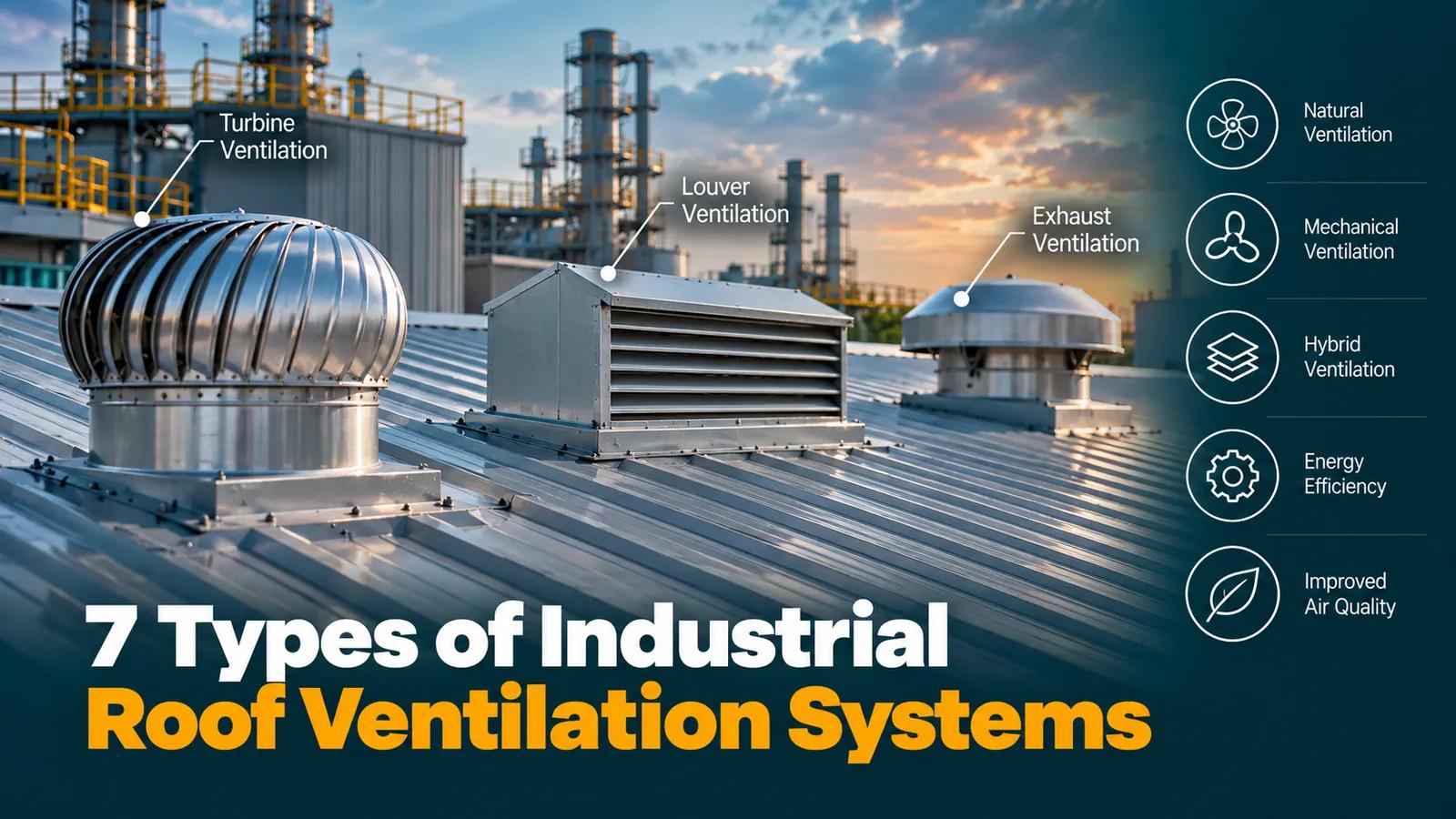
Heat naturally accumulates near the upper sections of industrial buildings because warm air rises. In facilities with high ceilings, machinery, production equipment, and limited air circulation, this heat can remain trapped beneath the roof.
A properly designed industrial roof ventilation system helps address several operating concerns:
However, general roof ventilation should not be treated as a replacement for dedicated industrial exhaust or air pollution control systems when hazardous fumes, gases, or dust are generated. These applications may require specialized extraction and filtration solutions.
Different industrial roof ventilators use different mechanisms to move air. The following are seven common systems used in industrial buildings.
Ridge ventilation systems are installed along the highest point of a pitched roof. They provide a continuous or segmented opening through which accumulated warm air can escape.
These systems primarily rely on natural convection and wind pressure to support airflow. As warm air rises, it moves toward the roof ridge and exits through the ventilation opening. Fresh air enters through lower-level openings, such as wall louvers or designated air inlets. Ridge ventilators are commonly considered for factories, warehouses, and large industrial sheds where heat naturally accumulates near the roof.
Wind-driven turbine ventilators use rotating turbine blades to help extract warm air from inside a building. When outdoor wind passes through the turbine, it creates rotational movement that supports air extraction.
These industrial roof ventilators can operate without a dedicated electric motor, making them an option for facilities seeking a natural ventilation approach. However, their performance depends on wind conditions, installation position, and the condition of moving components. Regular inspection of bearings and rotating parts is important to maintain effective operation.
Static gravity roof ventilators, also known as stationary roof ventilators, allow warm air to escape through fixed roof openings without rotating components or powered fans. They operate mainly through the stack effect, which occurs when warmer indoor air rises and creates a pressure difference that encourages air movement.
Because they have no motor or rotating mechanism, these ventilators generally require less mechanical maintenance. However, their performance depends on sufficient temperature differences, building height, available inlet openings, and outdoor wind conditions.
Roof monitors are raised structures installed along or near the roof ridge. They typically incorporate openings or louvers that allow warm air to escape from the building.
Unlike individual roof vents, a roof monitor can extend across a substantial section of an industrial building. This makes it useful for facilities with large floor areas and concentrated heat loads. Roof monitors can also incorporate glazing to introduce natural daylight. Their design should include appropriate weather protection, drainage, and openings sized according to the required airflow.
Powered roof exhaust fans use electric motors to actively remove indoor air through roof-mounted exhaust units. They provide more controlled airflow than passive ventilation systems because the fan generates the pressure difference needed to move air.
Depending on the application, axial or centrifugal fans may be selected. Axial fans are commonly used for relatively direct airflow, while centrifugal fans can be suitable for systems involving greater airflow resistance or ductwork. Industrial roof exhaust fans are useful in facilities where natural ventilation alone cannot provide sufficient air movement. Properly designed fresh-air inlets are also necessary to replace the exhausted air.
Unlike exhaust fans, roof-mounted supply fans introduce outdoor air into an industrial building. They help maintain the required fresh-air supply and support the replacement of air removed by exhaust systems.
These systems may include filters, ductwork, dampers, and air distribution components depending on the building requirements. Roof-mounted supply fans are particularly useful in facilities that need controlled fresh-air intake or where exhaust systems create negative indoor pressure. The supplied air should be distributed appropriately to prevent stagnant areas and uncomfortable drafts.
Hybrid ventilation combines natural ventilation openings with mechanical equipment to improve airflow under different operating conditions. For example, a factory may use ridge ventilators or roof monitors for continuous natural air removal while installing powered exhaust fans to provide additional airflow during periods of high heat generation.
This approach offers flexibility because mechanical ventilation can supplement natural airflow when wind conditions or temperature differences are insufficient. Hybrid systems are often considered for large industrial buildings with changing production loads and varying ventilation requirements.
Selecting the right industrial roof ventilation system requires evaluating the building layout, operating environment, and required airflow. A system that works well in a warehouse may not provide sufficient ventilation for a manufacturing facility with high heat generation or chemical processes.
Consider the following factors before selecting a system:
The building's floor area, ceiling height, roof slope, and internal layout influence airflow patterns. Large industrial buildings may require multiple ventilation points to prevent hot air from accumulating in specific areas.
Identify the heat generated by machinery, production processes, lighting, and other equipment. Facilities with high heat loads may require mechanical exhaust fans or hybrid ventilation rather than relying entirely on natural airflow.
The required airflow depends on the building's occupancy, activities, heat generation, and potential contaminants. Engineers should evaluate air volume, ventilation rates, pressure differences, and air distribution when determining system capacity.
Outdoor wind conditions, rainfall, humidity, and surrounding structures can influence natural roof ventilation. Mechanical systems may be more appropriate when consistent airflow is required regardless of changing weather conditions.
Consider electricity consumption, inspection requirements, replacement components, and long-term maintenance. Passive systems generally have fewer mechanical components, while powered ventilation provides greater control over airflow.
Ventilation performance also depends on the building envelope and roof structure. Roofing materials, structural supports, openings, and weather protection should be considered together during the design process.
For example, GFRP roof systems can be considered for industrial roofing applications where chemical resistance and UV protection are important. GAJA's Composite Alum® GFRP Roof uses a UV-resistant and chemical-resistant resin with a UV PE film coating. The product is available in sheet lengths of up to 14 meters.
For facilities requiring natural lighting alongside roofing and cladding, Skylight GFRP Roof & Cladding is another option to consider.
The roof structure should also be evaluated when installing ventilation equipment. FRP Pultrusion Purlin is one structural support product offered by GAJA for industrial building applications. Its suitability for a particular roof design should be verified through structural calculations.
It is important to distinguish roofing and structural products from ventilation equipment itself. GFRP roofing, skylights, and purlins support the building envelope and structure but do not independently provide mechanical air extraction.
General industrial roof ventilation and air pollution control serve different purposes. Roof ventilation primarily manages overall air movement, temperature, and indoor air conditions. However, it may not adequately capture hazardous pollutants generated directly by industrial processes.
Facilities handling corrosive gases, chemical vapors, and other airborne pollutants may require dedicated extraction and treatment equipment.
For these applications, GAJA's Air Pollutant System offers wet scrubber solutions designed to remove pollutants from industrial gas streams. The system uses scrubbing liquid to capture and neutralize pollutants before treated gas is discharged through an outlet stack.
The appropriate solution should be determined through an assessment of pollutant characteristics, gas volume, operating conditions, and applicable environmental requirements.
Selecting an appropriate industrial roof ventilation system involves more than choosing a roof ventilator. Building dimensions, heat loads, airflow requirements, roof materials, structural support, and potential airborne contaminants should all be evaluated during the planning stage.
GAJA (PT. Graha Adhi Jaya Abadi) provides industrial FRP engineering and manufacturing solutions, including GFRP roofing, skylight roofing, FRP structural products, and air pollution control systems.
If your project requires industrial roofing materials, structural FRP components, or air pollution control solutions, contact GAJA to discuss your project specifications and technical requirements.
Industrial roof ventilation is a system designed to remove hot, stale, and unwanted air from industrial buildings while supporting the entry of fresh outdoor air. It helps manage indoor temperatures, moisture, and air quality.
Common options include ridge ventilators, wind-driven turbine ventilators, static gravity ventilators, roof monitors, and powered roof exhaust fans. The appropriate choice depends on building design and ventilation requirements.
Natural roof ventilation relies on wind pressure and temperature differences to move air without powered fans. Mechanical roof ventilation uses electrically powered fans to control air supply or exhaust.
Yes. Roof exhaust fans can be used in large industrial buildings when appropriately sized and positioned. Their capacity, air inlet arrangements, and distribution should be evaluated to achieve the required airflow.
General roof ventilation may help dilute certain airborne contaminants, but it should not replace dedicated local exhaust ventilation or air pollution control equipment when hazardous chemical fumes are present.
18 Nov 2026
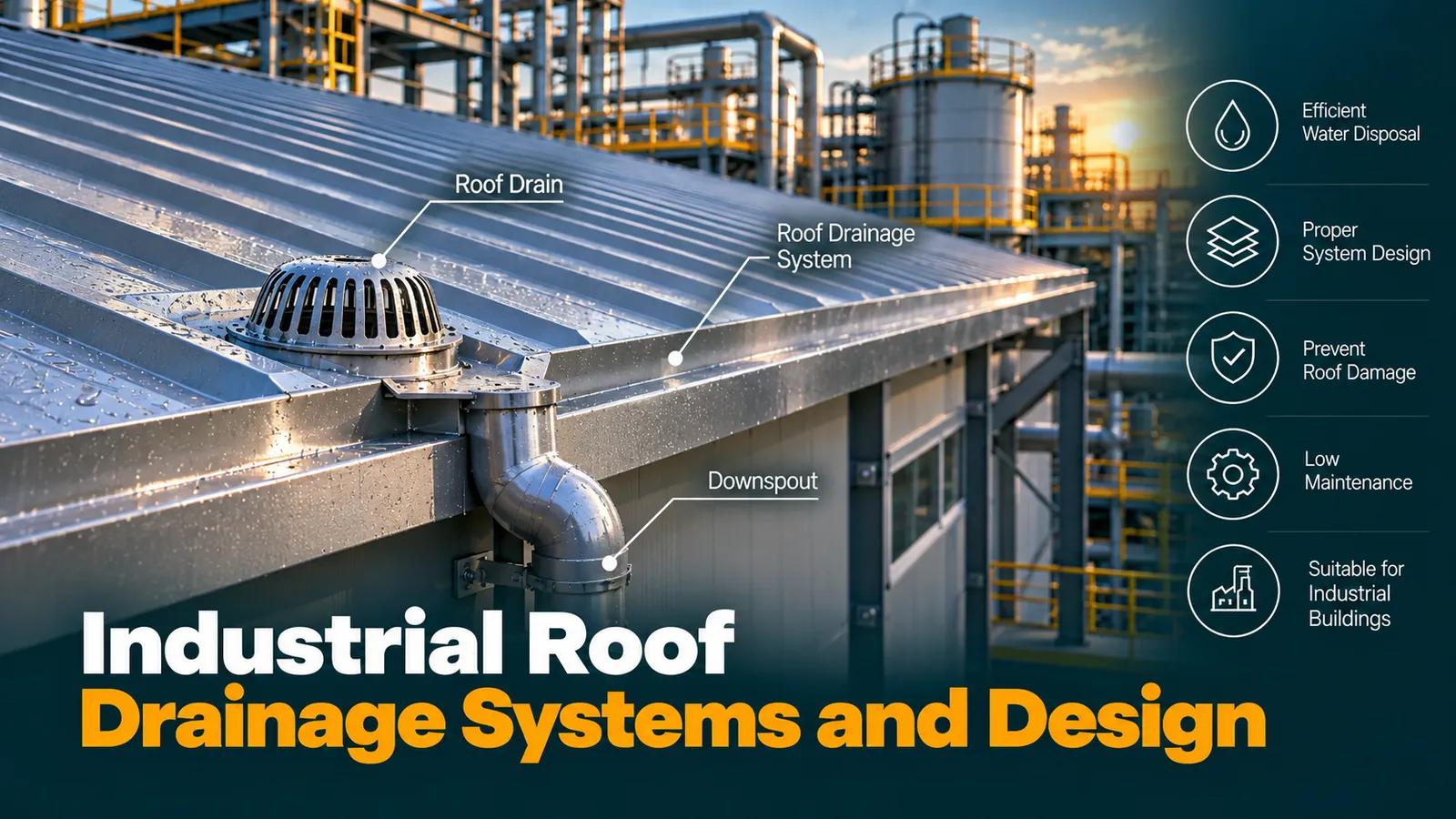
Learn how industrial roof drainage systems are designed, including gutters, outlets, downpipes, drainage capacity, materials, and maintenance.
Read More →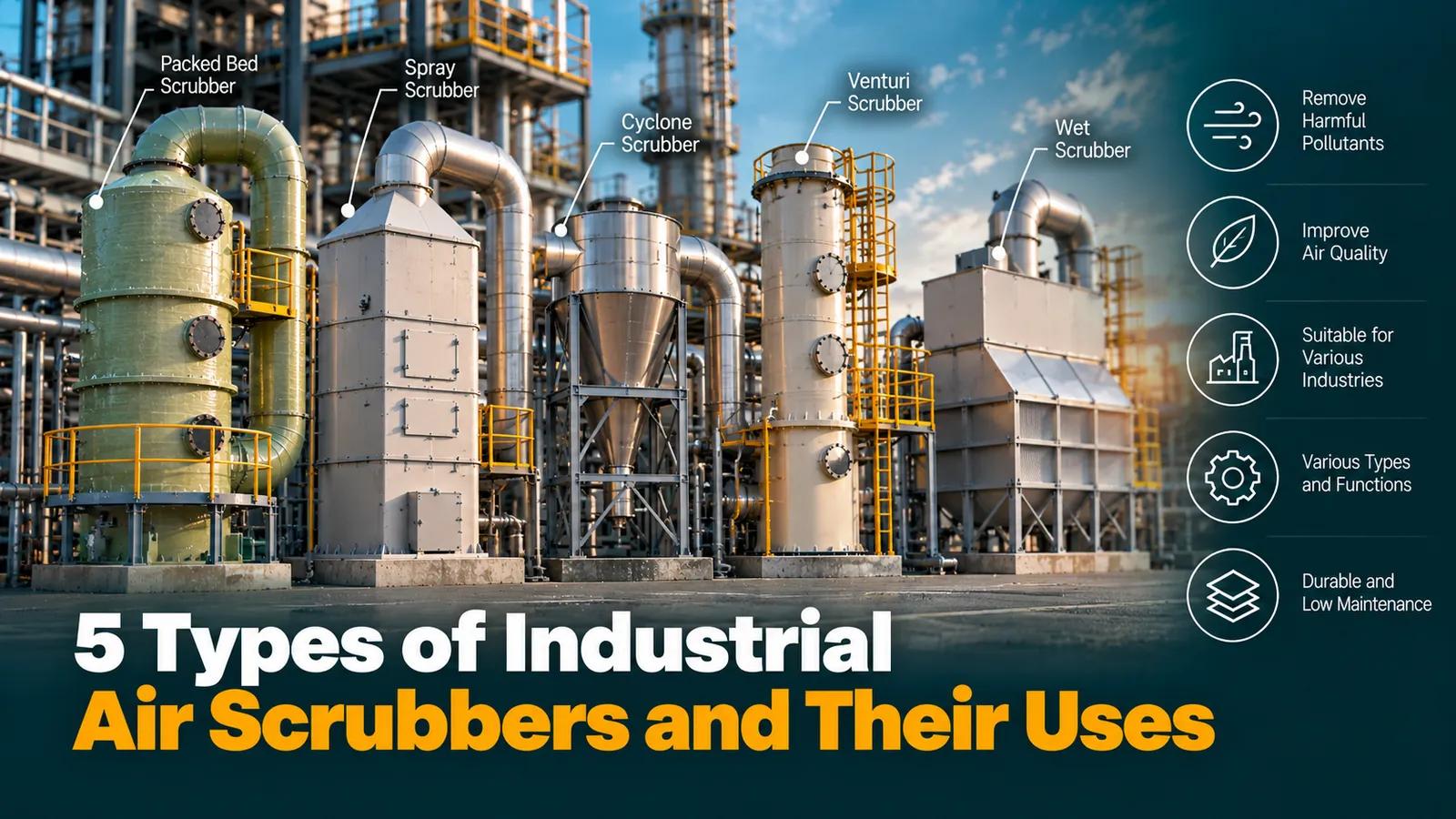
18 Nov 2026
Learn the industrial scrubber working principle, explore 5 types of air scrubbers, and understand their applications in industrial air pollution control.
Read More →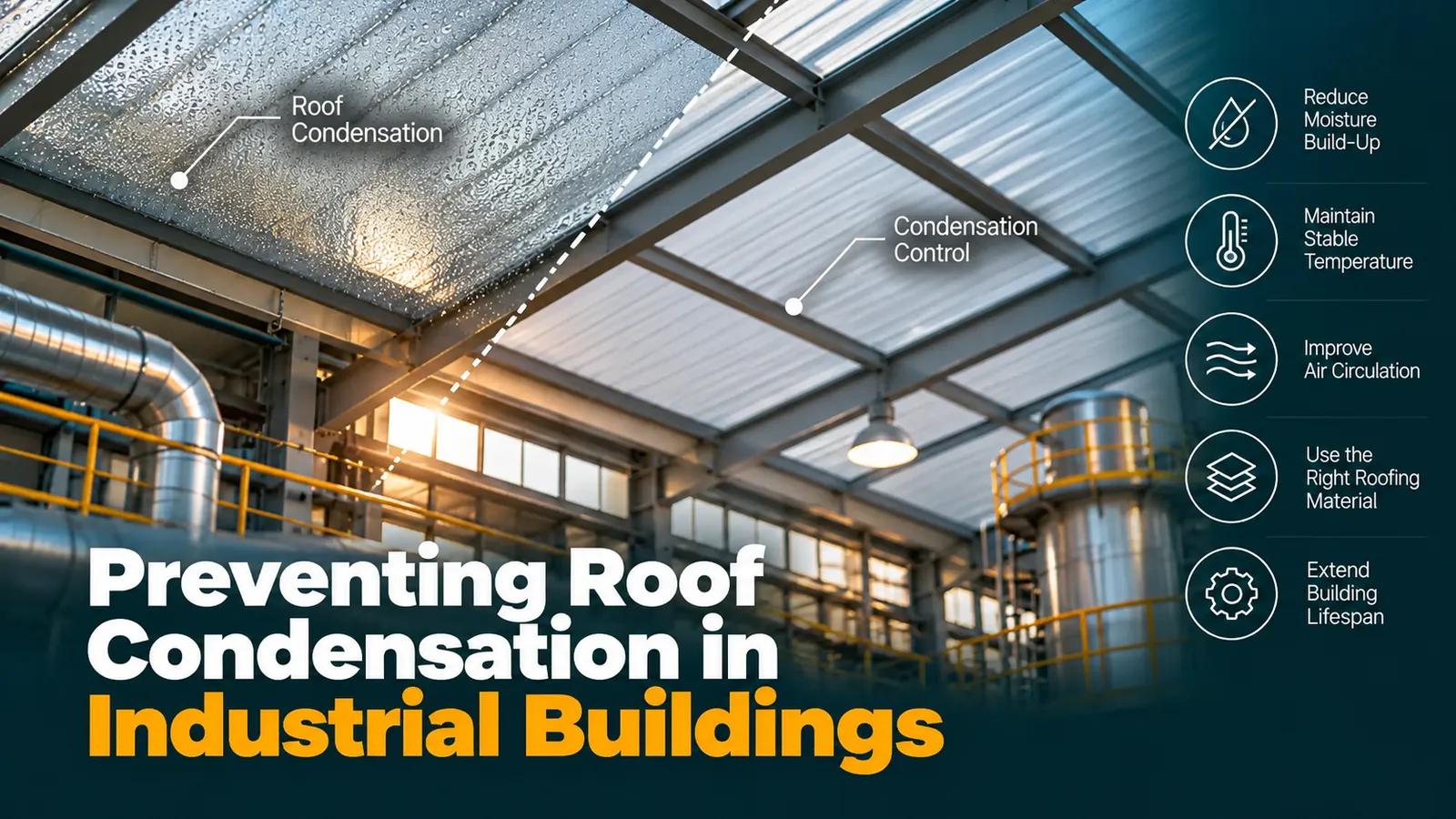
18 Nov 2026
Learn how to prevent roof condensation in industrial buildings through proper ventilation, insulation, roofing materials, and moisture control.
Read More →