Industrial stack height calculation is an important part of designing industrial exhaust systems. The height of an industrial stack affects how exhaust gases are released into the atmosphere, how they disperse, and whether nearby buildings or terrain interfere with the exhaust plume. An appropriately designed stack can help reduce the risk of excessive pollutant concentrations near the emission source.
However, determining the correct stack height involves more than selecting a standard measurement. Engineers need to consider emission characteristics, exhaust temperature, exit velocity, surrounding structures, local meteorological conditions, and applicable environmental regulations. Understanding these factors helps ensure that an industrial exhaust stack meets its operational and environmental requirements.
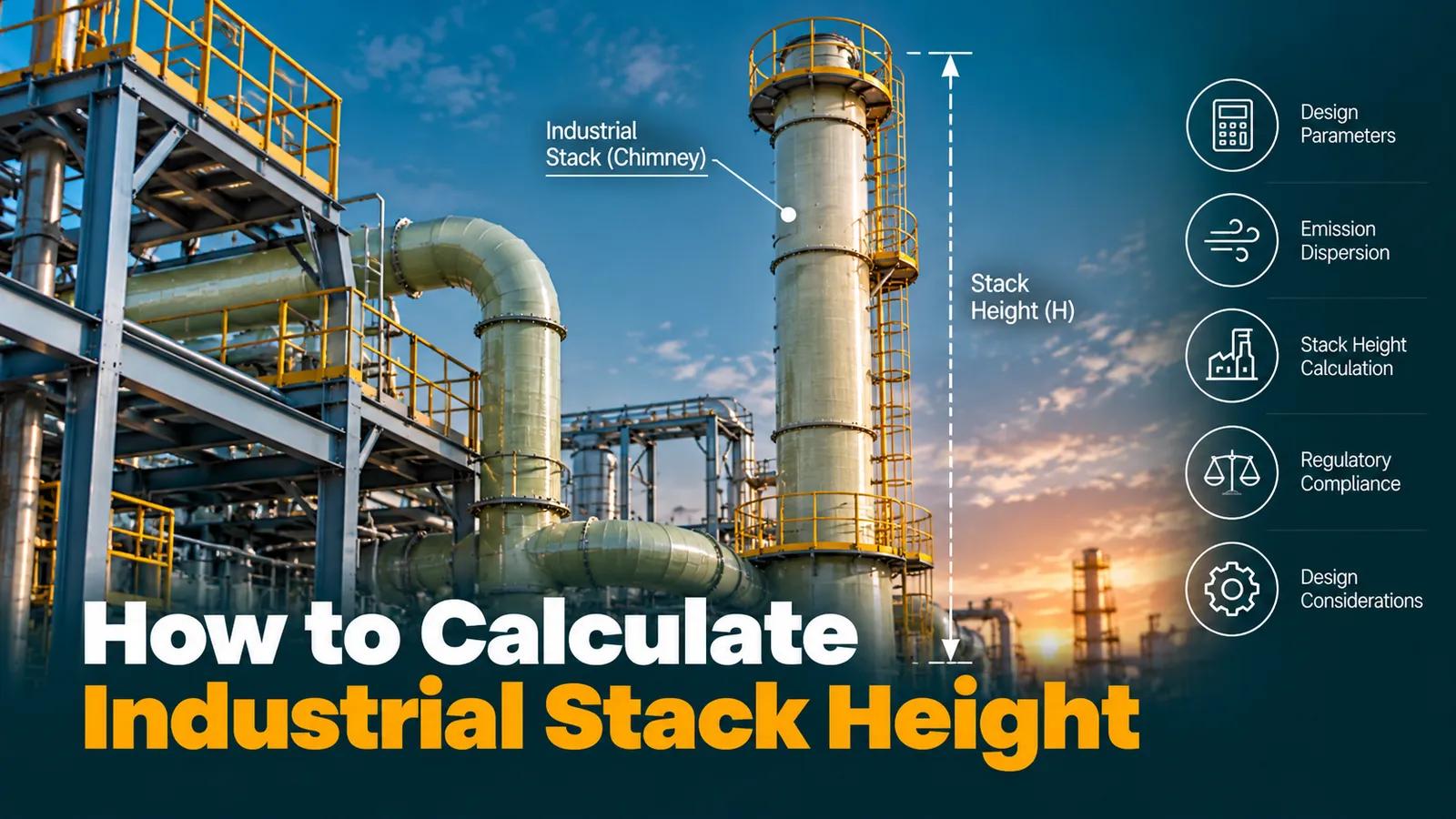
Industrial stack height refers to the vertical distance from the ground-level elevation at the base of a stack to its discharge outlet. It is commonly measured in meters and is an important parameter in industrial air pollution control systems. Stacks are used in industrial facilities to release exhaust gases generated by processes such as combustion, chemical manufacturing, power generation, and material processing.
The physical stack height is not the same as the effective stack height. Effective stack height also considers plume rise, which occurs when hot exhaust gases or gases discharged at sufficient velocity continue moving upward after leaving the stack.
The relationship can be expressed as:
Effective Stack Height = Physical Stack Height + Plume Rise
Both measurements are important when evaluating industrial exhaust stack design and atmospheric pollutant dispersion.
Before calculating the required height, engineers should evaluate several factors that influence stack performance.
The type and quantity of pollutants released affect how emissions should be managed. Common industrial pollutants include particulate matter, sulfur dioxide (SO₂), nitrogen oxides (NOₓ), and other process-specific gases. Emission concentration, emission rate, and operating conditions should be evaluated to understand the potential environmental impact of the discharge.
Exhaust temperature and discharge velocity influence plume rise. Hotter gases can have greater buoyancy than surrounding air, while higher exit velocity can contribute to the upward movement of the exhaust plume. These parameters are important when determining effective stack height and evaluating dispersion behavior.
Industrial buildings, processing equipment, and other structures can interfere with airflow around a stack. This phenomenon is known as building downwash. When exhaust gases enter the turbulent wake behind a building, pollutants may be carried downward and create higher concentrations near ground level.
Wind speed, wind direction, atmospheric stability, and ambient temperature influence how pollutants disperse. Engineers should use representative local meteorological information when conducting air dispersion assessments rather than relying on a single assumed wind condition.
Hills, elevated ground, and other geographical features can affect airflow and pollutant movement. Facilities located near complex terrain may require additional dispersion analysis to evaluate potential impacts on surrounding areas.
There is no single formula that determines the appropriate industrial stack height for every facility. However, engineers can use established engineering methods as part of the initial design assessment.
One commonly referenced approach is the Good Engineering Practice (GEP) stack height equation developed within the United States Environmental Protection Agency (EPA) regulatory framework.
For applicable stacks, the equation is:
Hᵍ = H + (1.5 × L)
Where:
The projected width is evaluated relative to the wind direction. This means that the building geometry and its orientation should be considered when applying the equation.
Assume an industrial facility has the following building dimensions:
Since the projected width is smaller than the building height, L is 12 meters.
Using the GEP equation:
Hᵍ = H + (1.5 × L)
Hᵍ = 20 + (1.5 × 12)
Hᵍ = 20 + 18
Hᵍ = 38 meters
Based on this simplified calculation, the GEP reference height is 38 meters.
However, this result should not automatically be treated as the final required physical stack height. GEP is a regulatory and engineering concept for evaluating building-related aerodynamic effects, not a universal formula for determining every industrial chimney's design height. Applicable local requirements and site-specific dispersion assessments must still be considered.
Understanding the difference between physical and effective stack height is essential when evaluating industrial stack height design.
| Parameter | Physical Stack Height | Effective Stack Height |
|---|---|---|
Definition | Actual vertical height of the stack | Physical height plus plume rise |
Main consideration | Structural dimensions | Stack height and exhaust plume behavior |
Influencing factors | Stack design and installation elevation | Temperature, exit velocity, and atmospheric conditions |
Application | Structural and mechanical design | Air dispersion assessment |
For example, an industrial stack with a physical height of 35 meters may produce an exhaust plume that rises an additional 10 meters under certain operating and atmospheric conditions. Its effective stack height would therefore be 45 meters. This illustrates why engineers should evaluate plume behavior rather than relying exclusively on the physical dimensions of an industrial exhaust stack.
Industrial stack design must comply with applicable environmental regulations in the country where the facility operates. In Indonesia, Government Regulation No. 22 of 2021 addresses environmental protection and management, including air quality and emission control. Under its provisions, certain emission sources require Technical Approval (Persetujuan Teknis) for compliance with emission standards.
The technical assessment can involve emission source identification, meteorological information, emission load calculations, and dispersion simulations to evaluate potential environmental impacts. Therefore, industrial stack height calculation should be considered alongside applicable emission limits, technical approval requirements, and environmental assessments. Meeting a particular stack height does not automatically guarantee compliance with emission standards.
Several mistakes can affect the accuracy and effectiveness of stack design.
Avoiding these mistakes helps engineers develop more reliable industrial exhaust systems.
Determining the appropriate stack height is only one part of industrial air pollution management. Facilities also need suitable equipment to manage emissions before they are released into the atmosphere.
An Air Pollutant System can form part of an integrated approach to industrial emission management, depending on the process requirements and pollutants involved. Equipment selection should consider the type of contaminants, gas flow rate, operating temperature, chemical characteristics, and required treatment efficiency.
GAJA provides industrial solutions for different operating environments, including air pollution-related systems. Integrating appropriate emission control equipment with properly designed exhaust infrastructure can help facilities address their air quality management requirements.
Industrial stack height calculation requires a combination of engineering assessment, emission data, and environmental considerations. Building dimensions, exhaust characteristics, meteorological conditions, and applicable regulations should all be evaluated before determining the final design.
For industrial facilities planning an exhaust or air pollution control system, contact GAJA to discuss your project requirements and explore suitable industrial solutions. Providing information about the application, emission characteristics, operating conditions, and system requirements can help establish a more appropriate starting point for the project.
Industrial stack height can be evaluated using engineering methods such as the Good Engineering Practice equation, alongside emission characteristics, building dimensions, meteorological conditions, and dispersion modeling.
A commonly referenced GEP equation for applicable stacks is Hᵍ = H + (1.5 × L), where H represents nearby building height and L is the lesser dimension of building height or projected width.
Physical stack height measures the actual height of the stack, while effective stack height includes additional plume rise caused by exhaust temperature and discharge velocity.
A taller stack can influence pollutant dispersion and reduce certain ground-level concentration impacts near a facility. However, it does not remove pollutants or replace emission control equipment.
Important factors include emission rate, exhaust temperature, exit velocity, stack diameter, nearby structures, wind conditions, terrain, dispersion modeling results, and applicable environmental requirements.
18 Nov 2026
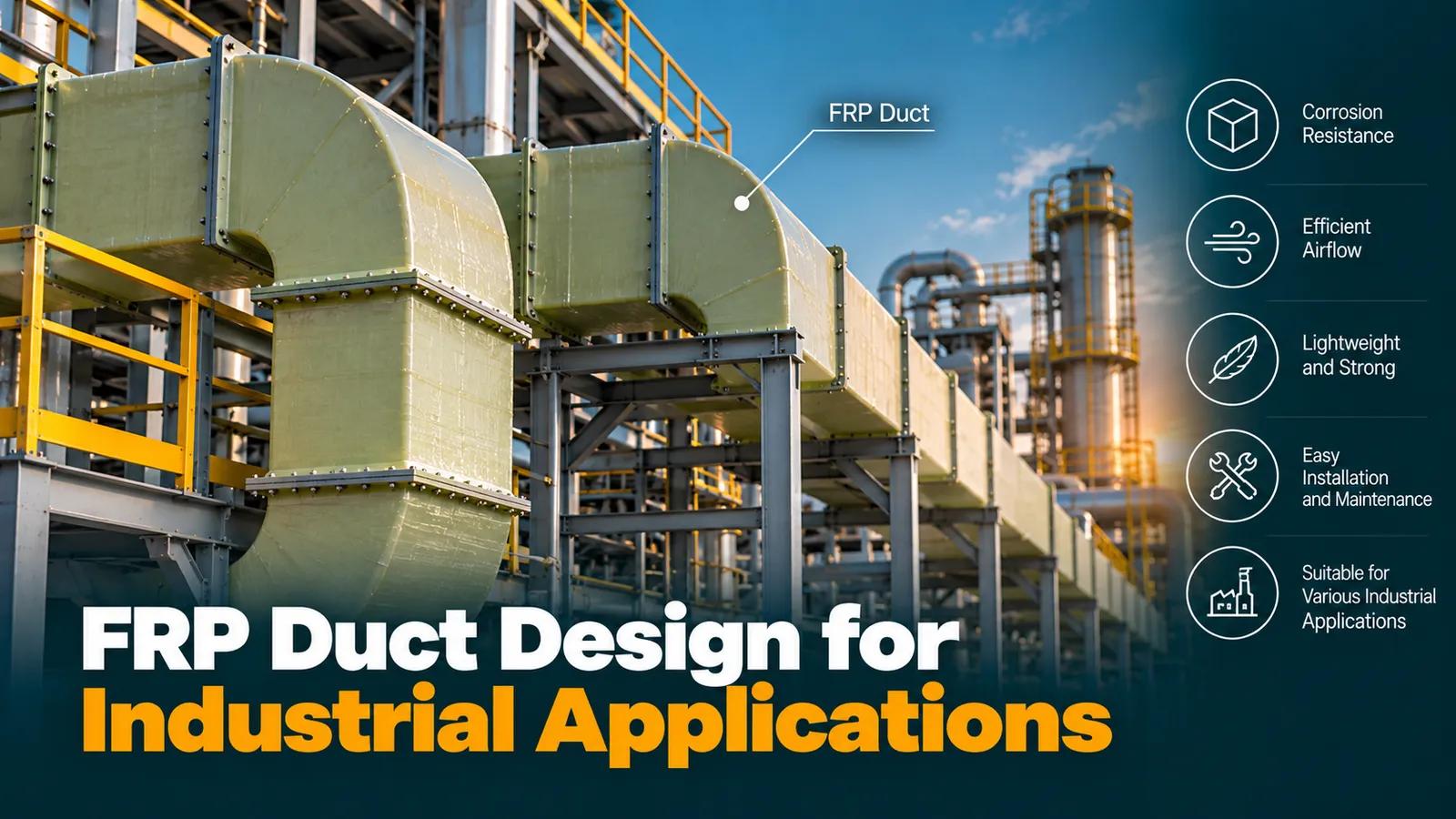
Explore FRP duct design considerations, including engineering calculations, structural requirements, material selection, and fabrication for industrial applications.
Read More →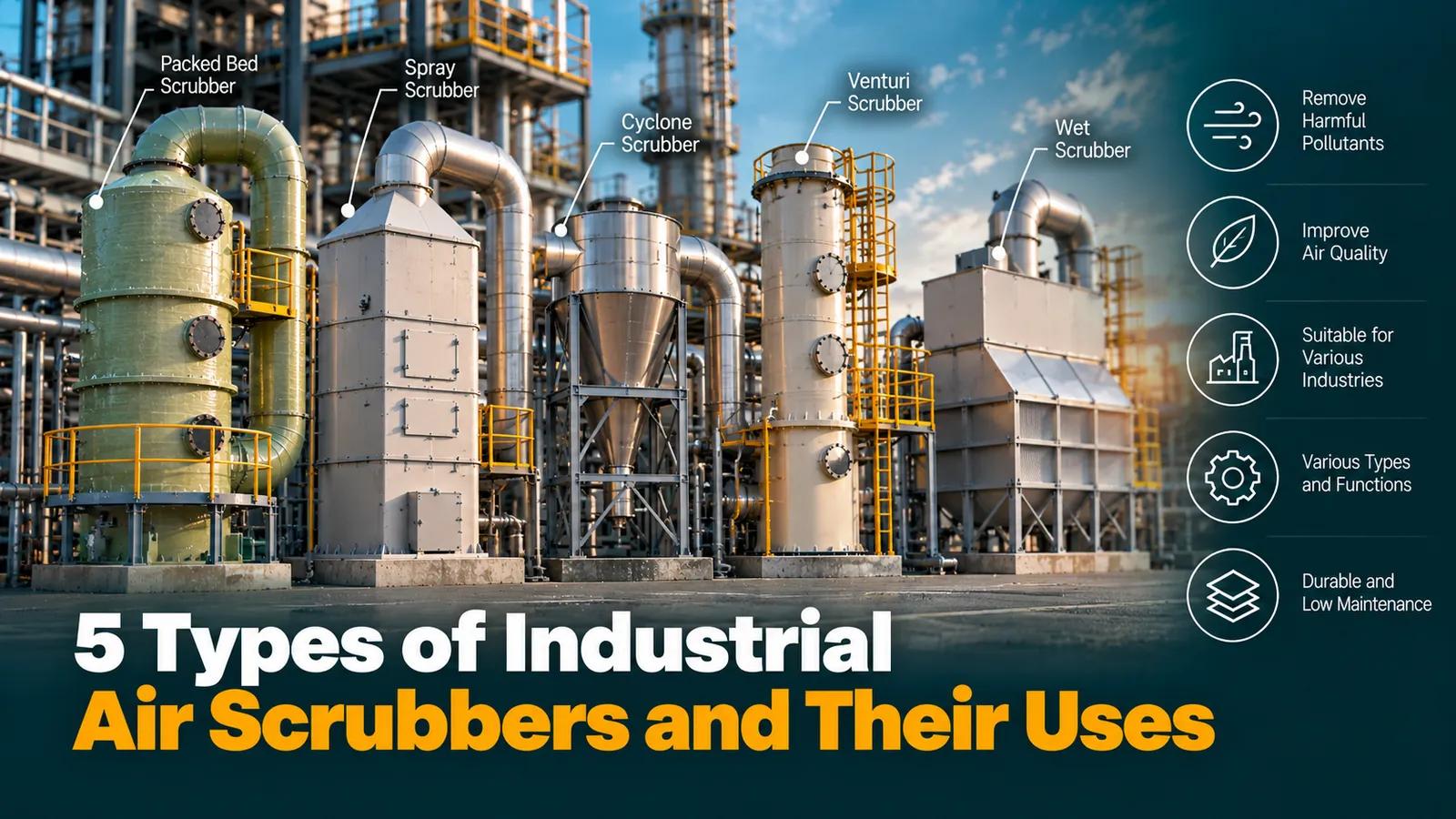
18 Nov 2026
Learn the industrial scrubber working principle, explore 5 types of air scrubbers, and understand their applications in industrial air pollution control.
Read More →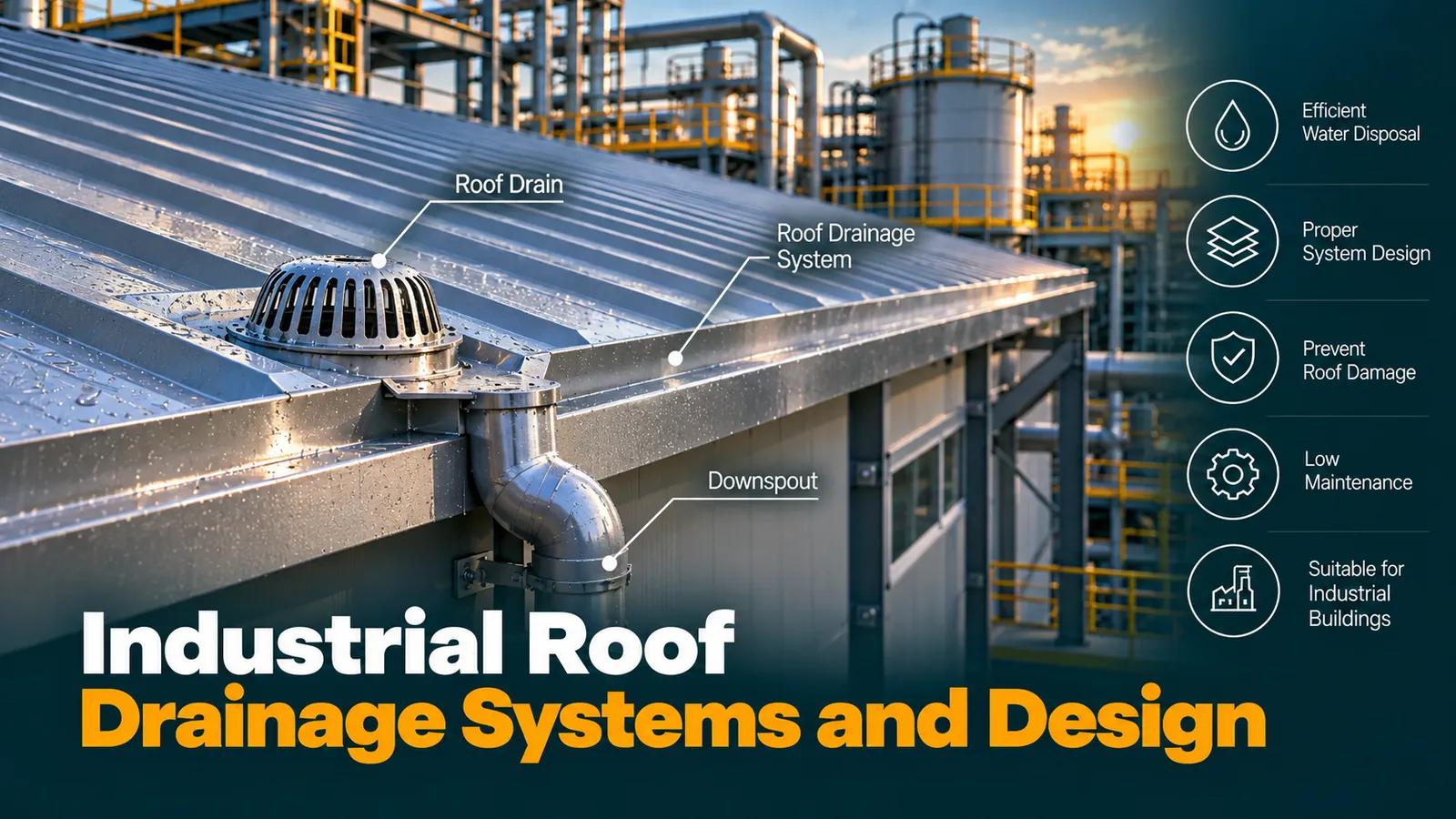
18 Nov 2026
Learn how industrial roof drainage systems are designed, including gutters, outlets, downpipes, drainage capacity, materials, and maintenance.
Read More →